
Flowers
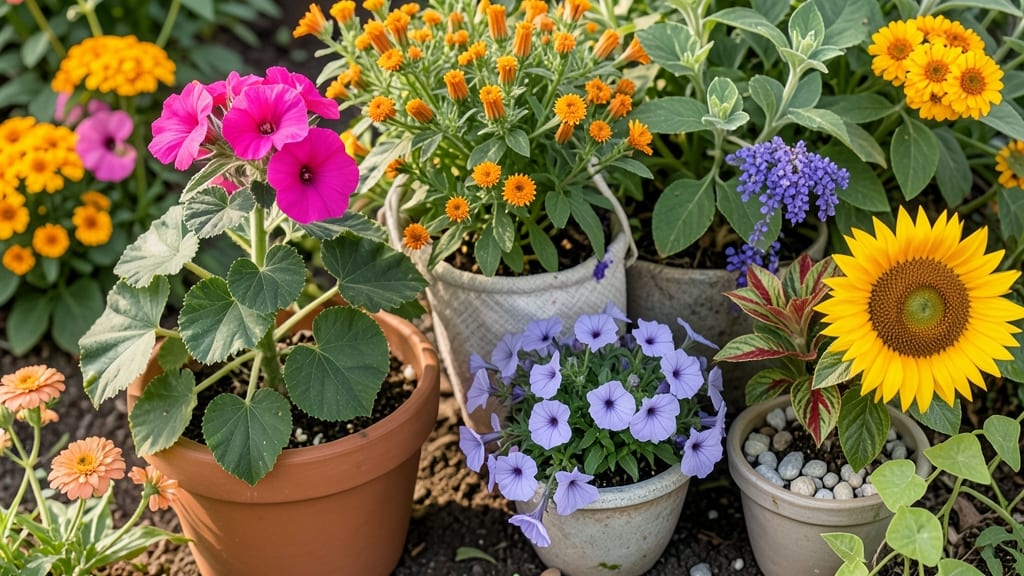
Finding the best summer flowers for pots means choosing vibrant blooms that handle heat, thrive in containers, and keep your patio or balcony looking fresh until frost.
Picture this: a sunny afternoon where your pots overflow with petunias, geraniums, and marigolds, their colors popping against the summer sky. The trick is picking sun-loving varieties that ask for little more than good drainage and regular watering.
Too many gardeners overlook how pot size and soil mix can make or break success. A shallow container might dry out too fast, while a heavy one becomes a backache waiting to happen. The right setup keeps your flowers happy and your thumbs green.
Below, I’ll share 10 top-performing summer flowers for pots, plus pro tips on pairing them for maximum impact—whether you want bold bursts of color or a soothing pastel palette.
Top 10 sun-loving summer flowers for pots that bloom nonstop
Summer heat shouldn’t stop your garden from bursting with color! These sun-loving annuals and perennials thrive in pots, tolerate drought, and deliver nonstop blooms from June until frost.
Whether you have a tiny balcony or a spacious patio, these low-maintenance beauties will turn your space into a vibrant oasis with minimal effort.
I’ve tested these top 10 varieties in my own containers—some are heat-proof powerhouses, while others bring delicate charm without wilting. The key? Full sun exposure (6+ hours daily), well-draining soil, and occasional deadheading to encourage more flowers. Let’s dive into the best performers that’ll make your summer shine!
Comparison Table: Sun Requirements, Care Needs, and Bloom Duration
My top pick for effortless blooms is lantana—it’s practically indestructible, thrives in scorching
How to choose and care for potted summer flowers for maximum blooms
Selecting the right summer flowers for pots is just the beginning—proper care ensures they thrive all season. The key lies in matching your container size, drainage system, and soil mix to each plant’s needs.
For example, petunias and geraniums love spacious pots with excellent drainage, while marigolds adapt well to smaller containers. Let’s break down the essentials to keep your potted blooms vibrant and healthy.
First, prioritize well-draining soil mixed with organic matter like compost or coconut coir. This prevents root rot—a common issue in pots—while retaining enough moisture for sun-loving varieties. A 50/50 mix of potting soil and perlite or vermiculite works wonders.
Additionally, choose pots with drainage holes and consider adding a layer of gravel at the bottom for extra airflow.
Sunlight exposure is non-negotiable for summer blooms. Most container flowers need 6-8 hours of direct sun daily. Place your pots where they’ll get morning sun and afternoon shade if temperatures soar past 90°F. For example, a south-facing balcony or east-west patio is ideal. If your space lacks full sun, opt for heat-tolerant varieties like lantana or zinnias, which handle partial shade better than others.
- Petunias – Bright colors, trailing habits, 6-8 hrs sun
- Geraniums – Drought-tolerant, upright growth, full sun
- Marigolds – Pest-repellent, compact size, 6 hrs sun
- Lantana – Heat-resistant, cluster blooms, full sun
- Zinnias – Long-lasting, varied heights, 6-8 hrs sun
Watering is an art, not a science. Most potted flowers need deep watering every 2-3 days during summer, but check the top inch of soil first—it should be dry before watering again. Avoid soggy soil, which suffocates roots. For hanging baskets, water more frequently since they dry out faster.
Early morning is the best time to water, as it reduces evaporation and fungal risks. Mulching with straw or shredded bark helps retain moisture and keeps roots cool.
Feeding your flowers is crucial for continuous blooms. Use a balanced liquid fertilizer (like 10-10-10) every 2-3 weeks during the growing season. For heavy bloomers like petunias, switch to a high-phosphorus formula (e.g., 5-10-5) to encourage flowers over foliage.
Always water before fertilizing to prevent root burn. Deadhead spent blooms regularly—this redirects energy to new flowers and keeps your pots looking fresh.
Finally, don’t overlook seasonal adjustments. As summer wanes, reduce watering and fertilizing. Trim back leggy stems to encourage bushier growth, and watch for pests like aphids or spider mites. A gentle spray of neem oil or insecticidal soap keeps them at bay.
With these steps, your potted summer flowers will stay lush, colorful, and full of life until the first frost!