
Light Requirements
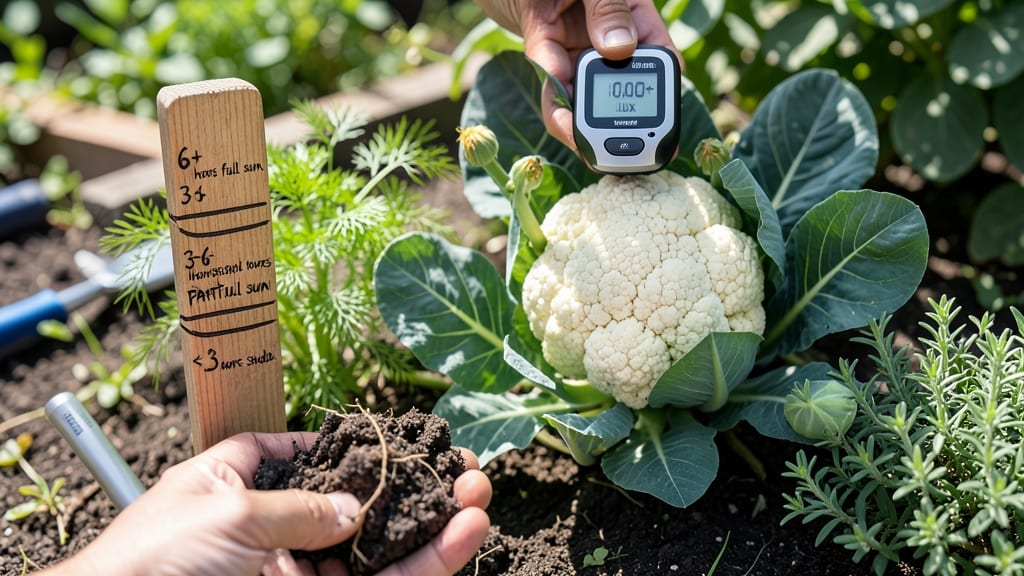
Your cauliflower sunlight requirements are the secret to growing those tight, snow-white heads 🥬—and skipping this step means bitter, loose curds or no harvest at all.
Picture this: you’ve spent weeks nurturing your seedlings, only to watch them bolt or produce tough, stringy heads. That’s not bad luck—it’s a sunlight mismatch. Cauliflower isn’t just another veggie; it demands 6 to 8 hours of direct sun daily, with adjustments as it matures.
But here’s the catch: too much midday heat in summer can stress plants, while partial shade in cooler zones might slow growth. I’ll break down the exact sunlight needs by stage—from seedlings to harvest—plus how to tweak exposure for your climate without sacrificing yield.
By the end, you’ll know how to position your plants, spot sunlight mistakes before they ruin your crop, and even work around shade if your garden isn’t full sun. Let’s get those heads perfect.

Cauliflower sunlight requirements by growth stage: hours and positioning
Cauliflower thrives on consistent sunlight, but its needs change dramatically from seedling to harvest. Too little light leads to stunted growth and poor head formation, while too much can cause bolting—where the plant flowers prematurely.
Understanding these stages will help you position your plants perfectly for maximum yield and tight curds. Let’s break down the exact sunlight requirements for each phase.
For seedlings, aim for 4-6 hours of indirect light daily. This prevents leggy growth while keeping them safe from intense sun that can scorch delicate leaves. Use shade cloth (30-50%) if growing outdoors in hot climates.
Once seedlings develop 2-3 true leaves, they’re ready for more direct sunlight, but gradual acclimation is key to avoid shock.
| Growth Stage | Sunlight Hours | Positioning Tips | Climate Adjustments |
|---|---|---|---|
| Seedlings (0-3 weeks) | 4-6 hours indirect | Start under grow lights or 30% shade cloth | Hot climates: 50% shade cloth |
| Transplant (3-4 weeks) | 6-8 hours direct | Morning sun + afternoon shade for 1 week | Cold climates: South-facing beds |
| Vegetative (4-8 weeks) | 6+ hours full sun | East or west-facing rows for even light | Desert areas: Drip irrigation + shade netting |
| Head Formation (8-12 weeks) | 6-8 hours (avoid midday heat) | Use row covers for afternoon shade in summer | Coastal areas: Windbreaks + extra water |
| Harvest (12+ weeks) | 5-6 hours (gentle light) | Move to partial shade if heads turn yellow | Frost risk: Cover with row fabric |
During the transplant stage (3-4 weeks), your cauliflower needs 6-8 hours of direct sunlight but should avoid intense midday sun. Position seedlings in a south-facing bed or use temporary shade cloth if temperatures exceed 85°F (29°C).
This phase is critical for root establishment—weak roots later struggle to support heavy heads. I’ve found success by transplanting in late afternoon to reduce stress from direct sun exposure.
Once in the vegetative stage (4-8 weeks), your cauliflower demands 6+ hours of full sun daily to develop strong leaves and a sturdy stem. This is when you’ll see rapid growth, but even light distribution is key.
Avoid planting near tall trees or structures that cast deep shade during peak sunlight hours (10 AM–2 PM). For container growers, rotate pots weekly to ensure all sides receive equal light.
The head formation stage (8-12 weeks) is where sunlight needs become more nuanced. While still requiring 6-8 hours daily, your cauliflower benefits from protection against midday heat.
In hot climates, use 30% shade cloth during the hottest hours (12 PM–4 PM) to prevent yellowing curds or premature bolting. I’ve seen dramatic improvements in head quality by providing afternoon shade during summer months.
As your cauliflower nears harvest (12+ weeks), it actually needs slightly less intense light—5-6 hours daily is ideal. Over-exposure at this stage can cause bitter flavors and loose curds. Watch for yellowing leaves or open buds, which signal it’s time to harvest.
In cooler climates, you can leave plants in full sun until harvest, but in hot areas, move them to partial shade to maintain quality.
For container gardening, place pots in the sunniest spot available but be prepared to move them as sunlight needs shift. South-facing windowsills or patio areas with afternoon shade work well.
If growing in partial shade gardens, choose shade-tolerant varieties like ‘Snowball Y Improved’ or ‘Purple of Sicily,’ which handle 4-6 hours of sun better than standard types.
One common mistake is assuming more sun is always better. While cauliflower loves light, heat stress from excessive sun can be just as damaging as shade. In my garden, I’ve lost multiple harvests by ignoring this balance—especially in Zone 9+ climates.
Always monitor your plants for signs of wilting or discolored leaves, which indicate sunlight adjustments are needed.
Pro tip: Use a light meter or observe your plants’ shadows to gauge sunlight exposure. If shadows are longer than 4 inches at midday, your cauliflower isn’t getting enough light.
For urban gardeners, reflective surfaces like white walls or mirrors can bounce extra light onto shaded areas, boosting growth by up to 20
How to adjust sunlight for different cauliflower varieties and seasons
Not all cauliflower varieties crave the same amount of sunlight, and seasonal shifts can drastically change your plants' needs. Green cauliflower like 'Snowball Y' thrives with 6-8 hours of direct sun, while purple varieties such as 'Graffiti' tolerate partial shade better due to their natural light sensitivity.
Understanding these differences ensures you avoid bitter-tasting heads or stunted growth.
Spring and fall plantings benefit from gentler sunlight adjustments—morning sun with afternoon shade prevents bolting. Summer's intense heat demands afternoon shade solutions, like shade cloth or strategic planting near taller crops. Let’s break down the exact sunlight tweaks for each variety and season to maximize your harvest.
- 1 Green Varieties (e.g., Snowball Y): Need 6-8 hours of full sun daily. Place in south-facing beds for maximum exposure. Reduce to 5 hours in summer if temps exceed 85°F.
- 2 Purple Varieties (e.g., Graffiti): Tolerate 4-6 hours of sun with 2-4 hours of shade. Ideal for partial shade gardens or late afternoon protection in hot zones. Avoid full sun to prevent discoloration.
- 3 Spring Planting: Start with 4-5 hours of sun and gradually increase to 6 hours as days lengthen. Use row covers to protect seedlings from harsh morning rays.
- 4 Summer Planting: Limit exposure to morning sun only (6 AM–12 PM). Install shade cloth (30-50%) for afternoon protection. Mulch heavily to retain soil moisture and cool roots.
- 5 Fall Planting: Aim for 5-7 hours of sun as days shorten. Plant near tall crops (e.g., corn, sunflowers) to create natural shade in peak afternoon hours.
For hot climates, consider drip irrigation with shade cloth to maintain ideal temperatures. Purple cauliflower, in particular, benefits from dappled shade—think of it like growing them under a light canopy. This mimics their natural habitat in cooler mountain regions, where sunlight is less intense.
Pro tip: Monitor your cauliflower’s leaf color. Yellowing leaves signal too much sun, while pale, leggy stems mean insufficient light. Adjust your setup weekly, especially during seasonal transitions. A simple sun gauge or app can track daily sunlight hours for precision.
By tailoring sunlight to your variety and season, you’ll avoid common pitfalls like bolting or poor head formation. Whether you’re growing green cauliflower in full sun or purple varieties in partial shade, these adjustments will keep your plants happy and productive—no bitter surprises here! 🌱