
Flowers
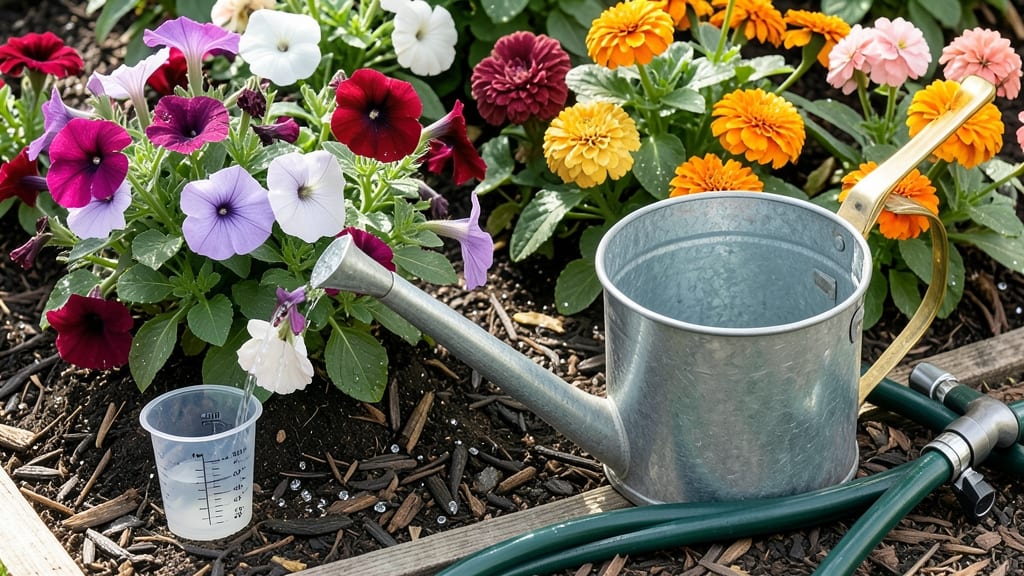
Watering flowers properly is all about giving them the right amount—too little stunts growth, but too much drowns roots.
Overwatering or underwatering flowers can stifle their growth—or worse, kill them. The secret to perfect hydration lies in understanding your soil’s moisture levels, not just following a rigid schedule.
Most gardeners guess, but the truth is, flowers 🌸 thrive when you water deeply and infrequently, letting the soil dry slightly between sessions. This method saves time and keeps roots healthy.
Below, I’ll show you exactly how to test soil moisture, adjust for your climate, and avoid the most common mistakes that turn vibrant blooms into sad, wilted stems.


The soil-moisture test method for watering flowers (step-by-step guide)
Determining how much to water flowers isn’t about guessing or sticking to a rigid schedule—it’s about reading your soil. The soil-moisture test method is my go-to technique because it accounts for your unique garden conditions, from sandy soil to clay-heavy beds.
Unlike generic watering rules, this method adapts to your plants’ real-time needs, whether you’re growing petunias, roses, or drought-tolerant lavender.
Most gardeners overwater by default, thinking flowers need constant moisture. But soggy soil suffocates roots and invites pests like fungal diseases. The key is checking moisture at the right depth—where roots actively seek water.
For most flowers, that’s 1-2 inches deep. Annuals like marigolds may need shallower checks, while perennials like daylilies can handle deeper soil moisture.
Here’s how to master the soil-moisture test in just a few minutes—no fancy tools required. This method works for container gardens and in-ground beds alike, and it’s especially useful during heatwaves or drought conditions when evaporation speeds up.
- 1
- 2
- 3
- Dry: Finger comes out clean—water immediately.
- Slightly moist: Soil clings lightly to your finger—wait 1-2 days before watering.
- Moist: Soil sticks slightly but isn’t wet—ideal for most flowers.
- Wet: Excess water drips off—skip watering to prevent root rot.
- 4
- Annuals (e.g., impatiens, zinnias): Prefer consistently moist soil—test daily in hot weather.
- Perennials (e.g., coneflowers, black-eyed Susans): Tolerate drier soil—test every 2-3 days.
- Drought-tolerant flowers (e.g., sedum, yarrow): Only water when soil is bone-dry.
- 5
- 6
Pro tip: Keep a gardening journal to track when you water and how your flowers respond. Note differences between morning and afternoon watering—some flowers (like hydrangeas) bloom better with consistent hydration, while others (like sunflowers) thrive with deeper, less frequent watering.
This method also saves water—critical during drought conditions. By only watering when truly needed, you’ll see healthier roots and more vibrant blooms. Plus, it’s a great way to spot drainage issues early.
If soil stays soggy for days after watering, your bed might need amended soil or a raised garden bed.
Remember, seasonal adjustments are key. In summer, you’ll test soil more often due to high evaporation, while winter might require testing only every 10-14 days. Pay attention to your local microclimate—a north-facing bed stays moist longer than a south-facing one.
Once you master this technique, you’ll never guess again
Watering requirements by flower type: how often to water roses, petunias, and more
Not all flowers drink the same—some thrive on deep, infrequent watering, while others demand consistent moisture. The key is matching your watering schedule to your flower’s natural habitat and seasonal conditions.
For example, roses need 1-2 inches of water weekly, while petunias prefer daily light watering in summer. Let’s break down the watering needs for your favorite blooms.
Your local climate and soil type also play huge roles. Sandy soil drains quickly, requiring more frequent watering, while clay holds moisture longer, needing less frequent but deeper soaks. In hot summer months, most flowers will need 20-30% more water than in spring or fall.
Always check the top 1-2 inches of soil—if it’s dry, it’s time to water.
For drought-tolerant flowers like lavender or yarrow, I’ve learned to water deeply but infrequently. These plants store moisture in their roots, so light, frequent watering actually encourages shallow roots.
In contrast, tropical blooms like hibiscus or ginger lilies need consistent moisture—let the top inch of soil dry out between waterings, but never let them wilt.
Seasonal shifts demand smart adjustments. In spring, focus on establishing root growth with moderate watering. By summer, increase frequency to prevent wilting under intense sun.
In fall, taper back as growth slows, and in winter, most flowers enter dormancy—water only enough to prevent soil from freezing.
Pro tip: Use a moisture meter or the finger test—stick your finger 1-2 inches into the soil. If it feels dry, it’s time to water. For container-grown flowers, check daily in summer since pots dry out 3-5x faster than in-ground plants.
Always water early in the morning to reduce fungal risks from evening moisture.
Remember, overwatering is just as deadly as underwatering. Yellowing leaves or mushy stems signal root rot, while crispy edges on foliage mean underwatering. Adjust your schedule based on these visual cues, and your flowers will reward you with vibrant, long-lasting blooms. 🌷