
Vegetables
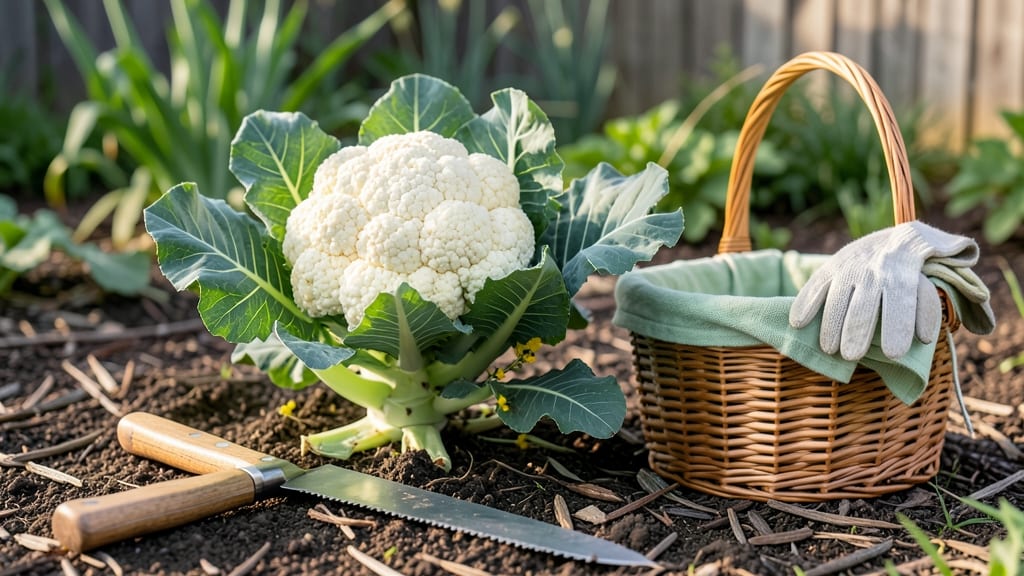
Cauliflower is harvested when its curds reach 70-100 days of maturity and show three key signs of readiness—tightness, color, and firmness.
Picture this: your 🥬 heads are finally ready, but you wait too long, and they turn woody or bitter. That’s why timing is everything—miss these cues, and your harvest could be ruined.
In USDA Zone 6a, most varieties are ready between June and August, but the exact moment depends on head size, leaf color, and how firm the curds feel when squeezed.
Below, I’ll walk you through the three visual signs that guarantee a perfect harvest, plus how to extend your season for multiple cuts.
3 Visual signs your cauliflower is ready for harvesting
Harvesting cauliflower at the perfect moment ensures tender, flavorful curds instead of bitter or woody heads. I’ve learned the hard way that waiting too long ruins the texture—so let’s focus on the three key visual cues that signal your cauliflower is ready.
These signs will help you time your harvest precisely, whether you’re growing white, purple, or orange varieties.
First, pay attention to the head size and tightness of the curds. A mature cauliflower head should measure about 6-8 inches in diameter and feel solid when gently squeezed.
If the curds start to spread apart or look loose, you’ve missed the window—this is your first warning that the plant is overripe. I once left mine too long, and the head split open, leaving me with only a fraction of what I could have harvested.
Next, examine the outer leaves surrounding the head. Healthy leaves should remain green and vibrant, but they’ll start to yellow or brown as the head matures. This is normal, but if the leaves are wilting or the head is exposed, it’s a sign the plant is stressed.
The key is to harvest when the head is fully formed but the leaves are still mostly green—this ensures the curds stay fresh and crisp.
Finally, check the color consistency of the head. For standard white cauliflower, the curds should be a uniform creamy white throughout. Purple varieties should have a deep, even hue, while orange types will develop a rich, golden tone.
Uneven coloring or pale spots mean the head isn’t fully mature yet. I always test this by cutting into a small section of the head—if it’s still pale inside, I wait a few more days.
🌱 3 Visual Signs Your Cauliflower Is Ready
- 1
- 2
- 3
💡 Pro Tip: Harvest in the morning when temperatures are coolest to preserve freshness and crispness.
One common mistake I see is harvesting based on days after planting rather than visual cues. While cauliflower typically matures in 70-100 days, environmental factors like temperature and water stress can delay or speed up maturity.
For example, hot weather can cause heads to bolt or become loose before reaching full size. Always prioritize these visual signs over a calendar-based approach.
If your cauliflower heads are smaller than expected or the curds are loose and spreading, it might be due to nutrient deficiencies or inconsistent watering. I once grew a batch in sandy soil, and the heads never developed properly.
Amending the soil with compost and using a balanced fertilizer (like 5-10-10) can help prevent this in future plantings.
Another trick I’ve learned is to harvest side shoots after the main head is cut. Once you remove the primary curd, the plant often produces smaller side shoots that can be harvested a few weeks later.
These won’t be as large, but they’re still delicious and extend your harvest season. Just watch for the same visual cues—size, tightness, and color—to know when they’re ready.
For heirloom or colored varieties, the color intensity is your best guide. Purple cauliflower, for instance, should have a deep, even violet hue, while orange types will develop a rich, golden tone. If the color is faint or patchy, wait a few more days.
I grew Romanesco once, and its fractal pattern only fully developed when the head was mature—harvesting too early would have left me with a pale, underdeveloped head.
Finally, avoid harvesting during hot afternoons or after heavy rain. The heads are most fresh and crisp in the early morning, and cutting them at this time ensures they stay firm longer.
If you must harvest later in the day, store them in the fridge until you’re ready to use them. I’ve found that cauliflower harvested in the morning and stored properly can last up to a week in the refrigerator.
By mastering these three visual signs, you’ll never miss the perfect moment to harvest your cauliflower again. The key is to observe daily, especially as the heads near maturity, and act quickly once you spot these cues. Happy harvesting—your kitchen (and taste buds) will thank you! 🥬
How to harvest cauliflower without damaging the plant
Harvesting cauliflower at the right time ensures tender, flavorful curds while keeping your plant healthy for potential side shoots. The key is using the right technique and recognizing when the main head is ready—plus knowing how to coax extra harvests from your plant.
A sharp knife and gentle hands make all the difference between a perfect harvest and a ruined one.
Start by cutting the main head cleanly, leaving a few inches of stem to encourage new side shoots. For heirloom varieties like purple or orange cauliflower, timing is even more critical since color development signals maturity.
I’ve found that harvesting in the morning after dew dries reduces stress on the plant and keeps the curds crisp.
Step-by-Step Harvesting Guide
-
Step 1: Check Head Maturity
Gently squeeze the curd—it should feel firm but not hard. The head should be 6-8 inches wide with tightly packed florets.
-
Step 2: Use a Sharp Knife
Cut the head 1-2 inches below the curd using a clean, sterilized knife to prevent disease. Leave the stem intact for regrowth.
-
Step 3: Harvest Side Shoots
After 2-3 weeks, new side shoots will form. Harvest these when they reach 3-4 inches wide, focusing on the largest, firmest shoots first.
-
Step 4: Extend the Season
For late-season harvests, use row covers to protect from frost. Succession plant every 2-3 weeks in warm climates for continuous yields.
-
Step 5: Store Properly
Wrap harvested heads in damp paper towels and store in the fridge for up to 5 days. For long-term storage, blanch and freeze.
One common mistake I see is harvesting too late—when the curds start to loosen or turn yellow. This happens when the plant diverts energy to seed production.
If you notice this, your next harvest will be smaller, but don’t worry: cauliflower plants often produce 2-3 side shoots after the main head is cut.
For extended harvest seasons, try planting slow-maturing varieties like ‘Snowball Y Improved’ or ‘Purple of Sicily.’ These varieties give you more time to harvest before the first frost.
I’ve even had success growing cauliflower in fall plantings under protective netting, which can push your harvest into early winter in mild climates.
After harvesting, give your plant a light fertilizer boost (like a 5-10-10 mix) to encourage side shoot growth. Just avoid over-fertilizing, as this can lead to bitter-tasting curds in the next flush. With the right care, a single cauliflower plant can provide enough for 3-4 harvests over its lifetime!
Remember, the goal is to balance harvest timing with plant health. If your cauliflower starts to bolt (send up a flower stalk), it’s past its prime—so act quickly when you see those tight, compact curds ready to go! 🥬