
Watering
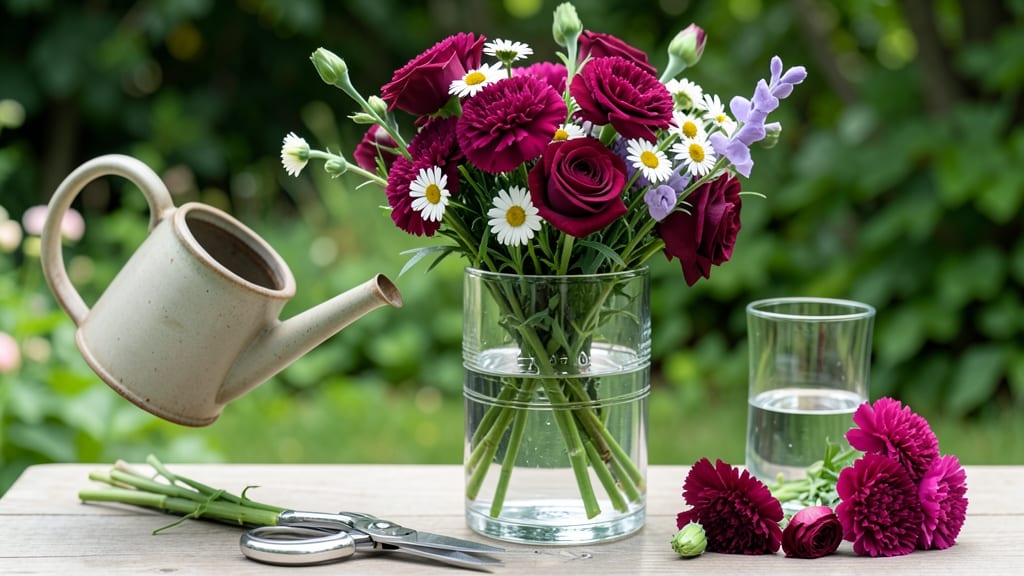
Flowers in a vase need just the right amount of water — too little and they wilt, too much and they rot, but the sweet spot depends more on the bloom type than you’d think.
Picture this: you’ve just arranged a stunning bouquet of 🌸 roses and tulips, and by day three, the edges are curling. Was it the water? Maybe — but it could also be the vase size, the season, or even the tap water you used.
The truth is, hydration for cut flowers isn’t one-size-fits-all, and small mistakes add up fast.
In this guide, I’ll break down exactly how much water different flowers need, from daily refills for thirsty lilies to the low-maintenance care of carnations. You’ll also learn how to spot over- or under-watering before it’s too late, plus pro tricks to stretch vase life by days.
Whether you’re a gardener extending your harvest or just keeping houseplants fresh, these rules will save you from tossing wilting blooms too soon.


Daily water requirements for common flowers in vases (by species)
Not all flowers drink the same way—some guzzle water like thirsty gardeners at a summer BBQ, while others sip delicately like tea lovers. Understanding your bouquet’s hydration needs is the key to keeping stems perky for days.
For example, roses and lilies are heavy drinkers, while carnations and alstroemeria are more conservative. Let’s break down the science behind their thirst and how often to refresh their water supply.
Most cut flowers need 1-2 inches of water covering their stems, but absorption rates vary wildly. A sunflower might drink a full vase in 24 hours, while a tulip could last a week with minimal top-ups.
The difference? Stem structure, leaf surface area, and even the seasonal temperature of your home. For instance, in summer heat, evaporation speeds up, so you’ll need to refill vases daily instead of every few days.
Here’s a game-changer: Trim stems at an angle every 2-3 days to create fresh wounds that absorb water more efficiently. This simple trick can extend a peony’s vase life by nearly 50%.
Pair this with room-temperature water (cold water shocks stems), and you’ve got a winning formula. Now, let’s dive into the specifics—because not all blooms are created equal.
Why do some flowers drink more than others? The answer lies in their stem anatomy. Flowers like roses and sunflowers have large, porous stems that act like straws, sucking up water rapidly. Meanwhile, tulips and carnations have tighter vascular bundles, so they sip water slowly.
Even the leaf surface area matters—more leaves mean more transpiration (water loss), so bouquets with dense foliage need more frequent water changes.
Pro tip: If your vase has a narrow neck, stems can’t access water efficiently. Use a wide-mouth vase or a clear glass jar to let all stems drink equally. And here’s a secret weapon: hydrogen peroxide (1 tsp per quart of water) keeps stems hyd
Hidden factors that change your flowers’ water needs
You might assume all flowers need the same amount of water in a vase, but hidden factors like temperature, humidity, and even the material of your vase can drastically alter their hydration needs.
For example, roses and tulips wilt faster in dry air, while lilies thrive in cooler conditions. These variables mean your bouquet’s lifespan could shrink—or extend—without you even noticing.
Beyond the obvious, water quality plays a surprising role. Tap water often contains chlorine or fluoride, which can clog flower stems and block absorption. Even the vase material—glass vs. ceramic—affects evaporation rates.
A glass vase lets you monitor water levels, while a ceramic vase may trap moisture longer, creating a microclimate that speeds up bacterial growth.
⚠️ Common Mistake: Overcrowding Stems
Packing too many stems into a vase forces flowers to compete for water, causing uneven wilting. Each bloom needs 1-2 inches of stem submerged—overcrowding blocks absorption and accelerates decay. Solution: Trim stems to fit your vase size and space them evenly.
Let’s start with temperature. In hot weather, flowers like sunflowers and gerbera daisies can drink 30% more water daily. Place them in a cooler spot, like an east-facing window, to slow evaporation.
Conversely, in winter, reduce watering to every 3-4 days—cooler air means less moisture loss.
Humidity is another silent villain. Dry indoor air (common in winter heating) causes flowers to lose moisture faster. To combat this, mist stems lightly with water or place the vase on a pebble tray filled with water. This adds 5-10% humidity around the blooms, mimicking outdoor conditions.
Now, let’s talk water quality. Always use room-temperature water—cold water shocks stems, while warm water can encourage bacterial growth. If your tap water is heavily treated, let it sit out for 24 hours to allow chlorine to evaporate, or use filtered water.
For extra longevity, add 1 teaspoon of sugar and 1/4 teaspoon of bleach per quart of water to feed flowers and prevent bacteria.
Finally, vase material matters. Glass vases are ideal because you can see water levels and adjust as needed. Ceramic vases, however, may retain moisture longer, which can lead to fungal growth if not cleaned regularly.
For long-lasting arrangements, opt for clear glass and change the water every 2-3 days, regardless of the vase type.