
Flowers
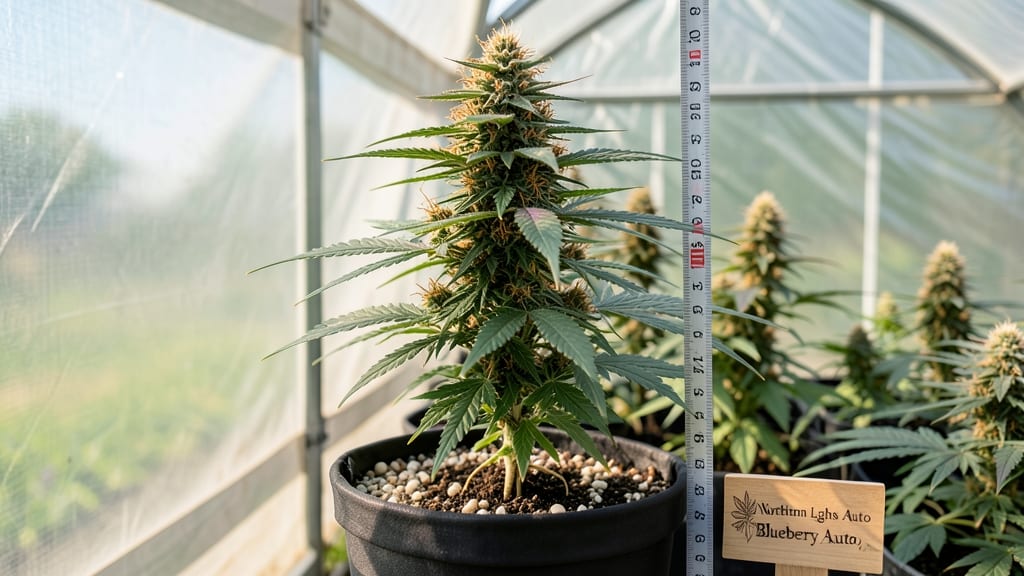
Autoflower cannabis plants grow between 1 and 5 feet tall, but their final height depends on the strain—and knowing this upfront saves you from crowded plants or wasted space.
Picture this: You’ve spent weeks nurturing your 🌿 autoflower, only to realize it’s stretching toward the ceiling while its neighbor stays compact.
That’s the beauty (and challenge) of autoflowers—they don’t follow the same rules as photoperiod plants, and their height can swing wildly from dwarf varieties like 'Blueberry Auto' to towering 'Gorilla Glue Auto' strains.
Genetics set the baseline, but pruning, training, and even your growing setup can tweak that height—sometimes dramatically. Whether you’re working with a 2-foot bush or a 6-foot giant, understanding these ranges helps you plan lighting, spacing, and even yield expectations before the first leaves pop.
In this guide, I’ll break down exact height ranges by strain type, share proven techniques to control growth without sacrificing buds, and reveal how height actually impacts your harvest—so you can grow smarter, not harder.


Autoflower cannabis height ranges by strain type: dwarf vs. tall varieties
Autoflower cannabis plants are famous for their predictable growth cycles, but their height potential can vary wildly depending on genetics. While some strains stay under 2 feet, others can stretch to 6 feet or taller.
This difference isn’t random—it’s determined by the plant’s genetic lineage, whether it’s descended from Indica, Sativa, or hybrid parents. For example, Indica-dominant autoflowers like Blueberry Auto stay compact, while Sativa-heavy varieties like Gorilla Glue Auto reach towering heights.
Understanding these ranges helps you choose strains that fit your space and care style.
Height isn’t just about aesthetics—it directly impacts yield potential, light exposure, and even harvesting ease. Taller plants need more vertical space and stronger support, while dwarf varieties thrive in small pots or tight grow tents.
Below, we break down the three main height categories—dwarf, medium, and tall—with real-world examples and genetic insights to help you pick the perfect strain for your setup.
Dwarf autoflowers, like Blueberry Auto or Fruity Pebbles, stay under 2 feet thanks to their Indica genetics. These compact plants are perfect for stealth grows or small grow tents, often producing 1-2 ounces per plant despite their size.
Their shorter stature also means they mature faster, typically in 8-10 weeks, making them ideal for beginners or those with limited space. However, their smaller size can limit bud production compared to taller varieties.
Medium-height autoflowers, such as White Widow Auto or Amnesia Auto, strike a balance with heights of 2-3 feet. These hybrids blend Indica relaxation with Sativa energy, offering a middle ground for yield and space.
They’re great for outdoor grows in discreet locations or indoor setups with moderate ceiling heights. Yields typically range from 2-4 ounces, depending on training techniques like low-stress training (LST).
Tall autoflowers, like Gorilla Glue Auto or Jack Herer Auto, can reach 5-6 feet or taller, thanks to their Sativa-dominant genetics. These giants are built for high yields, often producing 4-8 ounces per plant when given proper care.
However, their height requires strong support, such as stakes or trellises, and ample vertical space. They’re best suited for outdoor gardens or large indoor grow rooms with 18+ inch light distances.
Genetics play the biggest role in determining height, but environmental factors like light exposure, nutrient levels, and pruning techniques can also influence final size. For instance, overfeeding nitrogen can stretch plants unnaturally, while defoliation or topping can encourage bushier growth.
If you’re growing indoors, taller strains may need adjustable light setups to avoid light burn, while dwarf varieties can thrive under small LED grow lights.
One common misconception is that taller plants always mean bigger yields. While height can contribute to more bud sites, dwarf strains often produce denser, resinous buds due to their focused energy.
For example, a 2-foot Blueberry Auto might yield 1.5 ounces of potent, flavorful buds, while a 6-foot Gorilla Glue Auto could produce 6 ounces but with slightly less potency per gram. Your choice should align with your space constraints, care capacity, and
How to control autoflower height without sacrificing yield
Autoflower cannabis plants grow fast, but their height can spiral out of control if left unchecked. The key to managing their size lies in strategic training techniques that redirect energy toward bud production rather than vertical growth.
Unlike photoperiod plants, autoflowers have a fixed 8-12 week lifecycle, so timing is everything—intervene too late, and you risk stunted buds or stress. I’ve found that combining pruning, topping, and low-stress training (LST) yields the best results without sacrificing potency or yield.
Start by understanding your plant’s genetic growth potential. Dwarf autoflowers like Northern Lights Auto rarely exceed 2 feet, while tall strains like White Widow Auto can hit 6 feet. If your plants are on the taller side, early intervention is critical.
The vegetative stage (weeks 1-3) is the ideal window for height control, as plants are most resilient to pruning and training. Waiting until flowering begins can stress the plant and reduce bud quality.
🌱 Key Techniques to Control Autoflower Height
- 1. Topping (Week 2-3): Cut the main stem just above a node with 2-3 fan leaves. This forces lateral growth and keeps the plant bushier. Use sterile scissors to avoid infections.
- 2. Pruning (Weeks 1-4): Remove lower branches to improve airflow and redirect energy upward. Focus on yellowing or weak leaves first.
- 3. Low-Stress Training (LST) (Weeks 3-5): Gently bend stems and secure them with soft ties or trellises. This spreads the canopy without harsh cuts, ideal for tall, leggy plants.
- 4. Defoliation (Weeks 4-6): Remove large fan leaves to increase light penetration to buds. Limit to 20-30% of foliage to avoid stress.
- 5. Super Cropping (Weeks 2-4): Gently bend thick stems to create breaks, encouraging bushier growth. Best for sturdy, fibrous stems like those in indica-dominant autos.
One mistake I see often is over-pruning or using aggressive techniques too late in the cycle. Autoflowers are sensitive to stress, and excessive defoliation or topping in weeks 5-6 can trigger early senescence (premature aging). Instead, focus on lightweight training like LST or gentle pruning.
For example, if your Gorilla Glue Auto is reaching 5 feet, use LST to flatten the canopy and redirect energy to lower buds without stunting growth.
Lighting also plays a role in height control. In indoor setups, use 18/6 light schedules to maximize vegetative growth early, then switch to 12/12 when training is complete. Outdoors, watch for late-season stretching—if your plants bolt (elongate rapidly) in September, prune aggressively to salvage buds.
Always use reflective surfaces (like Mylar) to bounce light into the canopy, encouraging bushier growth.
Finally, don’t forget the root system. Healthy roots mean better nutrient uptake and resilience to training. Use mycorrhizal fungi or compost tea to boost root growth in the first 4 weeks. If your autoflowers are struggling post-pruning, a light fish emulsion feed can help them recover.
Remember: the goal is balanced growth, not just height reduction. A well-trained autoflower can yield 30-50% more buds than an untrained, tall plant.
With the right techniques, you can keep your autoflowers at your desired height—whether that’s a compact 2-foot bush or a managed 4-foot monster—without sacrificing yield or quality. Start early, stay gentle, and always prioritize plant health over aesthetics. 🌿✂️🌱