
Size
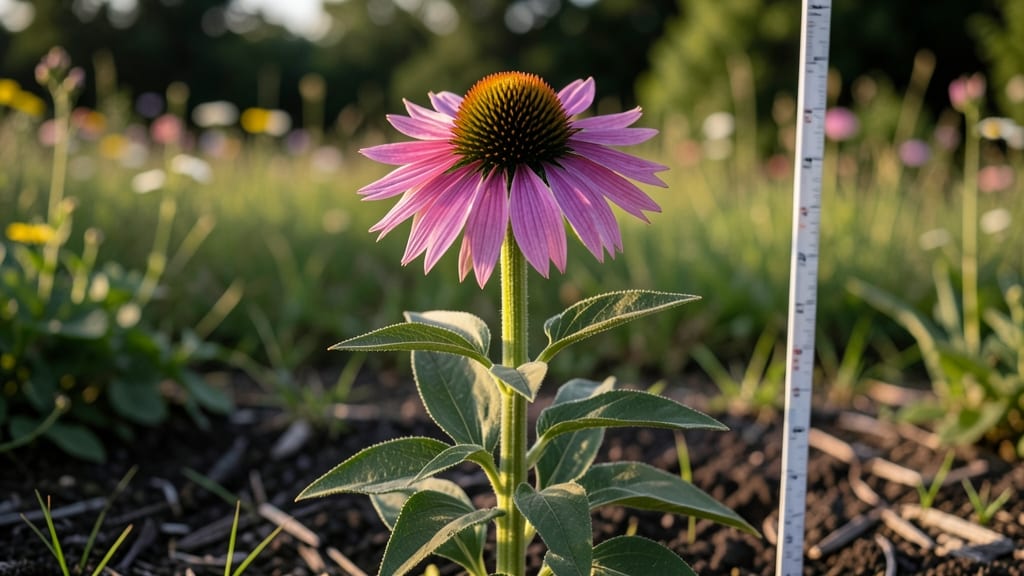
Coneflowers grow between 1 and 4 feet tall, depending on the variety and growing conditions 🌼 — a range that makes them incredibly versatile for any garden design.
If you're planning your garden layout or dreaming of a pollinator-friendly landscape, knowing how tall coneflowers grow is key to creating a balanced and thriving space. Whether you want them as a bold statement or tucked into borders, their height can transform your outdoor vision.
Most common varieties like Echinacea purpurea reach 2 to 3 feet, while dwarf types stay under 2 feet and tall selections can stretch toward 4 feet. This variety means you can use them as focal points, mid-height accents, or even background plants in larger gardens.
In this guide, I’ll break down exactly how tall different coneflower types grow, what affects their height, and how to use that information to create a garden that’s both beautiful and functional.


Coneflower height by variety: from compact to towering options
When designing your garden, choosing the right coneflower variety isn't just about color—it's also about height control. Some varieties stay compact enough for container gardens, while others reach towering heights perfect for backyard focal points.
Let's explore the mature heights of popular coneflower types so you can plan with confidence.
The most common species, Echinacea purpurea, typically grows between 2 to 4 feet tall, but varieties within this species can vary dramatically. For example, 'Magnus' reaches 4 feet, while 'White Swan' stays around 2 feet.
Understanding these differences helps you create balanced garden layers—whether you're designing a pollinator meadow or a container arrangement.
🌼
Dwarf varieties like 'Green Envy' (1–2 ft) are perfect for container gardening or adding color to small spaces. Meanwhile, towering types like 'Magnus' (3–4 ft) make stunning backdrop plants or cut flower arrangements.
If you're working with a raised bed, medium-height varieties like 'White Swan' (2–3 ft) offer versatility for mixed borders.
For pollinator gardens, taller varieties attract bees and butterflies from a distance, while shorter ones provide easy access for ground-level visitors. Mixing heights creates a natural layered effect—think of 2-foot coneflowers behind 1-foot lavender with 3-foot black-eyed Susans in the back.
This strategy works beautifully in both perennial beds and wildflower meadows.
If you're growing coneflowers in containers, prioritize dwarf or semi-dwarf varieties like 'Green Envy' or 'Yellow Coneflower'. These stay within 1.5 to 2.5 feet, making them ideal for balcony gardens or patio pots.
Just ensure your container has drainage holes and a minimum 12-inch depth to accommodate their root systems.
🌿
Pro tip: Spacing matters for height control. Tall varieties like 'Magnus' need 24–36 inches between plants to avoid crowding and flopping. Compact types like 'Green Envy' thrive with just 12–18 inches of space. Always check the plant tag for variety-specific spacing recommendations to prevent overgrowth and disease.
When selecting coneflowers, consider your garden's vertical space. A 4-foot variety planted near a 3-foot fence
How coneflower height affects garden design and plant pairings
Coneflowers aren't just beautiful pollinator magnets—their height variations let you design layered gardens with purpose. Whether you're creating a dramatic focal point or a soft border edge, choosing the right height class transforms your space from flat to dynamic.
The key is pairing coneflowers with plants that complement their stature without competing for attention.
Taller varieties like Echinacea purpurea 'Magnus' (up to 5 feet) thrive as backdrop plants, while dwarf types such as 'White Swan' (1-2 feet) shine in container gardens or forefront borders. The secret? Matching their height to nearby plants creates visual harmony while maximizing your garden's impact.
- 🌿 Dwarf Cones (1-2 ft) → Perfect for front borders or container gardens. Pair with lavender (1 ft) or catmint (1.5 ft) for a textured edge.
- 🌼 Medium Cones (2-3 ft) → Ideal for mid-height layers in pollinator gardens. Combine with black-eyed Susans (3 ft) or bee balm (2.5 ft) for season-long color.
- 🌳 Tall Cones (3-4+ ft) → Use as backdrop plants behind shrubs like butterfly bush (4-5 ft) or ornamental grasses (3-6 ft) for height contrast.
- 🪴 Container Pairings → Mix dwarf coneflowers with salvia (1 ft) and calendula (1.5 ft) for portable pollinator pockets.
For a low-maintenance border, plant 2-foot coneflowers alongside sedum (1-2 ft) and Russian sage (3-4 ft). This combo delivers year-round interest with minimal upkeep. The textural contrast between coneflower's ruffled petals and sedum's succulent foliage adds depth instantly.
In woodland gardens, where shade limits height, opt for dwarf varieties like 'Green Envy' (1-2 ft) and pair them with hostas (1-2 ft) or heucheras (1-2 ft).
The soft color palette creates a naturalistic feel while keeping the space airy. Pro tip: Add mulch to retain moisture and suppress weeds in these shaded spots.
Don’t overlook seasonal transitions—taller coneflowers (3-4 ft) provide winter structure when paired with ornamental grasses (3-5 ft). Their dried seed heads offer textural interest long after blooms fade. For summer impact, interplant with annuals like cosmos (2-3 ft) to fill gaps until coneflowers reach their peak.
Remember: Height isn’t just about size—it’s about proportion. A 4-foot coneflower next to a 6-foot shrub feels dwarfed, while pairing it with a 3-foot shrub creates balance. Experiment with odd-number groupings (e.g., 1 tall, 2 medium) for a natural, organic look that feels intentional.
Your garden will thank you with pollinators, color, and year-round beauty! 🌼