
Flowers
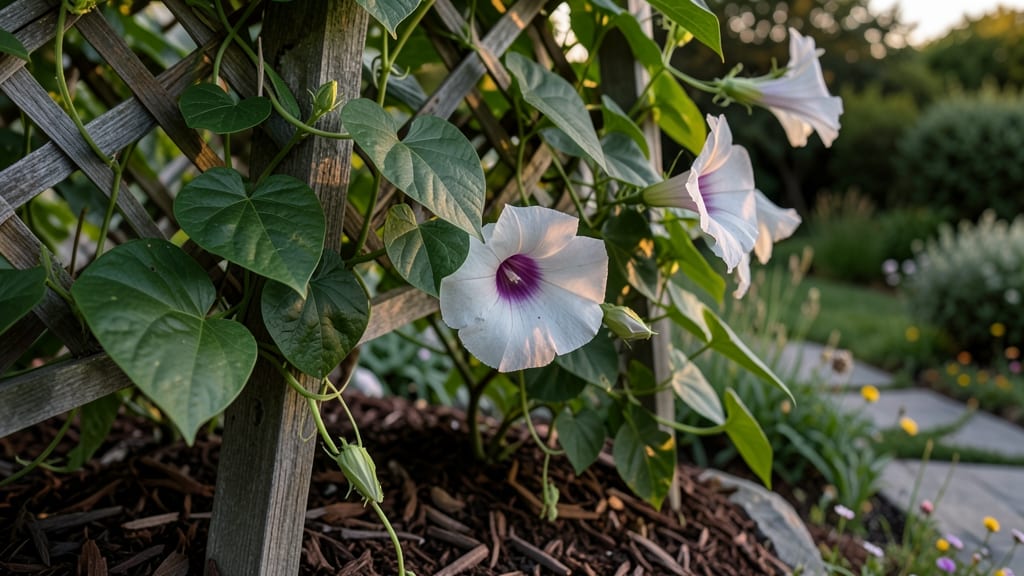
Moonflower vine length by variety: growth heights compared
Moonflowers (Ipomoea alba) are fast-growing vines that can transform your garden with their fragrant night-blooming flowers. But not all varieties reach the same mature height—some sprawl like trailing vines while others climb aggressively.
Understanding these differences helps you choose the perfect variety for your space, whether it’s a container garden or a backyard trellis. Let’s break down the vine lengths by popular moonflower types.
The average moonflower vine length ranges from 5 to 15 feet, but growth habits vary widely. Some varieties stay compact, ideal for patio containers, while others need tall structures like arbors or pergolas.
Below, we compare the most common moonflower varieties and their climbing vs. trailing tendencies, plus how to support them for maximum blooms.
If you’re growing moonflowers in containers, opt for trailing varieties like 'Evening Sky' or 'White Dawn', which max out at 8 feet when trained. These work well in large pots (15+ gallons) with a small trellis or cage.
For vertical gardens, climbing types like 'Moonlight' or 'Purple Moonlight' will reach their full 10–15 foot potential on a sturdy pergola or arbor.
Growth rates vary by variety, but most moonflowers grow 6–12 inches per week under ideal conditions (full sun and well-draining soil). In cooler climates (USDA Zones 6–9), they thrive as annuals, while in warmer zones, they may self-seed and return yearly.
This means their vine length can expand dramatically if left unchecked—always plan for their mature size!
For small spaces, consider pruning regularly to encourage bushier growth and more blooms. Pinch back tips when vines reach 3–4 feet to promote side shoots. In containers, rotate the pot occasionally so all sides get sunlight, preventing lopsided growth.
Moonflowers are heavy feeders, so feed them every 4–6 weeks with a balanced fertilizer (5-10-10) during the growing season.
One common mistake is assuming all moonflowers need the same support. Trailing varieties like 'Evening Sky' can sprawl on the ground, while climbers like 'Moonlight' will flop without a trellis. Always match the vine length of your chosen variety to your garden’s vertical space.
For example, a 6-foot fence is perfect for 'White Dawn' but too short for 'Purple Moonlight'.
Moonflowers also benefit from mulching to retain moisture and prevent weeds, which can compete for nutrients and stunt growth. Use 2–3 inches of organic mulch (like straw or shredded leaves) around the base, keeping it 6 inches away from the stem to avoid rot.
This helps maintain consistent soil moisture, which is critical for their rapid vine elongation.
If you’re growing moonflowers in urban gardens or balconies, choose dwarf or trailing types and use wall-mounted trellises or hanging baskets with support cages. These setups work well for 'Evening Sky' or '
How to control moonflower growth: pruning and support tips
Moonflowers (Ipomoea alba) can become rambunctious climbers if left unchecked, reaching 10–15 feet in a single season. Without proper pruning and support, their vines sprawl chaotically, smothering nearby plants or collapsing under their own weight.
The key to managing their growth lies in strategic pruning and choosing the right trellis—both of which encourage bushier blooms and prevent overgrowth.
If you’re growing moonflowers in containers, their height can be controlled more easily, but they’ll still need vertical support to thrive. Without it, vines become leggy and produce fewer flowers. I’ve learned that regular pruning—especially after blooming—stimulates new growth and keeps your moonflowers looking intentional, not wild.
⚠️ callout-warning
Without support, vines can double in length (10–15 ft) in just 60 days. Overcrowding leads to fewer blooms and disease risk from poor airflow. Prune aggressively in early summer to redirect energy into bushier growth and more flowers—not just height!
Start by installing a trellis as soon as vines reach 12–18 inches tall. A strong arbor or perforated metal fence works best—avoid flimsy wire mesh, which can snap under the weight.
For containers, use a small trellis or cage (5–6 feet tall) to limit vertical sprawl while still encouraging upward growth.
When pruning, cut back leggy vines by one-third in early summer to promote branching. Remove spent blooms regularly to encourage more flowers. I avoid heavy pruning in late summer, as this can stunt fall blooms. Instead, focus on light trimming to maintain shape and airflow.
Common mistakes include waiting too long to prune (leading to unruly vines) or over-pruning (which reduces flowering). I’ve also seen gardeners skip trellises entirely, only to watch their moonflowers flop onto the ground. A 5-foot tall trellis is ideal for most varieties—it provides enough support without overwhelming small gardens.
For container gardening, choose large pots (12+ inches deep) with drainage holes and add compost to retain moisture. Moonflowers in containers need more frequent watering (every 2–3 days in summer) and weekly feeding with a balanced fertilizer (5-10-10). This keeps them thriving without letting them outgrow their space.
With the right pruning schedule and support system, you can enjoy lush, fragrant moonflowers without sacrificing garden space. Just remember: prune early, support often, and water deeply—your vines will reward you with nighttime magic every summer! 🌙✂️🪴