
Fertilization
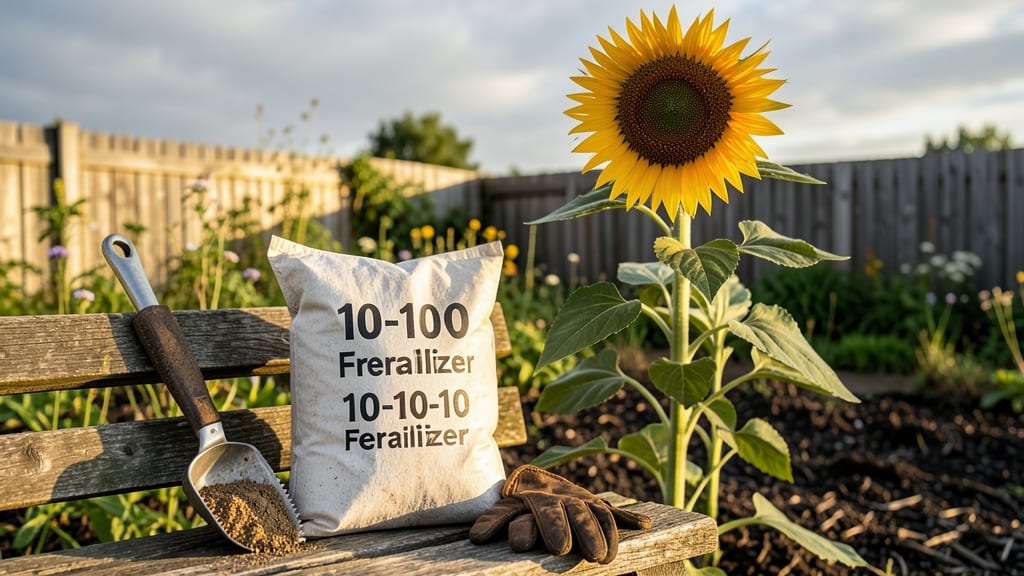
Using the right sunflower fertilizer 10-10-10 is the key to unlocking their full towering potential—think 12-foot giants instead of stunted stems.
Here’s the catch: tossing granules at random won’t cut it. Too early, and you risk burning delicate roots; too late, and your blooms won’t reach their peak. The secret lies in timing—and knowing how much to use at each stage.
Sunflowers thrive on balanced nutrition, and a 10-10-10 blend delivers equal parts nitrogen, phosphorus, and potassium to fuel every phase of growth. But without the right schedule, you’ll end up with leggy stems or weak blooms.
Below, I’ll walk you through the exact when and how to apply this fertilizer—plus how to spot over- or under-feeding before it’s too late. Your sunflowers will thank you with record-breaking height and vibrant blooms.
How 10-10-10 fertilizer boosts sunflower growth (and when to apply it)
Sunflowers thrive when their nutrient needs are met at the right time, and 10-10-10 fertilizer delivers balanced nitrogen, phosphorus, and potassium to fuel every growth stage. The 10-10-10 ratio supports root development, stem strength, and flowering—critical for those iconic towering blooms.
But timing is everything: apply too early or too late, and you risk stunted growth or premature flowering. Let’s break down how this fertilizer works and when to use it for maximum impact.
First, let’s decode the 10-10-10 NPK ratio. The numbers represent nitrogen (N) for leafy growth, phosphorus (P) for root and flower development, and potassium (K) for overall plant health and disease resistance. Sunflowers need all three nutrients in equal parts during different phases of growth.
For example, nitrogen helps young plants establish strong leaves, while phosphorus later supports bud formation and flowering. Without this balance, your sunflowers might grow lanky stems or produce weak blooms.
Here’s the key: 10-10-10 fertilizer is ideal for sunflowers because it provides even nutrition without overwhelming the plant. Unlike high-nitrogen fertilizers that can cause excessive leaf growth at the expense of flowers, this balanced approach ensures steady, healthy development.
However, the application window is critical. Applying it too early can lead to leafy but weak stems, while applying it too late might not give your sunflowers the final boost they need for those show-stopping blooms.
The early growth stage (first 4-6 weeks) is when sunflowers need nitrogen the most. This is the time to apply your first dose of 10-10-10 fertilizer—right at planting. Think of it as giving your sunflowers a nutrient kickstart so they can develop strong roots and lush foliage.
Without this initial boost, seedlings may struggle to compete with weeds or establish themselves in the soil. I’ve seen sunflowers in my own garden bolt to 3 feet tall in just 6 weeks when fertilized correctly during this phase.
As your sunflowers enter the vegetative stage (around 6-8 weeks), they’ll need that balanced NPK ratio to support rapid stem elongation. This is where the second application of 10-10-10 fertilizer comes into play.
At this point, your sunflowers should be 6 inches tall or taller, and you’ll want to apply another 1 tablespoon per plant, working it gently into the soil around the base. Avoid getting fertilizer on the leaves, as this can cause burn.
I always water the soil before applying fertilizer to help distribute the nutrients evenly.
Here’s a pro tip: Avoid fertilizing during the flowering stage. Once your sunflowers start forming buds, they need less nitrogen and more phosphorus and potassium to support bloom development.
Over-fertilizing at this stage can lead to excessive leaf growth at the expense of flowers or even premature flowering, which means smaller, less vibrant blooms. Instead, switch to a low-phosphorus fertilizer or simply compost to provide micronutrients without overloading the plant.
One common mistake I see is overapplying 10-10-10 fertilizer in hopes of bigger blooms. But too much nitrogen at the wrong time can result in weak stems that snap under the weight of large flowers.
To avoid this, always follow the recommended dosage—1 tablespoon per plant at planting and again at 6 inches tall—and monitor your sunflowers for signs of stress, like yellowing leaves or stunted growth. If you notice these symptoms, flush the soil with water to dilute excess nutrients.
For container-grown sunflowers, reduce the fertilizer amount to ½ tablespoon per plant since pots have limited soil volume. In my experience, container sunflowers benefit from weekly diluted fertilizer (1 teaspoon per gallon of water) during the vegetative stage rather than heavy doses all at once.
This approach mimics natural nutrient release and prevents root burn. Always ensure your containers have drainage holes to avoid salt buildup from fertilizer.
Finally, remember that soil quality plays a huge role in how well your sunflowers respond to 10-10-10 fertilizer. If your soil is clay-heavy or compacted, nutrients may not be readily available to the roots.
In this case, amend your soil with compost or sand before planting, and consider using a slow-release fertilizer
Step-by-step guide: applying 10-10-10 fertilizer for sunflowers (with dosage charts)
Sunflowers thrive when fed the right nutrients at the right time, and 10-10-10 fertilizer delivers balanced nitrogen, phosphorus, and potassium to fuel their dramatic growth. The key is applying it in stages—starting with seedlings, then boosting vegetative growth, and finally prepping for flowering.
Too much too soon can cause burned roots or weak stems, while too little leaves your sunflowers struggling to reach their full height potential.
Before you begin, test your soil’s pH (ideal range: 6.0-7.0 for sunflowers) and amend it if needed. Sandy soil drains too quickly, while clay holds moisture and nutrients too long.
A light compost mix can improve both texture and fertility. Once your soil’s ready, follow these precise steps to fertilize your sunflowers for maximum height and vibrant blooms.
Step-by-Step Application Guide
-
1
Seedling Phase (2-4 weeks after germination)
Dilute 1 tbsp 10-10-10 in 1 gallon of water. Apply ½ cup per plant around the base, avoiding direct contact with leaves. This encourages root development without overwhelming young seedlings. -
2
Vegetative Growth (4-8 weeks after planting)
Switch to a full-strength solution: 1 tbsp 10-10-10 per 1 gallon of water. Use 1 cup per plant every 4-6 weeks to support stem elongation. Water deeply afterward to prevent salt buildup. -
3
Pre-Flowering (8-10 weeks after planting)
Reduce to ½ the dose: ½ tbsp 10-10-10 per gallon. Apply ½ cup per plant to shift energy toward bloom development rather than foliage. Stop fertilizing once buds form to avoid leggy stems. -
4
Monitor for Over/Under-Fertilization
Watch for yellowing leaves (nitrogen deficiency) or crispy brown edges (burn from excess salts). Weak stems or slow growth? Adjust your dosage or frequency. Mulch with straw to retain moisture and regulate soil temperature.
Timing matters just as much as dosage. Always apply 10-10-10 fertilizer in the morning so roots have time to absorb nutrients before the heat of the day. Avoid fertilizing when sunflowers are already stressed—like during drought or extreme heat—because their roots won’t absorb nutrients efficiently.
Instead, focus on deep watering to revive them before resuming feeding.
For container-grown sunflowers, halve the fertilizer amounts since pots dry out faster and nutrients leach away more quickly. Mix a slow-release granular 10-10-10 into the soil at planting for a steady nutrient supply, then top-dress with a light application every 6 weeks.
This method reduces the risk of nutrient runoff while keeping your sunflowers consistently fed.
Pro tip: Pair your 10-10-10 applications with a micronutrient boost like Epsom salt (1 tbsp per gallon of water) every 8 weeks to prevent magnesium deficiency, which causes yellowing between leaf veins.
Your sunflowers will reward you with sturdy stems, lush foliage, and showstopping blooms that reach their full height potential.