
Watering
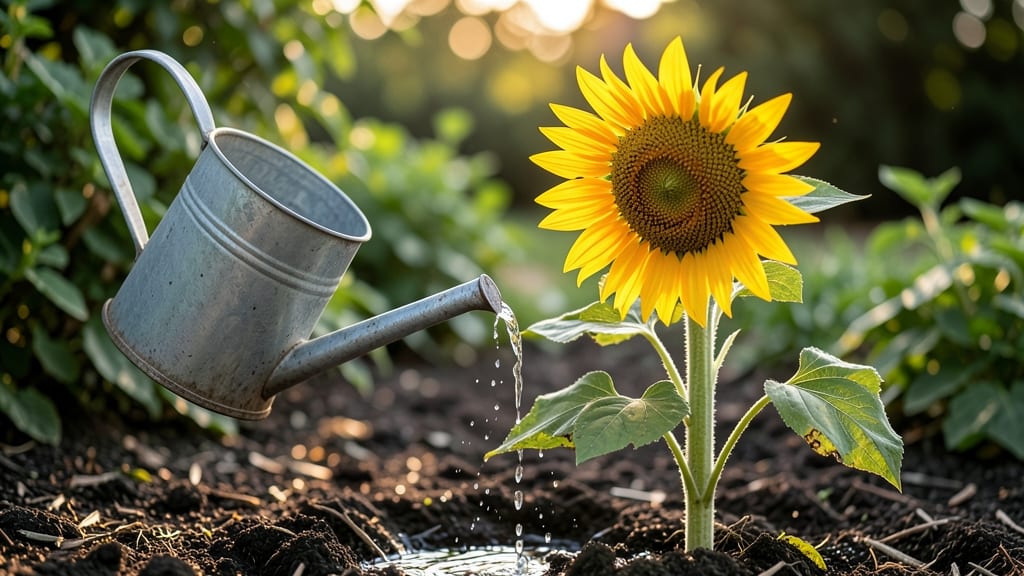
Understanding your sunflower’s water needs is the secret to growing those 6-foot-tall giants with minimal effort — and skipping the guesswork about whether they’re thirsty or drowning.
Sunflowers may seem low-maintenance with their towering stems and vibrant blooms, but their deep roots demand a precise watering strategy — too little stunts growth, while overwatering invites rot. Mastering their hydration needs is the key to cultivating sunflowers that reach their full, sun-soaked potential.
Think you can just "water when it looks dry"? Not quite. Young sunflowers need consistent moisture, while mature plants thrive on deep, infrequent soaks that encourage those roots to dive deeper.
I’ll break down the exact schedule by growth stage, plus how to spot the subtle signs of over- or under-watering before it’s too late.
Ready to ditch the trial-and-error? You’ll learn how to time your watering for maximum efficiency, the best tools to use, and even how mulch can save you hours of work while keeping those 🌻 stalks sturdy and strong.


How much water do sunflowers need weekly by growth stage?
Sunflowers thrive on consistency, but their water needs shift dramatically as they grow—from delicate seedlings to towering giants. Understanding these stages helps you avoid root rot or stunted growth. I’ve grown sunflowers for years, and the key is matching watering to their root depth and growth demands at each phase.
Young sunflowers need frequent, shallow watering to keep their topsoil moist, while mature plants with deep roots can handle longer dry spells. The challenge? Overwatering smothers their roots, while underwatering stresses them during critical blooming. Let’s break it down by stage so you can water with confidence.
| Growth Stage | Water Frequency | Soil Moisture Target | Key Notes |
|---|---|---|---|
| Germination (0-14 days) | Daily (keep moist) | Top 1-2 inches damp | Seeds need consistent moisture to sprout; avoid puddles. |
| Vegetative (2-6 weeks) | Every 2-3 days | Top 3-4 inches moist | Focus on deep watering to encourage root growth. |
| Flowering (6-10 weeks) | Every 3-5 days | Top 4-6 inches moist | Reduce frequency but increase water volume for blooms. |
| Seed Development (10-12+ weeks) | Every 5-7 days | Top 6+ inches moist | Let soil dry slightly between waterings to prevent rot. |
During the germination stage, your sunflower seeds need constant moisture—think of it like a spa day for tiny roots. I’ve seen seeds fail to sprout when soil dries out, even for a day.
Use a spray bottle or drip irrigation to keep the top 1-2 inches of soil consistently damp. Avoid overhead watering, which can wash seeds away or cause fungal issues.
As seedlings emerge, they enter the vegetative stage, where rapid growth demands more water. Here, I switch to a deep watering schedule—soaking the soil to 3-4 inches deep every 2-3 days.
This encourages roots to grow downward rather than staying shallow. A simple test: Stick your finger 2 inches into the soil; if it’s dry, it’s time to water.
When buds form and flowers bloom, your sunflowers are in the flowering stage, a phase where watering becomes strategic. Overwatering now can lead to bud drop, while too little causes flowers to wilt before they open.
I aim for 3-5 days between waterings, focusing on the base of the plant to avoid wetting leaves (which attracts pests). Early morning watering is ideal—it gives foliage time to dry before nightfall.
The final stage, seed development, is where patience pays off. Mature sunflowers can handle slightly drier soil, but their roots still need 1-2 gallons per week during hot spells. I reduce frequency to every 5-7 days and let the top 6 inches dry out between waterings.
This prevents stem rot while ensuring seeds mature properly. Mulching with straw helps retain moisture without smothering the plant.
Climate plays a huge role in adjusting these guidelines. In hot, dry regions, I water more frequently but shallowly to prevent runoff, while in humid areas, I space waterings further apart to avoid fungal diseases.
Always check the soil—if it’s clay-heavy, it holds moisture longer; sandy soil drains faster and needs more frequent watering.
One common mistake I’ve seen is treating sunflowers like annuals with shallow roots. Their taproots can reach 6 feet deep, so surface watering is ineffective. Instead, use a soaker hose or watering wand to deliver moisture directly to the root zone. This mimics natural rainfall and reduces waste.
Pro tip: If your sunflowers start wilting in the afternoon, it’s often a sign of underwatering, but check for overwatering too—yellowing leaves or mushy stems mean you’re drowning them.
Adjust your schedule based on the plant’s response, not just the calendar. With the right approach, your sunflowers will reward you with vibrant blooms and heavy seed heads.
Signs of overwatering vs underwatering in sunflowers (and how to fix it)
Sunflowers 🌻 thrive on consistent moisture, but their deep taproots mean they can’t tolerate soggy soil or drought stress. The first sign of trouble often appears in the leaves—whether they’re yellowing, wilting, or developing unsightly spots.
As a gardener, I’ve learned to watch for these early warning signs before they become irreversible damage.
Overwatering is just as harmful as underwatering because it suffocates roots and invites fungal diseases like powdery mildew. You’ll notice mushy stems, dark brown lesions, or leaves turning yellow while remaining soft to the touch. Meanwhile, underwatered sunflowers show crispy edges, drooping foliage, and stunted growth—their way of signaling thirst.
💧 Sunflower Water Needs: Pros & Cons
- Soak 12-18 inches deep
- Encourages strong root growth
- Prevents shallow roots
- Leads to stem rot
- Causes yellow leaves
- Attracts pests
- Reduces evaporation
- Prevents fungal growth
- Allows foliage to dry
- Causes wilting
- Stunts stem growth
- Leads to flower drop
If your sunflower’s leaves feel spongy and pull away from the stem, it’s a red flag for overwatering. To fix this, reduce watering frequency and improve drainage by amending soil with perlite or sand.
For underwatered plants, deep water the soil until moisture reaches 12 inches down—this mimics natural rainfall and encourages roots to grow deeper.
Another key difference? Overwatered sunflowers develop white mold on leaves, while underwatered ones show brown, crispy edges. In my garden, I’ve saved struggling sunflowers by adjusting my watering schedule based on these visual cues.
For example, during hot summers, I water every 3-4 days instead of sticking to a rigid routine.
Yellowing leaves can mean either too much or too little water, but the location of the discoloration helps diagnose the issue. Lower leaves yellowing often signals overwatering, while upper leaves wilting point to underwatering. Always check the soil moisture by sticking your finger 2 inches deep—if it’s damp, hold off on watering.
For mature sunflowers, I’ve found that mulching with straw helps retain moisture while preventing soil compaction. This simple trick reduces the need for frequent watering and keeps roots cool and hydrated.
If you notice blackened stems or mushy bases, act fast by trimming affected areas and improving airflow around the plant.
Remember, sunflowers are resilient once you correct hydration issues. With the right adjustments—whether deep watering or draining soggy soil—your sunflowers will bounce back stronger. Keep an eye on those leaves and stems, and your towering giants will thank you with vibrant blooms all season long. 🌻