
Light Requirements
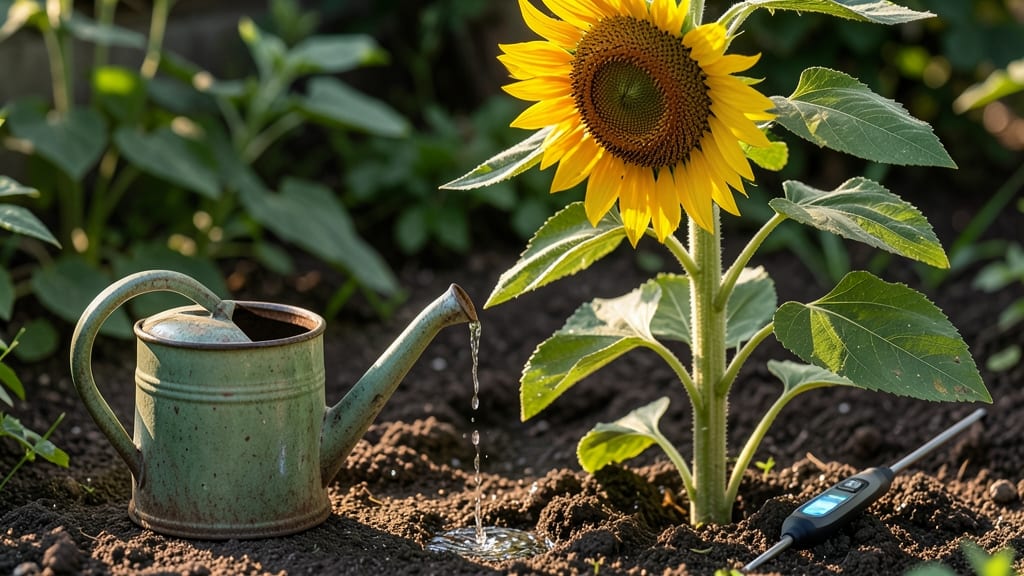
Mastering the sunflower water requirements is essential for growing thriving plants—too little causes wilting, while too much leads to rot.
You might think sunflowers are drought-tolerant, but their water needs shift dramatically from seedling to seed head. A daily soak in early growth can turn deadly later, while skipping water during flowering stunts your harvest. Here’s how to match their thirst to their age.
From germination to maturity, sunflowers demand precision in their watering routine. Skimp now, and you’ll lose your tallest blooms before they even open. Overdo it, and root rot will silence your plants before they reach their full height.
In this guide, I’ll break down the exact watering schedule by growth phase, plus how to adjust for containers, drought, or heavy clay soil. By the end, you’ll know when to water, how much to give, and what to watch for in the soil.


Sunflower water requirements by growth stage: exact daily needs
Sunflowers are drought-tolerant once established, but their water needs vary dramatically depending on the growth stage. Seedlings require consistent moisture, while mature plants can handle longer dry spells.
Understanding these shifts prevents wilting, root rot, or stunted growth. Let’s break down the exact daily water requirements for each phase, including soil moisture indicators and environmental adjustments.
For seedlings (weeks 1-3), keep soil evenly moist—never soggy. Young roots are shallow and delicate, so water lightly every 1-2 days using a spray bottle or gentle stream.
Overwatering at this stage causes fungal diseases like damping-off. Aim for 1/2 inch of water per week, adjusting for rain.
As plants enter the vegetative stage (weeks 4-6), they need deep, infrequent watering to encourage strong root development. Water every 2-3 days, soaking the soil 6-8 inches deep.
Check moisture by inserting your finger—if the top inch feels dry, it’s time to water. Mulch with 2-3 inches of straw to retain moisture and suppress weeds.
During flowering (weeks 7-10), sunflowers demand the most water to support bud development and pollen production. Increase frequency to every 1-2 days, delivering 1-1.5 gallons per plant per watering.
Monitor soil closely—wilting petals signal thirst, while yellowing leaves may indicate overwatering. Early morning watering minimizes fungal risks.
In maturity (weeks 11+), sunflowers become drought-tolerant as their roots deepen. Reduce watering to every 3-5 days, delivering a deep soak weekly. Let the top 3-4 inches of soil dry between waterings to prevent seed rot.
If growing for seeds, taper off watering entirely 2 weeks before harvest to improve seed quality.
Environmental factors like temperature and humidity significantly impact water absorption. In hot, dry climates, increase frequency by 20-30% and water early morning or late evening to reduce evaporation.
Conversely, in humid regions, reduce watering slightly to prevent fungal diseases. Always adjust for rainfall—skip watering if 1 inch of rain occurs in 24 hours.
Use the "finger test" to gauge soil moisture: Insert your finger 1-2 inches deep. If it feels dry, water thoroughly. For container-grown sunflowers, check soil moisture daily—they dry out 3x faster than in-ground plants. Use pots with drainage holes and water when the top inch is dry.
Overwatering is just as harmful as underwatering. Signs include yellow leaves, mushy stems, or white mold on soil. If you notice these, reduce watering immediately and improve drainage.
For sandy soil, water more frequently but less deeply, while clay soil holds moisture longer—water less often but more thoroughly.
Pro tip: Group sunflowers with companion plants like beans or marigolds to improve soil moisture retention. These plants create microclimates that reduce evaporation and suppress weeds. Always water at the base of the plant to avoid wetting foliage, which attracts pests and diseases.
By tailoring your watering routine to each growth stage, you’ll ensure your sunflowers grow tall, healthy, and productive. Pay attention to soil moisture, adjust for your climate, and soon you’ll be harvesting bountiful blooms and seeds—all while keeping your sunflowers thriving with minimal stress. 🌻
Common sunflower watering mistakes and how to avoid them
Sunflowers are hardy plants, but even they can suffer from watering mistakes that stunt growth or invite disease. The most common error? Overwatering seedlings while they’re still fragile. Too much moisture smothers their roots, causing rot before they even get a chance to establish.
On the flip side, neglecting mature plants during heatwaves can lead to wilting and poor seed development.
Another frequent misstep is watering at the wrong time. Evening watering keeps leaves damp overnight, creating the perfect conditions for fungal infections like powdery mildew. Even well-intentioned gardeners often skip mulching around the base, which helps retain moisture and regulate soil temperature—critical for sunflowers with deep roots.
🌱
⚠️ Watering Warning Signs
Watch for these red flags in your sunflowers:
- Yellowing leaves = Overwatering or poor drainage
- Wilted stems = Underwatering or heat stress
- Blackened stems at base = Root rot from excess moisture
- Dry, crispy edges = Inconsistent watering
Act fast—correcting these issues early can save your plants!
Let’s start with the seedling stage, where precision is key. Newly sprouted sunflowers need consistent moisture but hate soggy soil. A common mistake is using a sprinkler system instead of a gentle watering can.
The force can dislodge tiny seedlings or create uneven water distribution. Instead, use a fine-mist spray or drip irrigation to keep the soil evenly damp without disturbing the roots.
As sunflowers transition to the vegetative stage, many gardeners make the opposite error—underwatering because they assume the plants are "too big" to need frequent water. In reality, sunflowers this size require 1-2 inches of water per week, especially in sandy soil that drains too quickly.
Check moisture by sticking your finger 2 inches deep; if it’s dry, it’s time to water deeply.
During flowering and seed development, heat stress becomes a major factor. Without enough water, buds may abort before opening, or seeds won’t fill out properly. A pro tip: Water at the base rather than overhead to prevent petals from getting soggy.
If your area experiences high temperatures (above 90°F), increase watering to every other day and apply mulch to lock in moisture.
Finally, mature sunflowers often get overlooked once they’ve stopped growing. Even though they’re established, they still need regular deep watering—especially if you’re growing them for seed production. Skipping this step can lead to shallow roots and poor seed quality.
Aim for 1 gallon of water per plant per week during dry spells, and always water in the early morning to reduce evaporation.
💧