
Flowers
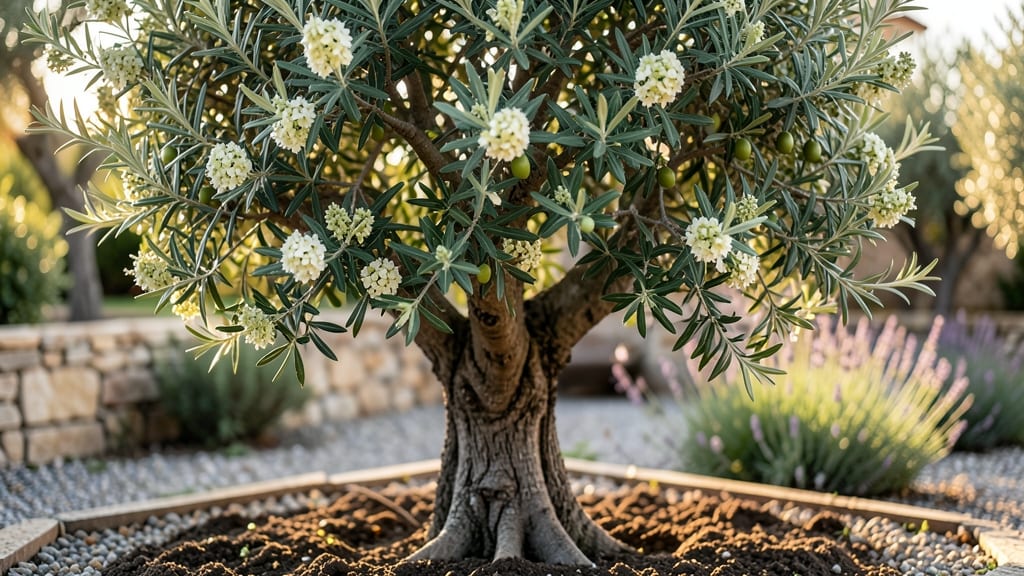
Olives flower in late spring—typically between April and May—when warm Mediterranean air kicks in and the tree’s energy shifts from dormancy to growth.
Did you know these delicate white blooms last just 3 to 5 days? Miss that window, and you might end up with fewer olives—or none at all.
In my Zone 9 garden, a late frost once wiped out an entire season’s potential harvest, and I’ve since learned to watch the weather like a hawk.
Understanding your olive tree’s flowering cycle isn’t just about patience—it’s the key to predicting harvests, planning pruning, and even choosing the right variety for your climate. Coastal areas like California often see earlier blooms, while inland spots might delay until June.
Here’s how to spot the flowers, what to do if pollination fails, and the simple tricks to give your 🫒 tree the best shot at a full harvest—no guesswork required.
Olive flowering season: exact timing by Mediterranean climate zones
Olive trees typically flower in late spring, but the exact timing depends heavily on your Mediterranean climate zone. In most regions, you’ll see those fragrant white blossoms appear between mid-April and early May.
However, coastal areas often bloom 1-2 weeks earlier than inland zones due to milder temperatures and higher humidity levels. Understanding these variations helps you predict harvests and plan pruning schedules for optimal olive production.
Temperature plays a critical role in triggering olive flowering. Trees need a prolonged warm spell—ideally 60-70°F (15-21°C) for several weeks—to break dormancy and initiate blooms.
Coastal regions like Southern Spain or California may see flowers as early as March, while inland areas in Greece or Italy might delay until late May. Rainfall also matters: too much moisture can delay flowering, while drought stress might stunt bloom production entirely.
Here’s how regional climate zones influence olive flowering timing, including key differences between coastal and inland Mediterranean areas:
If you’re growing olives in California, expect flowering to align closely with Southern Spain due to similar climate patterns. However, inland areas like Central California may see delays if spring temperatures fluctuate.
In contrast, coastal Greece or Italy often enjoy earlier blooms thanks to warmer ocean currents and consistent humidity. These regional differences mean gardeners should monitor local weather forecasts and adjust pruning or irrigation plans accordingly.
Rainfall timing also shifts flowering windows. In drier Mediterranean zones, like parts of Southern Italy or Greece, olives may wait for spring rains to trigger blooms. Too much rain, however, can wash away pollen or cause flower drop.
In California’s arid climate, supplemental irrigation in late winter can encourage earlier flowering. Always aim for consistent moisture without waterlogging the soil during the 3-4 weeks before blooms appear.
For gardeners in cooler Mediterranean zones (USDA 8), like parts of Southern France or coastal California, late frosts pose a major risk. A single cold snap below 32°F (0°C) can destroy olive flowers before they even pollinate.
To protect your tree, consider frost cloths or drip irrigation to raise soil temperatures. Early-flowering varieties like ‘Arbequina’ or ‘Frantoio’ are better suited for these areas, as they bloom slightly later when frost risks subside.
Humidity levels further refine flowering timing. In high-humidity coastal areas, like Southern Spain or Greece, olive flowers may appear 10-14 days earlier than in dry inland zones. The extra moisture helps pollen transfer and reduces stress on the tree.
If you’re in a low-humidity area, like Central California, hand-pollination might be necessary to ensure fruit set. Simply shake branches gently during peak bloom to disrupt wind patterns and improve cross-pollination.
Knowing your exact flowering window helps with harvest predictions. Olives typically take 6-9 months to mature after flowering, so a mid-April bloom in coastal Spain might mean harvests in October or November.
In contrast, a late May bloom in inland Italy could delay harvests until January. Use this timing to schedule pruning in late winter (just before buds swell) and fertilization in early spring
How to identify olive tree flowers and ensure successful pollination
Spotting olive tree flowers can be tricky since they’re tiny—just 0.1 inches wide—and blend into the tree’s silvery-green foliage. These fragrant white blossoms appear in clusters along the branches, often hidden until they release their sweet scent.
I’ve learned to look for them in late spring, typically April to May, when the tree’s growth slows after winter. Their short 3-5 day bloom window makes timing critical for pollination success.
Olive flowers are perfectly self-pollinating, but environmental factors like wind disruption or poor weather can reduce fruit set dramatically. In my California garden, I’ve seen years where heavy rains during bloom washed away pollen, leaving me with barely any olives that season.
Understanding these flowers—and their fragile pollination process—is key to a productive harvest. Let’s break down how to spot them and what to do next.
- 🌸 When to Look: Late spring (April-May in USDA Zones 8-10), when new shoots appear but haven’t hardened yet.
- 🔍 How to Spot: Tiny white flowers in 3-10 flower clusters along branches; use a magnifying glass if needed.
- ⏰ Bloom Duration: Just 3-5 days—miss this window, and you’ll need to hand-pollinate for success.
- 🌬️ Pollination Triggers: Bees and wind are primary pollinators; humidity below 60% improves pollen transfer.
- ⚠️ Warning Signs: No fruit set after 6 weeks or premature fruit drop indicate failed pollination.
Once you’ve identified the flowers, act fast. Olive trees rely on insects (like bees) and gentle wind to transfer pollen, but urban or indoor gardens often lack these helpers. I’ve had success using a soft paintbrush to hand-pollinate flowers in the morning when they’re most receptive.
Gently brush the brush over one cluster, then another, ensuring pollen sticks to both male and female flowers (which grow together on the same tree). Repeat this process for 3 consecutive days during the bloom window.
Avoid disturbing the tree during bloom, especially on windy days, as this can shake off pollen. I’ve also noticed that overhead irrigation during flowering can wash away pollen, so I switch to drip irrigation or water at the base.
If you see fruit drop within 4-6 weeks after flowering, it’s a red flag—this often means pollination failed. In that case, consider reapplying hand-pollination or checking for pests like olive fruit flies that may be interfering.
For gardeners in cooler climates (like Zone 7), timing is even trickier. If spring arrives late, delay pruning until after flowering to avoid removing potential fruit. I’ve planted early-flowering varieties like ‘Arbequina’ to extend my bloom window and increase chances of success.
Pair this with winter chill hours (300+ hours below 45°F) to ensure the tree’s energy is focused on flowering rather than recovery.
With patience and attention to detail, you can turn your olive tree’s delicate flowers into a bountiful harvest. Start by monitoring for bloom, then protect those flowers like they’re gold—because in olive cultivation, they are. 🌿