
Blooming
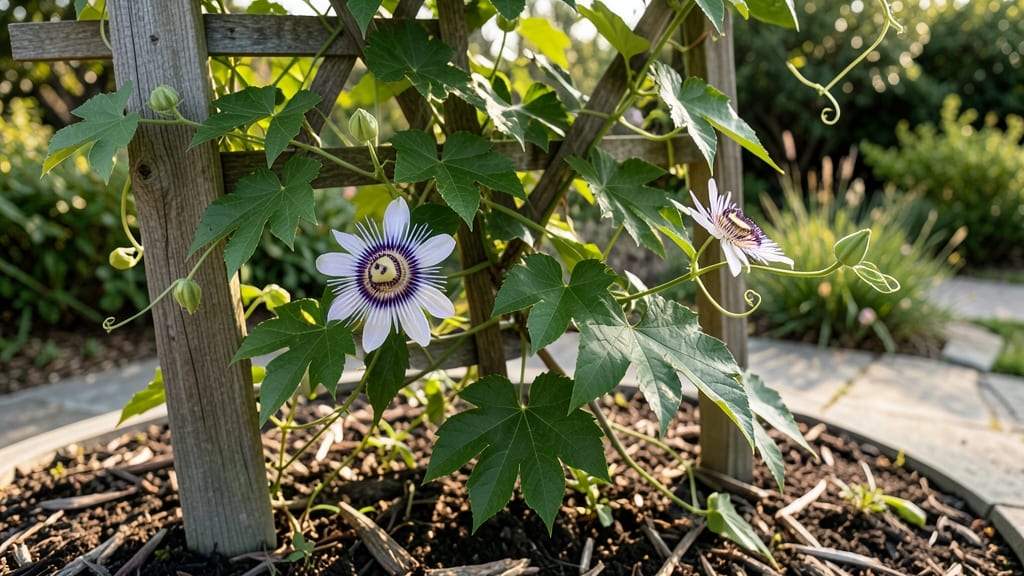
Passionfruit flowers bloom in spring and early summer—typically between March and June in frost-free zones, with a second flush in late summer for subtropical varieties 🍈.
Picture this: your vine covered in exotic, fragrant blooms—but miss the timing, and you’ll watch them drop without setting fruit. The exact months depend on your USDA zone, and a few simple adjustments can shift that window by weeks.
In Zones 10–12, flowering starts as early as February, while Zone 9 vines wait until April. Temperature drops or too much nitrogen can stall blooms, but the right care turns a sparse vine into a flowering powerhouse.
Below, I’ll break down the month-by-month schedule for your region, plus the 3 key triggers that force more frequent blooms—so you’re not left with empty flowers come harvest time.
Passionfruit flowering timeline by USDA Zone: month-by-month guide
Passionfruit vines (Passiflora edulis) thrive in USDA Zones 8–11, but their flowering windows shift dramatically depending on your location. In Zone 11 (e.g., Miami, Hawaii), you’ll see blooms year-round with peaks in spring and fall.
Meanwhile, Zone 8 growers (like those in Las Vegas) only get a 3-month window—typically April–June—before summer heat stunts production. Understanding these patterns helps you align pollination with fruit set for a bountiful harvest.
Temperature fluctuations are the primary trigger for passionfruit blooms. A 5–10°F drop at night after warm days signals vines to produce buds. Commercial growers in Florida’s Everglades time their irrigation to mimic this pattern, while California’s Central Valley growers rely on coastal breezes to cool evenings naturally.
Without this temperature contrast, flowers may appear but fail to set fruit.
Early varieties like ‘Panama Yellow’ bloom first in Zone 9–11, often as early as February, while late varieties such as ‘Purple Giant’ may wait until June in cooler zones. This staggered timing extends your harvest season from summer through early winter. Below, I’ve mapped out the month-by-month flowering windows by zone, plus pro tips from growers who’ve mastered the art of seasonal synchronization.
| USDA Zone | Primary Flowering Window | Secondary Blooms | Key Temperature Trigger | Pro Tip |
|---|---|---|---|---|
| Zone 8 (e.g., Las Vegas) | April–June | September–October | 50–75°F nights, 80–90°F days | Use shade cloth in summer to prevent heat stress. |
| Zone 9 (e.g., Phoenix, Orlando) | February–April, August–October | Year-round with gaps | 60–70°F nights, 85–95°F days | Prune aggressively after winter to encourage spring flush. |
| Zone 10 (e.g., San Diego, Tampa) | January–March, July–September | May, November | 65–75°F nights, 90–100°F days | Hand-pollinate in humid months to boost fruit set. |
| Zone 11 (e.g., Miami, Hawaii) | Year-round (peaks spring/fall) | None | 70–80°F nights, 85–95°F days | Mulch heavily to retain moisture during dry seasons. |
In Zone 8, where winters can dip below 40°F, passionfruit vines go dormant and may drop all foliage. However, the roots survive, and new growth (and flowers) emerges as temperatures rise.
I’ve seen commercial growers in Las Vegas use row covers to protect vines during late-winter cold snaps, ensuring an earlier bloom in April. Without protection, expect delays until May or June.
For Zone 9–11, the story changes. Here, humidity becomes the limiting factor. In Florida’s humid summers, passionfruit vines may produce sterile flowers—those without reproductive parts—due to excess moisture. Growers combat this by pruning lower leaves to improve air circulation and applying fungicide sprays preventatively.
In California’s coastal zones, the opposite problem occurs: low humidity can cause buds to drop before opening. A simple fix? Mist the vines in the early morning to mimic dew.
One critical mistake I’ve seen repeated is assuming all passionfruit varieties bloom at the same time. ‘Panama Yellow’, for example, flowers 6–8 weeks earlier than ‘Purple Giant’ in the same zone.
This means if you’re growing both, you’ll have two harvest windows: one in late summer and another in early winter. To maximize yield, plant both early and late varieties—or even grafted hybrids—to stagger your blooms and extend fruiting.
How to induce earlier or more frequent passionfruit blooms
Passionfruit vines can be finicky about flowering, but with the right techniques, you can trigger earlier and more abundant blooms. The key lies in understanding how light exposure, pruning, and nutrient balance influence their natural cycle. Many gardeners accidentally delay blooms by overdoing nitrogen or neglecting pruning—let’s fix that!
First, light exposure is non-negotiable. Passionfruit vines need 6+ hours of direct sunlight daily to initiate flowering. If your vine is in partial shade, relocate it immediately—even a few hours less sunlight can stall blooms.
In cooler zones like USDA Zone 9, supplement with grow lights during winter to mimic longer days.
- 1 Prune aggressively in late winter to remove old, woody growth and encourage new, flowering shoots. Cut back 20-30% of the vine to redirect energy to blooms.
- 2 Use a 5-10-10 NPK fertilizer when buds form to boost phosphorus for flowering. Avoid high-nitrogen feeds—they promote leaves, not blooms. Apply every 4-6 weeks during active growth.
- 3 Control water stress by letting soil dry slightly between waterings. Mild drought stress in late summer triggers blooms, but don’t let the vine wilt—aim for consistent moisture with occasional dry spells.
- 4 Remove spent flowers (deadheading) to prevent energy waste. This signals the vine to produce new blooms faster. Use clean pruners to avoid disease spread.
Another common mistake? Over-fertilizing with nitrogen in early spring. Too much nitrogen leads to lush foliage but fewer blooms. Instead, switch to a low-nitrogen, high-phosphorus fertilizer once buds appear. I’ve seen passionfruit vines in Zone 10 double their blooms in just 6 weeks after adjusting their fertilizer ratio!
For cooler climates (Zone 9), protect your vine from late-winter frosts by covering it with frost cloth. Cold snaps can shock the plant and delay blooms. In warmer zones (Zone 11), focus on pruning and water management—these vines often bloom year-round if given the right care.
Finally, hand-pollinate flowers in the morning when bees are least active. Use a small brush to transfer pollen from male to female flowers (look for the 3-styled stigma—it’s the fuzzy, cone-shaped center). This ensures higher fruit set and more consistent harvests.
With these techniques, you’ll see earlier, more frequent blooms and a heavier fruit harvest in just one growing season. Happy gardening! 🌱