
Container Gardens
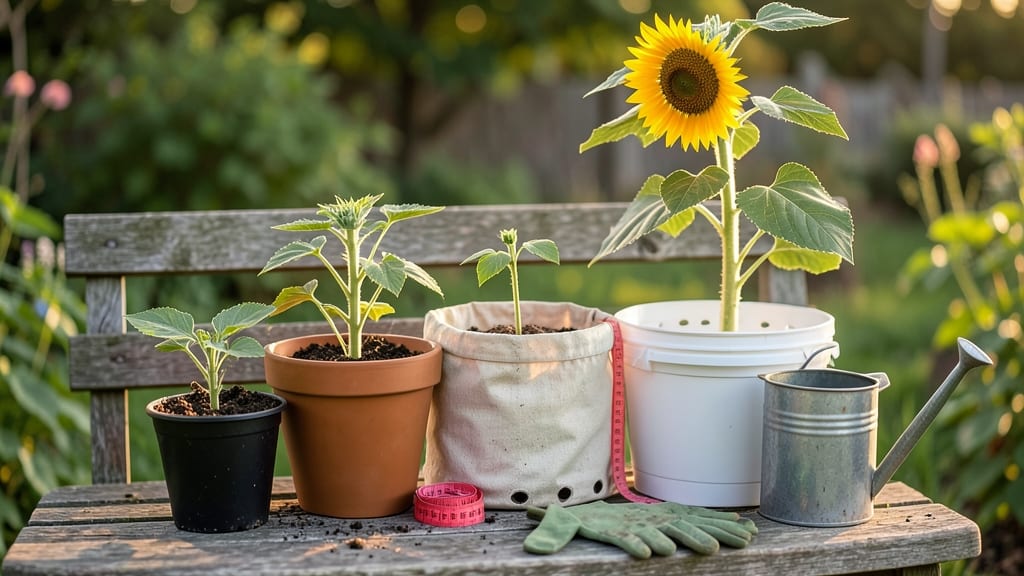
To grow tall, sturdy sunflowers 🌻 in containers, you’ll need a pot that matches their root space needs—starting with at least 12 inches in diameter for dwarf varieties and scaling up to 24+ inches for giants.
If you’ve ever watched a sunflower tower over your balcony only to snap its stem or topple its pot, you know the struggle—choosing the right container size is half the battle for happy, healthy sunflowers.
Sunflowers are heavy drinkers, and their roots need room to spread. A pot that’s too small leads to root-binding, stunted growth, or—worst of all—a wobbly stem that can’t support its own weight.
But the right size isn’t just about diameter; depth matters too, especially for varieties that grow 10 feet or taller.
Below, I’ll break down the exact pot sizes for each sunflower type, plus pro tips for drainage, stability, and staking so your sunflowers thrive without becoming a toppling hazard.
Sunflower pot size guidelines: root space requirements by variety
Choosing the right pot size for sunflowers isn't just about aesthetics—it's about giving their roots the space to thrive without risking toppling. Sunflowers are heavy feeders, and their roots need room to spread and anchor.
A pot that's too small leads to root binding, stunted growth, or even snapped stems when they reach for the sky. Let's break down the pot size requirements for each sunflower variety to keep your plants happy and stable.
Sunflower varieties range from dwarf types (2-4 feet) to towering giants (10+ feet). Each needs a different pot size to support its mature height and root system.
For example, a dwarf sunflower like 'Teddy Bear' only needs a 5-gallon pot, while a giant variety like 'Mammoth' requires a whopping 25+ gallons. The rule of thumb? The pot should be at least 12-18 inches deep and wide enough to accommodate the plant's root spread.
For dwarf sunflowers, a standard 5-gallon pot (12-14 inches deep) works perfectly. These varieties have shallower roots and won’t need as much space. However, even dwarf types benefit from pots that are slightly wider than they are deep—this encourages root spread and stability.
If you’re growing multiple dwarf sunflowers in one container, space them 12 inches apart to avoid competition for nutrients.
Medium-height sunflowers, like 'Autumn Beauty,' need more room to grow. A 15-gallon pot (16-18 inches deep) is ideal, but don’t skimp on width. These varieties develop robust root systems that can outgrow their containers if the pot is too narrow.
Aim for a pot that’s at least 16 inches in diameter to give roots room to branch out. This prevents the plant from becoming top-heavy as it reaches for the sun.
Giant sunflowers are the heavyweights of the sunflower world, and their pots need to match their stature. A 25-gallon or larger pot (20+ inches deep) is essential for varieties like 'Mammoth.' These pots must also be wide—20-24 inches in diameter—to support the plant’s massive root system.
Without enough space, giant sunflowers can become unstable and prone to snapping under their own weight. For extra stability, place these pots on the ground or use a sturdy stand.
Root depth is just as critical as pot diameter. Sunflowers have taproots that grow deep to access water and nutrients. A pot that’s too shallow (less than 12 inches deep) will stunt root growth and limit the plant’s ability to thrive.
For giant varieties, deeper pots (20+ inches) allow the taproot to develop fully, which is key for supporting the plant’s towering height. If you’re repurposing containers, ensure they meet these depth requirements—even a deep but narrow pot won’t work for sunflowers.
One common mistake is assuming that larger pots always mean better growth. While it’s true that sunflowers need room, overly large pots can retain too much moisture, leading to root rot. Always choose a pot that’s proportional to the plant’s mature size.
For example, a 5-gallon pot is perfect for a dwarf sunflower, but a 25-gallon pot would be overkill and could cause waterlogging. Use pots with drainage holes and avoid saucers that trap excess water at the bottom.
If you’re growing sunflowers in containers for the first time, start with the minimum recommended pot size for your variety. You can always upgrade to a larger pot later in the season if the plant outgrows its container.
Just be sure to acclimate the plant to its new home by watering it
How to prevent sunflowers from toppling: stability tips for tall varieties
Sunflowers are nature’s skyscrapers, but their towering beauty comes with a challenge—staying upright. When grown in containers, even the sturdiest stems can snap under their own weight or blow over in wind.
The key to preventing toppling lies in proper weight distribution, structural support, and smart anchoring techniques tailored to your pot size.
I’ve learned from experience that a 5-gallon pot works for dwarf varieties (2–4 ft), but standard sunflowers (8–16 ft) need at least a 15-gallon container to support their roots and prevent leaning.
Without the right setup, your sunflower’s dramatic flop can happen faster than you think—especially in windy conditions or when the pot sits on uneven surfaces.
⚠️ Pot Size Pitfall: Too Small = Toppling Risk
A 10-gallon pot may seem big, but it’s insufficient for standard sunflowers. Their roots need 12+ inches of depth and 18+ inches of diameter to anchor properly. For giant varieties (12+ ft), opt for 20+ gallons or a half-barrel planter to distribute weight and prevent tipping.
🌱 Pro Tip: Fill the bottom 1/3 of the pot with gravel or broken pottery to improve drainage and add stability.
For weight distribution, I swear by the "bottom-heavy" trick. Place a brick or cinder block in the bottom of the pot before adding soil. This lowers the center of gravity, making it harder for wind or the sunflower’s weight to tip the container.
For balcony gardens, secure the pot to the railing with bungee cords or a pot stabilizer—trust me, a 12-foot sunflower will test your balcony’s strength!
Structural support is non-negotiable for tall varieties. Use bamboo stakes or metal cages inserted at planting time. Tie the stem loosely with soft plant ties (not wire!) every 1–2 feet up the stem.
Pro move: Add a second stake on the opposite side of the pot to create a triangle support system, which distributes pressure evenly and prevents snapping in storms.
Don’t overlook DIY hacks for smaller pots. For 5–10 gallon containers, create a cage from chicken wire or repurpose a tomato cage to encircle the sunflower. For fabric grow bags, line the inside with wire mesh before planting to add rigidity.
I’ve even seen gardeners use old wire hangers bent into a spiral for lightweight support—genius and budget-friendly!
Finally, watering habits play a role in stability. Overwatered soil becomes heavy, increasing toppling risk. Water deeply once every 3–5 days (depending on pot size) and always in the morning to let excess moisture evaporate.
Mulch the soil surface with straw or pebbles** to retain moisture without adding weight. With these tricks, your sunflowers will stand tall—no dramatic collapses here!