
Watering
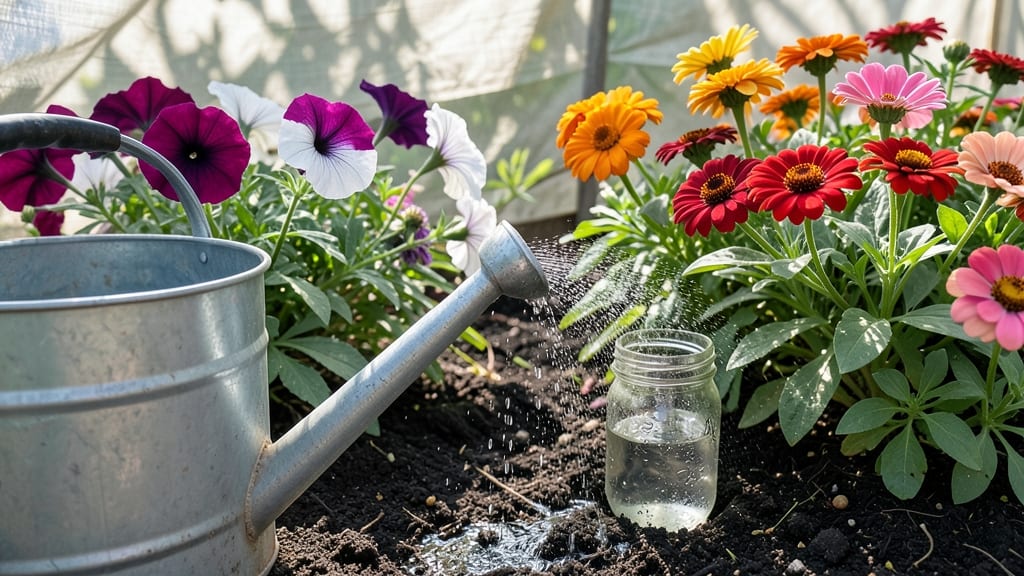
To water flowers outside the right amount means checking soil moisture before your watering can even comes out — because overwatering is the silent killer of blooms, and most gardeners never know they’re doing it.
You might think wilting means drought, but 90% of the time, it’s actually too much water smothering roots. The fix? A simple finger test in the soil that takes 10 seconds — no guesswork, no wasted gallons.
In this guide, I’ll break down the perfect watering schedule for your 🌸 flowers, from sandy soil that drains too fast to clay that holds moisture like a sponge. You’ll also learn the three signs your plants are thirsty (and when to ignore them).
By the end, you’ll water with confidence — no more soggy soil, no more guesswork, just perfect moisture every time, whether you’re in Zone 6a or a hotter climate.
How often to water flowers based on soil type and season
Your flowers' watering needs aren't one-size-fits-all—they depend on your soil type and the seasonal climate. Sandy soil drains quickly, while clay holds moisture for days, and loam strikes the perfect balance. Understanding these differences prevents both root rot and wilting blooms before they start.
Seasonal shifts also demand adjustments: spring blooms need consistent moisture, summer heatwaves require daily deep watering, and autumn transitions slow water needs. The key is matching your watering schedule to your soil's capacity and the plant's current growth stage—not guesswork.
Here's a science-backed breakdown of how often to water outdoor flowers based on your soil type and seasonal conditions, with a focus on root health and bloom longevity:
For clay soil, the challenge is preventing waterlogging. Test moisture by sticking your finger 2 inches deep—if it feels damp, wait.
In sandy soil, roots dry out fast, so water early in the morning to reduce evaporation. Loamy soil is the gardener's dream, holding moisture without drowning roots, but still requires deep watering every few days.
Seasonal shifts demand even more attention. During spring blooms, focus on consistent moisture to encourage root growth. When summer heatwaves hit, switch to daily deep watering in the morning to prevent stress. As autumn transitions approach, reduce frequency but maintain moderate moisture to prep plants for dormancy.
Mulching is your secret weapon—it retains soil moisture, regulates temperature, and reduces evaporation. Apply a 2-3 inch layer of organic mulch (like shredded bark or straw) around your flowers, keeping it 2 inches away from stems to prevent rot.
This simple step can cut your watering needs by 30-50%.
Watch for visual cues like wilting leaves or yellowing petals, which signal underwatering. Conversely, mushy stems or fungus growth mean you're overdoing it. Adjust your schedule based on these signs—your flowers will thank you with longer-lasting blooms and healthier roots.
Pro tip: Use a moisture meter for precision, especially in containers or sandy soils. These $10 tools give instant readings, eliminating guesswork. For organic gardeners, the finger test works just as well—just dig down 1-2 inches near the plant's base.
Remember, root health is the foundation of bloom longevity. When roots struggle, flowers wilt faster and produce fewer blooms. By matching your watering to your soil type and seasonal needs, you'll create an environment where your flowers thrive all season long.
Start with your soil's natural tendencies, then fine-tune based on weather patterns. A dry spring might require more frequent watering, while a cool summer could mean less. Stay flexible, and your garden will reward you with vibrant, long-lasting blooms. 🌸
5 Soil test tricks to determine when flowers need watering
Most gardeners water flowers based on a schedule—like every morning at 8 AM—but that approach often leads to either soggy roots or parched petals. Instead of guessing, I’ve learned to read my soil like a book.
The key is understanding moisture levels at the root zone, not just the surface. Overwatering is the silent killer of blooms, yet many of us drown our flowers thinking they’re thirsty. Let’s fix that with simple, no-tools tricks.
Before you reach for a moisture meter, try these five hands-on soil tests that reveal exactly when your flowers crave hydration. These methods work for in-ground beds, containers, and hanging baskets alike. The best part?
You already have what you need—just your fingers, eyes, and a little observation time. Start with the easiest test and move to advanced techniques as you build confidence in your watering routine.
🌱 5 Soil Test Tricks for Perfect Watering
- Finger Test (1-inch deep): Stick your index finger 1–2 inches into soil. If it feels dry and crumbly, water deeply. If damp, wait 1–2 days.
- Leaf Wilting Cues: Morning droop = thirsty. Evening wilting = heat stress. Crispy edges = underwatering or overwatering.
- Pot Weight Check: Lift containers—light pots need water. Heavy pots (with drainage holes) may still need checking deeper.
- Soil Color Clues: Dark, moist soil = hold off. Pale, dry soil = water now. Grayish hues often mean overwatered roots.
- Moisture Meter Magic: For precision, use a meter. 30–40% moisture is ideal for most flowers. 0–20% = thirsty; 60%+ = soggy.
Let’s break down the finger test first, since it’s the most reliable and requires zero tools. Push your finger 1–2 inches into the soil—this is where most flower roots thrive. If the soil feels dry and powdery, your plants need water.
If it’s slightly damp but not soggy, hold off for another day. This method works best in well-draining soil, so if you’ve amended your garden beds with compost, you’ll need to water less frequently than in pure clay or sand.
Next, watch your flowers’ leaves for silent SOS signals. Morning wilting is a classic sign of thirst—your plants drank up the moisture overnight and need a refill. But beware: evening wilting often means heat stress, not dehydration.
If leaves feel crispy to the touch, check the soil immediately—this could signal underwatering or overwatering, depending on other symptoms like yellowing or mold.
For container gardeners, the pot weight trick is a game-changer. Lift your pots before watering—if they feel surprisingly light, the soil is dry and ready for hydration. However, if your containers have drainage holes, the top layer might be dry while moisture lingers below.
Always check deeper with your finger to avoid overwatering. Pro tip: Use terracotta pots in summer—they wick away moisture faster, so you’ll know when to water sooner.
Don’t ignore soil color as a quick diagnostic tool. Healthy, moist soil appears dark brown or black, while dry soil looks pale and crumbly. If you spot grayish or white hues, your flowers might be suffering from overwatering or poor drainage.
This is especially common in heavy clay soils or containers without drainage. In these cases, amend with perlite or compost to improve airflow and prevent root rot.
Finally, for the precision approach, invest in a moisture meter (they’re under $20!). These tools measure soil moisture at the root zone, giving you exact data. Aim for 30–40% moisture for most flowers—anything below 20% means it’s time to water, while readings above 60% signal soggy soil.
Use this method for high-value plants like roses or orchids, where perfect moisture balance is critical for bloom longevity and disease prevention.