
Planting
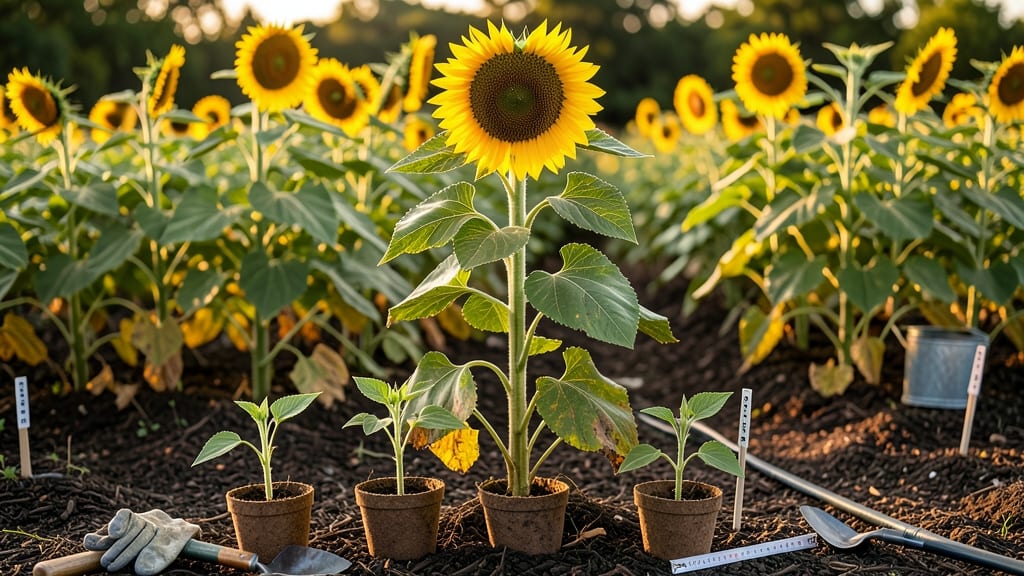
Proper mammoth sunflower plant spacing is the secret to raising those 12-foot giants instead of leggy, weak stems struggling for sunlight.
Picture this: your garden transformed into a golden jungle of towering 🌻 blooms—until you realize your sunflowers are leaning like drunken giants, their stems snapping under their own weight. That’s the cost of spacing them too close together.
Mammoth sunflowers need room to stretch their roots deep and their stems strong, but how much? The answer depends on whether you’re planting in rows, clusters, or a mixed border—and whether you want to avoid fungal diseases that thrive in crowded conditions.
Below, I break down the exact spacing rules for every growth stage, from seedlings to full bloom, plus how to adjust if your garden is small or your soil is heavy. No more guessing—just proven layouts for sunflowers that reach their full potential.

Optimal mammoth sunflower spacing by growth stage: from seedlings to towering giants
Mammoth sunflowers need strategic spacing at every growth stage to reach their full 12–16-foot potential. Too close, and they’ll compete for nutrients, leading to weak stems and poor blooms.
Too far apart, and you waste garden space. My proven spacing guidelines adapt as your plants grow, ensuring strong roots, sturdy stems, and vibrant flowers.
Spacing isn’t one-size-fits-all—it changes from seedlings to vegetative growth to flowering maturity. Below, I’ll break down the exact distances for each stage, plus companion planting tips to keep pests and diseases at bay while maximizing your garden’s sunlit real estate.
For small gardens, plant mammoth sunflowers in clusters of 3–4 with 3 feet between clusters. This creates a dramatic focal point while saving space. In large gardens, use a grid layout with 4 feet between plants and 6 feet between rows to prevent shading and disease spread.
Companion planting is your secret weapon against pests. Pair mammoth sunflowers with marigolds to deter nematodes or bush beans to fix nitrogen in the soil. Avoid planting near tomatoes or potatoes, which compete for the same nutrients and attract similar pests.
Watch for powdery mildew when plants are crowded. Thin out overgrown seedlings immediately and space mature plants at least 3 feet apart to improve airflow. If mildew appears, spray with a baking soda solution (1 tsp baking soda + 1 quart water) every 7–10 days until it clears.
In container gardens, use large pots (18+ inches wide) with one plant per container. Place pots on a raised bed or deck to prevent root competition with surrounding plants. Add compost-rich potting mix and fertilize lightly every 4 weeks to support their towering growth.
Proper spacing isn’t just about aesthetics—it’s about plant health. Overcrowded mammoth sunflowers develop weak stems that snap in wind or rain. By giving them room to grow, you’ll enjoy sturdy, sun-filled giants that dominate your garden with grace and resilience.
Start with 6-inch spacing for seedlings, then adjust as they grow. Your mammoth sunflowers will reward you with vibrant blooms and plump seeds—all while keeping your garden thriving and pest-free.
Common spacing mistakes that stunt mammoth sunflower growth (and how to fix them)
Mammoth sunflowers need 18–24 inches of space between plants to reach their full 12–16-foot height. When crowded, they compete for nutrients, sunlight, and water, leading to stunted growth and fewer blooms.
The most common spacing mistakes—like planting seeds too close together or ignoring mature plant size—can turn your sunflower patch into a tangled mess instead of a towering garden centerpiece.
Even experienced gardeners sometimes make these errors, especially when working with limited garden space. Overcrowding doesn’t just affect the sunflowers; it also invites pests and diseases by creating humid, shaded conditions.
If your mammoth sunflowers are showing signs of stress—like yellowing leaves, weak stems, or small blooms—spacing is likely the culprit.
⚠️ callout-warning
⚠️ Warning Signs of Poor Spacing
Your mammoth sunflowers are too close if you see:
- 🌱 Stems leaning or bending unnaturally
- 🌿 Lower leaves yellowing or dropping early
- 🌻 Blooms smaller than expected (under 6 inches wide)
- 🌡️ Soil stays damp longer than usual (poor airflow)
Fix it now: Thin seedlings to 18–24 inches apart or transplant mature plants to a larger area.
One of the biggest mistakes is assuming seedling spacing is the same as mature plant spacing. Seeds can start 6 inches apart, but by the time they reach 6 feet tall, they’ll need at least 18 inches between stems.
Skipping this adjustment leads to competition for sunlight, causing the tallest stems to shade out their neighbors and grow lopsided.
Another common error is planting in tight rows without accounting for wind exposure. Mammoth sunflowers need room to sway in the breeze, which strengthens their stems. If rows are too narrow (under 3 feet apart), stems become top-heavy and prone to snapping, especially in storms.
For maximum stability, space rows 3–4 feet apart and plant in a north-south orientation to minimize shading.
If you’re dealing with an already overcrowded patch, don’t panic—there are fixes! Start by removing the weakest stems first, leaving only the healthiest, straightest plants. For stubborn clumps, carefully transplant excess plants to a new location, being sure to water deeply afterward to reduce shock.
You can also prune lower branches to improve airflow, but avoid cutting more than 10% of the foliage at once.
For future plantings, use a spacing guide like this: 18–24 inches between plants in a square or triangular grid (not rows). This layout maximizes sunlight exposure and airflow while keeping stems upright.
If your garden is small, consider vertical supports or trellises to help mammoth sunflowers grow upward without spreading outward.
With the right spacing, your mammoth sunflowers will thrive, bloom large, and stand tall—turning your garden into a sunflower spectacle instead of a tangled mess. The key is planning ahead and adjusting as they grow to give them the room they deserve! 🌻