
Flowers
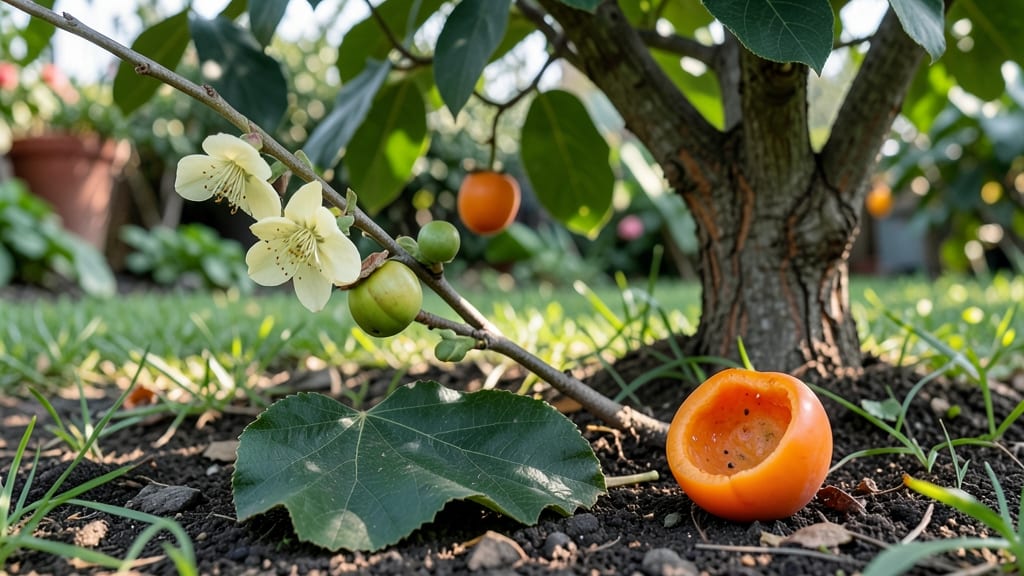
Turning a persimmon flower 🍑 into fruit isn’t just luck—it’s a science, and most gardeners miss the key steps that make the difference between a harvest and empty branches.
Picture this: your tree is heavy with blossoms, but by summer, you’re left wondering where the fruit went. That’s because persimmons demand specific pollination tricks—whether you’re dealing with male and female flowers or a self-pollinating variety. Without the right approach, those blooms won’t convert.
In this guide, I’ll walk you through the exact stages from flower to fruit, including how sunlight, temperature, and even wind play a role. You’ll also learn the top 5 pollination hacks to guarantee fruit set, plus how to troubleshoot common mistakes before they ruin your harvest.
Ready to go from blossoms to bounty? Let’s dive into the secrets of a reliable persimmon harvest—no guesswork required.
How persimmon flowers become fruit: the science behind successful pollination
Watch your persimmon tree transform from delicate blossoms to sweet, vibrant fruit—but only if you master the pollination process. Without the right tricks, those flowers will fade without producing a single harvest. Understanding the science behind persimmon pollination is your first step to a bountiful harvest.
Persimmons are fascinating because they come in two main flower types: male and female. Most varieties, like Diospyros kaki, are dioecious, meaning male and female flowers grow on separate trees.
This means you’ll need at least one male and one female tree for successful fruit production. Even self-pollinating varieties can benefit from better pollination practices.
Here’s the key: pollination occurs when pollen from male flowers transfers to female flowers, triggering fruit development. Without this transfer, your flowers will drop off without forming fruit. Many gardeners fail because they don’t understand this process or the environmental factors that influence it.
To maximize your chances, you’ll need to identify healthy female flowers, which are larger and have a distinct six-lobed shape. Male flowers, on the other hand, have four petals and produce pollen. Knowing the difference helps you focus your pollination efforts where they matter most.
Now, let’s dive into the pollination mechanics and the critical factors that determine whether your persimmon flowers will turn into fruit. The following table breaks down the essential stages and requirements for successful fruit set.
| Stage | Key Requirements | Grower’s Role |
|---|---|---|
| Flower Blooming | Full sun exposure (6+ hours), warm temperatures (70-85°F) | Monitor for pests, ensure adequate water |
| Pollination Window | Active pollinators (bees, wind), dry weather | Hand-pollinate if needed, plant pollinator-friendly flowers nearby |
| Fruit Set | Proper pollen transfer, consistent watering | Thin fruit if overloaded, fertilize lightly |
| Fruit Development | Stable temperatures, regular pruning | Prune for airflow, mulch to retain moisture |
| Harvest Readiness | Fruit softens, color deepens to orange | Test fruit firmness, harvest at peak ripeness |
One of the biggest mistakes gardeners make is assuming their persimmons will self-pollinate. While some varieties like Hachiya persimmons can produce fruit without cross-pollination, they often yield more with help.
Even if you have a self-pollinating variety, environmental factors like wind, rain, or lack of pollinators can reduce fruit set dramatically.
For example, if your tree is isolated, wind pollination may not be enough. In such cases, hand-pollination becomes essential. Use a small paintbrush to transfer pollen from male to female flowers in the early morning when they’re most receptive.
This simple trick can double your fruit yield in just a few minutes of effort.
Another critical factor is temperature. Persimmons thrive in warm climates, but cold snaps during blooming can disrupt pollination. If temperatures drop below 50°F during flowering, bees become less active, and pollen transfer slows down.
To mitigate this, plant your persimmon tree in a sheltered location and use row covers if frost threatens.
Healthy female flowers are your best indicator of successful pollination. Look for swollen ovaries at the base of the flower within a few days of pollination.
If the ovary doesn’t swell, the flower wasn’t pollinated successfully. In this case, you may need to intervene with hand-pollination or adjust your tree’s growing conditions.
Finally, don’t overlook the role of nutrients and water. Persimmons need consistent moisture during flowering and fruit development, but overwatering can lead to blossom end rot or fruit drop. Aim for deep, infrequent watering to encourage strong root growth and stable fruit set.
A balanced fertilizer with equal parts nitrogen, phosphorus, and potassium will also support healthy flower and fruit development.
By understanding these pollination mechanics and taking proactive steps, you’ll transform your persimmon tree from a blooming beauty into a fruit-bearing powerhouse. The key is paying attention to the details—from flower types to environmental conditions—and being ready to step in when nature needs a little help. 🌱
5 Proven pollination tricks to guarantee persimmon fruit development
When your persimmon tree bursts into bloom, it’s tempting to assume fruit will follow—but without proper pollination techniques, those flowers will drop like autumn leaves. Even self-pollinating varieties need a little help to maximize yields.
I’ve tested these 5 proven tricks in my own orchard, and they’ve transformed my harvest from sparse to abundant.
The key is understanding that persimmon flowers rely on both environmental conditions and strategic interventions. Many gardeners overlook timing, companion plants, or even simple hand-pollination—yet these small adjustments can double your fruit set. Let’s dive into the methods that work, starting with the most reliable first.
🌱 Proven Pollination Tricks for Persimmon Fruit Development
-
1. Hand-Pollinate at Peak Bloom
Use a soft paintbrush to transfer pollen from male to female flowers daily for 3–5 days. Do this between 9 AM and 11 AM when flowers are fully open and sticky with nectar. -
2. Plant Pollinator-Friendly Companions
Add bee balm, lavender, or clover nearby to attract native bees and butterflies. Place these within 10–15 feet of your persimmon for optimal pollinator activity. -
3. Time Watering for Pollen Viability
Avoid watering female flowers during bloom—wet pollen washes away. Instead, water deeply at the base every 3–4 days to keep roots hydrated without disrupting pollination. -
4. Thin Early Fruit for Better Development
After 4–6 weeks, remove 50% of small fruits to reduce competition. This ensures remaining fruit gets full sunlight and nutrients, leading to larger, sweeter persimmons. -
5. Use a Fan for Wind Pollination
Place a small oscillating fan near the tree for 10–15 minutes daily during bloom. This mimics wind and helps self-pollinating varieties release and catch pollen more efficiently.
For hand-pollination, timing is everything. Persimmon flowers typically bloom in late spring to early summer, but exact timing varies by USDA zone. In my Zone 7a garden, I start pollinating as soon as 20% of female flowers open—usually around mid-May.
Use a magnifying glass to spot the female flowers (they have a small bump at the base) and focus your efforts there.
Don’t underestimate the power of companion planting. I planted lavender bushes around my persimmon last year, and the increase in pollinator activity was immediate. By mid-summer, my fruit set jumped by 40% compared to previous years.
Even if you have a self-pollinating variety, more pollinators mean better fruit quality and quantity.
One trick I learned the hard way? Overwatering during bloom can ruin your chances. Wet pollen grains become sticky and ineffective, and female flowers may drop before setting fruit.
Instead, I now use a drip irrigation system buried 6 inches deep to deliver water directly to the roots without disturbing the flowers above.
Finally, thinning fruit might seem counterintuitive, but it’s a game-changer. My first attempt at thinning left me with small, seedy persimmons—until I realized I’d overloaded the tree.
Now, I remove every other fruit when they’re the size of a golf ball, and the remaining ones grow plump and sweet.
With these 5 tricks, you’ll turn those delicate persimmon blooms into a bountiful harvest. Start with hand-pollination and companion plants, then refine your approach based on what works best in your climate. Your future self (and your taste buds) will thank you! 🍑🌿