
Flowers
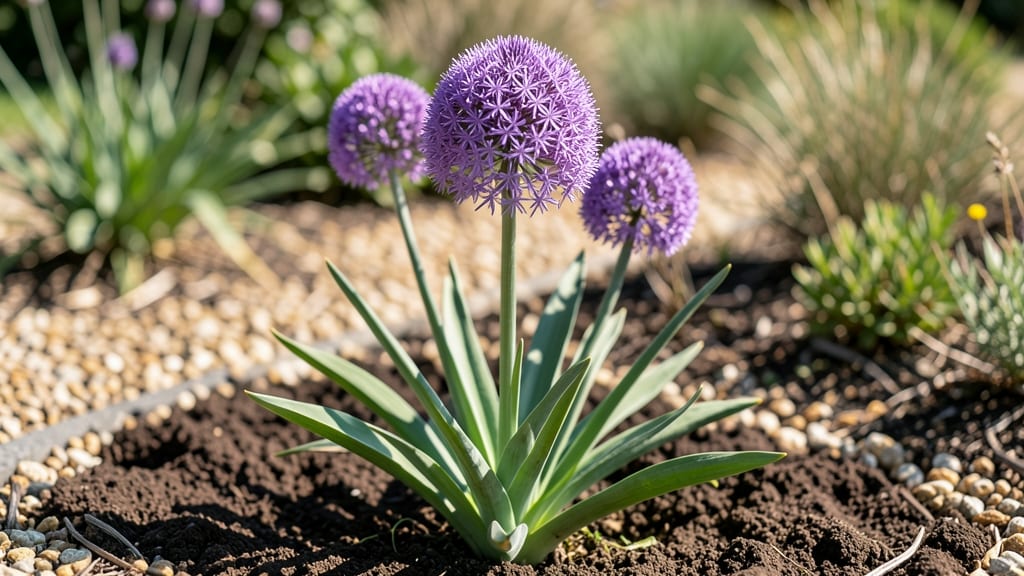
Allium flowers bloom in late spring to early summer, turning gardens into striking purple, white, and pink showstoppers 🌷 — but their timing depends on variety, climate, and when you plant.
Picture this: You’ve waited months for those globe-shaped blooms, only to realize you missed their short 2–3 week window because you didn’t know the exact month. That’s the beauty—and the challenge—of alliums: they reward patience with bold color but demand precision.
From Allium giganteum’s towering spikes in May to Allium sphaerocephalon’s fuzzy pom-poms in June, each type has its own schedule.
Throw in your USDA zone, and those bloom dates can shift by weeks—meaning a late April planting in Zone 6a might bloom in June, while the same bulb in Zone 9 could wait until July.
Here’s the game-changer: I’ll break down exact bloom months by variety, how to adjust for your climate, and the simple tweaks (like sunlight and soil) that can push those flowers to appear weeks earlier—or keep them coming back year after year.
Allium bloom times by popular variety: month-by-month guide
If you’ve ever wondered when allium flowers bloom, timing is key to enjoying their dramatic spherical clusters in your garden. These ornamental onions offer seasonal interest from early spring to late summer, but each variety has its own bloom window.
Knowing these can help you plan perfect pairings with other perennials for continuous color.
Alliums thrive in full sun and well-draining soil, but their bloom periods vary widely. Some burst into color in late spring, while others wait until mid-to-late summer.
Below, I’ve broken down the bloom times for 10+ popular varieties, including heights, color cues, and identification tips to help you spot them in your garden.
Pro Tip: Plant bulbs in fall (September-October) for spring blooms, or in early spring for summer varieties. This ensures they establish roots before their energy-intensive flowering phase.
Notice how Allium giganteum
How climate zones shift Allium bloom times: USDA zones 3–10 explained
Your USDA zone determines when to plant allium bulbs for spring or fall blooms. Cold-hardy varieties like Allium giganteum thrive in Zones 3–7, while tender types such as Allium moly prefer milder Zones 8–10. Even a 5-degree difference can shift bloom times by weeks!
In Zone 3–5, plant bulbs in late September for spring blooms, as frozen soil delays root growth. Meanwhile, Zone 9–10 gardeners can plant as late as December—the mild winters let bulbs establish before spring. Frost sensitivity is the key difference!
Cold-hardy alliums (e.g., Allium schubertii) bloom 2–3 weeks earlier in colder zones due to longer winter dormancy. Tender varieties (e.g., Allium roseum) may bloom 4–6 weeks later in warm zones because they need cooler temps to trigger flowering.
| USDA Zone | Cold-Hardy Varieties | Tender Varieties | Planting Window | Bloom Time |
|---|---|---|---|---|
| 3–5 | Allium giganteum, Allium schubertii | N/A | Late Sept–Oct | May–June |
| 6–7 | Allium cristophii, Allium sphaerocephalon | Allium moly | Oct–Nov | April–May |
| 8–10 | N/A | Allium roseum, Allium karataviense | Dec–Jan | Feb–March |
*Bloom times shift ±2 weeks based on microclimates (e.g., coastal vs. inland).
For Zone 5–7, aim to plant bulbs 6–8 weeks before your average last frost date. In Zone 9–10, extend planting into December to avoid summer heat stress. Always check local frost dates—they’re your gardening calendar!
Pro tip: Use mulch in cold zones to insulate bulbs and trigger earlier sprouting. In warm zones, shade cloth can delay planting until December without risking heat damage. Timing is everything!
If you’re in Zone 8, consider planting half your bulbs in fall (for spring blooms) and half in winter (for early spring color). This two-pronged approach ensures continuous blooms from March to June.
Remember, soil temperature matters more than air temperature. Use a soil thermometer to confirm 50°F before planting—this ensures roots establish before frost. Happy planting!