
Flowers
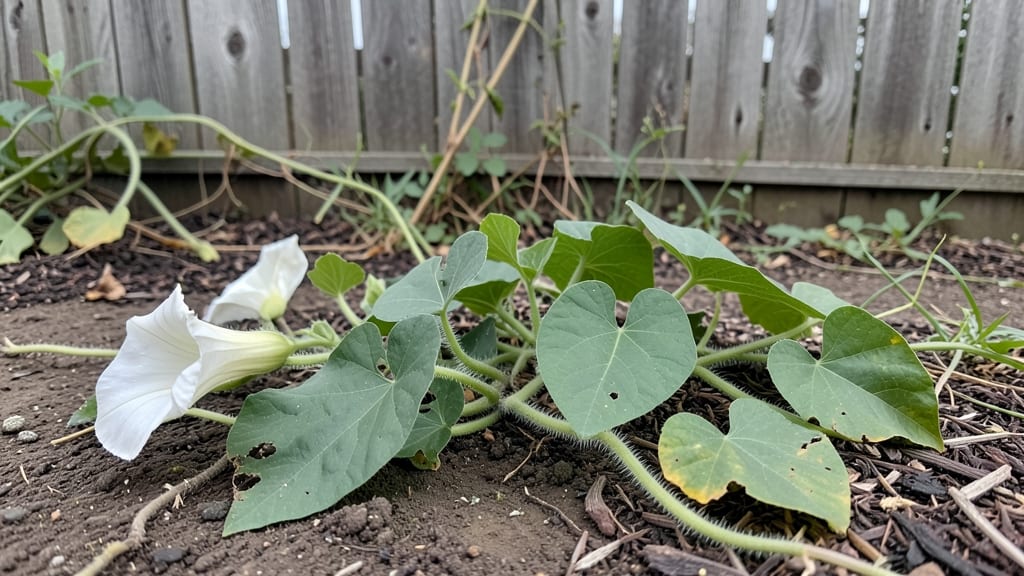
The closed moon flower, or Ipomoea alba 'Moonlight,' blooms with tightly shut white blossoms that only open at night, revealing a fragrant, star-shaped flower. This rare night-blooming vine thrives in warm climates with full sun to partial shade, requiring well-draining soil and consistent moisture. Prune aggressively after flowering to encourage bushier growth and prevent legginess. Deadhead spent blooms to prolong the blooming season, which typically spans summer through early fall. Ensure a sturdy trellis or support structure, as this fast-growing vine can climb 10–15 feet. Avoid overwatering, as soggy roots lead to root rot, and protect from frost, which can kill the plant. Fertilize lightly with a balanced, water-soluble fertilizer every 4–6 weeks during the growing season for optimal health and vibrant blooms.
The closed moon flower’s daytime dormancy isn’t just a quirk—it’s a survival strategy tied to its pollinators. 🌙 Unlike many flowers that rely on bees, this vine attracts nocturnal moths, which are drawn to its intoxicating scent released after dark.
The flower’s tight bud structure also protects its delicate petals from harsh sunlight, preserving their pristine white hue until evening.
This nighttime bloom cycle even helps regulate its growth, as cooler night temperatures signal the plant to open fully, ensuring energy isn’t wasted on daytime blooms that would wilt under the sun.
What’s fascinating is how this behavior compares to other light-sensitive plants. While some, like the sensitive plant (Mimosa pudica), fold their leaves at night, the moon flower’s mechanism is more precise—its blooms respond to both light and temperature shifts.
For gardeners, this means timing matters: if nights stay too warm, the flowers may open prematurely or fail to close properly during the day, signaling stress. 🌡️ Understanding this rhythm helps create the ideal conditions for those signature star-shaped blooms to appear like clockwork each evening.
💡 In This Article
- Why the Moon Flower Stays Closed During the Day
- Step-by-Step Guide to Propagating Closed Moon Flower Vines
Why the moon flower stays closed during the day
The moon flower's daytime closure is governed by a sophisticated biological clock called photoperiodism, where light duration directly controls its blooming cycle. This vine detects decreasing light levels as evening approaches, triggering a cascade of hormonal signals.
The key player here is ethylene gas, which accumulates in the flower buds during daylight hours. As light fades, ethylene levels rise, loosening the petal cells' rigid structures and allowing them to unfurl.
This process is similar to how Mimosa pudica folds its leaves at night, but far more precise in timing.
Temperature plays an equally critical role—cool nighttime temperatures (60-75°F) act as a secondary signal, ensuring the flower opens only when conditions are optimal for pollinators.
The evolutionary advantage is clear: by blooming at night, the moon flower attracts nocturnal moths (its primary pollinators) while avoiding daytime predators like birds. This strategy also conserves energy—keeping petals tightly closed during the sun's heat prevents water loss and protects delicate tissues from UV damage. 🌙
Light intensity further refines this behavior: bright sunlight suppresses blooming entirely, while filtered light (like dappled shade) can encourage partial opening. Gardeners in hot climates often notice their moon flowers struggling to close properly during 100°F+ days, a sign of heat stress.
The plant's closing mechanism involves turgor pressure regulation—water is actively pumped out of petal cells during daylight, causing them to shrink and fold inward, a process reversible only when darkness triggers ethylene release.
Comparing it to Calotropis (another nyctinastic plant), the moon flower's system is more temperature-dependent. While Calotropis primarily responds to light cycles, the moon flower's dual light-temperature sensitivity makes it highly adaptable. This flexibility explains why it thrives in tropical regions where nighttime temperatures can vary dramatically.
The ethylene gas production peaks at dusk, creating a 3-4 hour window before full bloom when the flower emits its signature vanilla-like fragrance to lure pollinators.
What most gardeners don't realize is that artificial lighting can disrupt this natural rhythm. Keeping grow lights on past 8 PM can trick the plant into delaying bloom time, while blackout curtains during the day can force premature opening.
The ideal scenario mimics natural conditions: 12+ hours of daylight followed by complete darkness. This precise environmental control is why moon flowers often struggle in urban settings with extended artificial light exposure.
For those growing moon flowers in containers, maintaining this cycle requires strategic placement—move pots to shaded areas during peak afternoon sun (12-4 PM) to prevent heat stress.
The plant's ability to "reset" its blooming cycle each evening is what makes it so resilient, but pushing its limits with unnatural light patterns can lead to leggy growth and reduced flowering. Understanding these mechanisms lets you create the perfect conditions for those magical nighttime displays. ✨