
Blooming
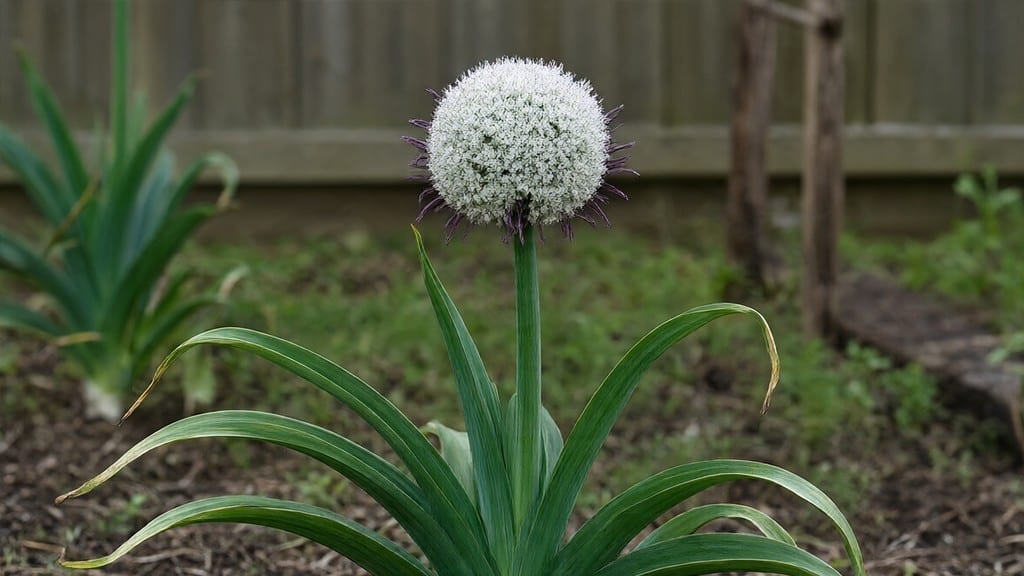
Leeks flower when grown from seed or bulb sets left in the ground, producing tall purple stems with white bulbous bases and small white flowers. This occurs in their second year or after bolting from stress, heat, or maturity.
Leeks develop flowers as a natural part of their life cycle, especially when they sense environmental cues like extended daylight or temperature shifts. 🌱 This process, called bolting, often happens in their second growing season when they've reached maturity, though stress from drought or overcrowding can trigger it prematurely.
The resulting blooms aren't just ornamental—they signal the plant's readiness to produce seeds, which can actually weaken the leek's edible stalk over time.
What's interesting is how different growing methods affect flowering: seed-grown leeks tend to bolt more reliably than transplanted ones, since their roots develop deeper and face more natural stress.
I've found that keeping soil consistently moist and harvesting leeks before they reach full size helps delay this process significantly in home gardens.
💡 In This Article
- Leek Flowering Process Explained
- Preventing Leek Flowering in Gardens
Leek flowering process explained
Leeks enter their flowering stage through a biological process triggered by photoperiodism—the plant's response to daylight length. When leeks experience 14-16 hours of daylight (common in late spring/early summer), they produce a hormone called florigen that signals the transition to reproductive growth.
This is why second-year leeks, which have already established strong root systems, bolt more readily than younger plants. Seed-grown leeks typically flower 60-90 days after reaching maturity, while transplants may take slightly longer due to their established root systems.
The actual flowering mechanism involves a 5-7 inch hollow stem elongating rapidly, often reaching 3-4 feet tall in just 2-3 weeks. This rapid growth diverts energy from bulb development, causing the white base to become fibrous and less tender.
The flowers themselves are small, white, and clustered like tiny umbrellas—each bloom measures about 0.25 inches across. Interestingly, the flowering process is also temperature-sensitive: leeks exposed to consistent temperatures above 75°F will bolt faster than those in cooler climates.
Here's what sets seed-grown leeks apart: their deeper root systems (often 12-18 inches deep) make them more sensitive to seasonal changes. Transplanted leeks, which develop shallower roots, may take 1-2 weeks longer to bolt because their energy is initially directed toward root establishment.
The key difference lies in their stress response—seed-grown leeks experience more natural soil fluctuations, while transplants have a buffered environment. This is why gardeners in northern climates often find their seed-grown leeks flowering earlier in the season.
What most people don't realize is that leek flowering follows a predictable three-stage process:
- Stage 1 (Pre-Bolt): Leaves yellow at the base as the plant redirects nutrients to the developing flower stalk
- Stage 2 (Stem Elongation): The hollow stem shoots upward at a 2-3 inch per day rate, accompanied by a slight bitter taste in the bulb
- Stage 3 (Bloom): White flowers appear in clusters at the stem's top, followed by seed pods forming 3-4 weeks later
The flowering process also explains why leeks left in the ground over winter often bolt the following spring. Their dormancy period breaks when soil temperatures rise above 45°F, triggering the same hormonal response as extended daylight.
This is particularly noticeable in biennial leeks, which complete their full life cycle from seed to flower in just 18-24 months.
The visual transformation from edible stalk to flowering plant is dramatic—what was once a 6-inch white bulb can suddenly support a 4-foot flowering stalk while the bulb becomes tough and inedible.
Understanding these stages helps explain why gardeners often find their leeks flowering unexpectedly. The plant's internal clock combines daylight sensitivity with temperature cues, creating a perfect storm for bolting when conditions align.
For example, a leek planted in early spring might remain dormant until summer's long days trigger flowering, while one planted in fall could bolt the following spring when temperatures rise. 🌿