
Watering
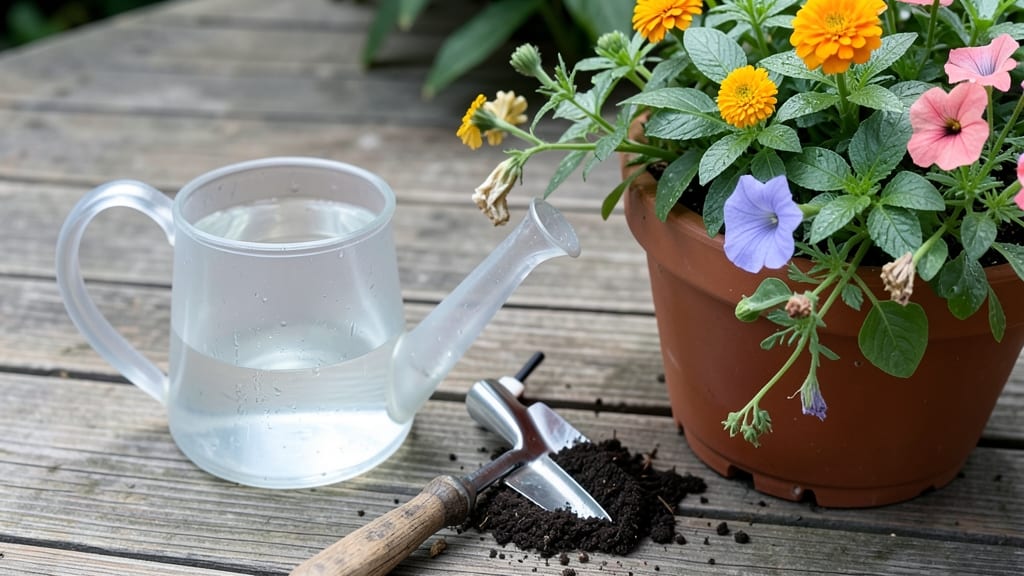
You don’t have to water flowers every day—most just need consistent moisture, not daily drenching 🌸.
Overwatering kills more plants than underwatering—but most gardeners still guess their flower watering schedule instead of following science. Discover the exact frequency your blooms need to thrive without wilting or rotting.
In Zone 6a, spring-blooming flowers like petunias and marigolds typically need water every 2-3 days, while drought-tolerant varieties (think lavender or yarrow) can stretch to 5-7 days once established. The key? Checking soil moisture before reaching for the hose.
Below, I break down the science behind watering schedules, how to spot over- or underwatering, and time-saving methods like mulching and deep watering to keep your garden thriving with minimal effort.


How often to water flowers based on plant type (science-backed guide)
You don’t need to water flowers every day—in fact, most blooms thrive on inconsistent moisture rather than daily soaking. The key is understanding your plant’s root depth and soil type.
For example, petunias and geraniums (popular annuals) need moisture at the top 1–2 inches of soil, while lavender and succulents store water in thick leaves and roots. Let’s break down the science so you can water with confidence, not guesswork.
Root depth is your best friend. Plants with shallow roots (like marigolds or pansies) dry out faster than deep-rooted daylilies or black-eyed Susans. A simple test: Stick your finger 1–2 inches into the soil.
If it feels dry, it’s time to water. For tropical flowers like hibiscus or cannas, aim for consistently moist soil, but never soggy. Overwatering is the #1 killer—it drowns roots by cutting off oxygen.
| Plant Type | Water Needs | Frequency (Days) | Soil Moisture Trigger | Examples |
|---|---|---|---|---|
| Annuals (Thirsty) | Consistently moist | 1–2 days (summer) | Top 1–2" dry | Petunias, Geraniums, Impatiens |
| Perennials (Moderate) | Moist but well-draining | 3–5 days (spring/fall) | Top 2–3" dry | Coneflowers, Daylilies, Black-Eyed Susans |
| Succulents (Drought-Tolerant) | Dry between waterings | 7–14 days (spring/fall) | Top 3–4" dry | Lavender, Sedum, Echeveria |
| Tropicals (Moisture-Loving) | Never dry out | 1–3 days (year-round) | Top 1" dry | Hibiscus, Canna Lilies, Begonias |
Climate plays a huge role. In hot, dry summers, even drought-tolerant lavender may need water every 5–7 days instead of biweekly. Conversely, cooler months (spring/fall) let soil retain moisture longer, so you can stretch watering to 5–7 days for most perennials.
Pro tip: Mulch (2–3 inches of straw or shredded leaves) locks in moisture and cuts watering needs by 30–50%. It’s like giving your soil a spa treatment!
Potted flowers dry out 2–3x faster than in-ground plants because containers have no moisture reserve. I’ve seen petunias in 6-inch pots wilt by noon if skipped a day. For containers, water when the top ½ inch of soil feels dry.
A self-watering pot or drip irrigation system solves this—both deliver water directly to roots without over-saturating the surface. Avoid overhead sprinklers; they waste 50% of water through evaporation.
Signs of underwatering include drooping leaves, crispy edges, and wilting even in the morning. But <
5 Signs your flowers are overwatered (and how to fix it)
Even well-meaning gardeners can drown their flowers by watering too often. Overwatering suffocates roots, inviting fungal diseases and root rot. The key is moisture balance—your flowers need consistent dampness, not a swampy home. I’ve seen petunias wilt from soggy soil just as quickly as they thrive with proper care.
Don’t guess—learn the tactile and visual cues that scream "too much water!" Yellowing leaves, moldy stems, and a foul odor are red flags. These signs appear faster in clay soil or potted plants because water drains poorly. Even succulents (like sedum) can’t handle excess moisture—they’ll pucker and rot.
⚠️ Stop Watering Daily! Your Flowers Are Drowning
Daily watering is a common mistake—most flowers only need water every 2-3 days (or less in cool weather). Clay soil stays wet for days; sandy soil drains quickly. Potted plants dry out faster than in-ground flowers. Test soil moisture by sticking your finger 1 inch deep—if it’s damp, wait!
Fix it now: Let soil dry between waterings. Use a moisture meter for accuracy. For heavy clay, amend soil with compost or perlite to improve drainage.
Watch for yellowing leaves that start at the bottom—this is a classic overwatering symptom. Unlike nutrient deficiencies (which show between veins), waterlogged stress turns leaves uniformly yellow. Mold or mildew on soil or stems?
That’s fungus thriving in wet conditions. Even healthy-looking plants can hide root rot—dig gently to check for mushy, black roots.
Recovery depends on your plant type and soil type. Annuals like zinnias bounce back in 3-5 days if you adjust watering immediately. Perennials (e.g., coneflowers) may take 1-2 weeks to recover fully.
For succulents or cacti, recovery can take 4+ weeks—they’re ultra-sensitive to moisture. Always reduce watering by half while plants recover.
Prevent future overwatering with these pro tips. Water deeply but infrequently—aim for 1 inch of water per week (adjust for rain). Use drip irrigation or soaker hoses to deliver water slowly at the roots. Mulch (2-3 inches of straw or bark) locks in moisture while preventing evaporation.
And never water at night—wet foliage invites pests and disease.
Remember: Underwatering causes wilting, but overwatering kills roots silently. Trust your soil’s texture and your plant’s signals—they’ll tell you when to hold back. With these fixes, your flowers will bloom healthier and longer this season. 🌸