
Pruning
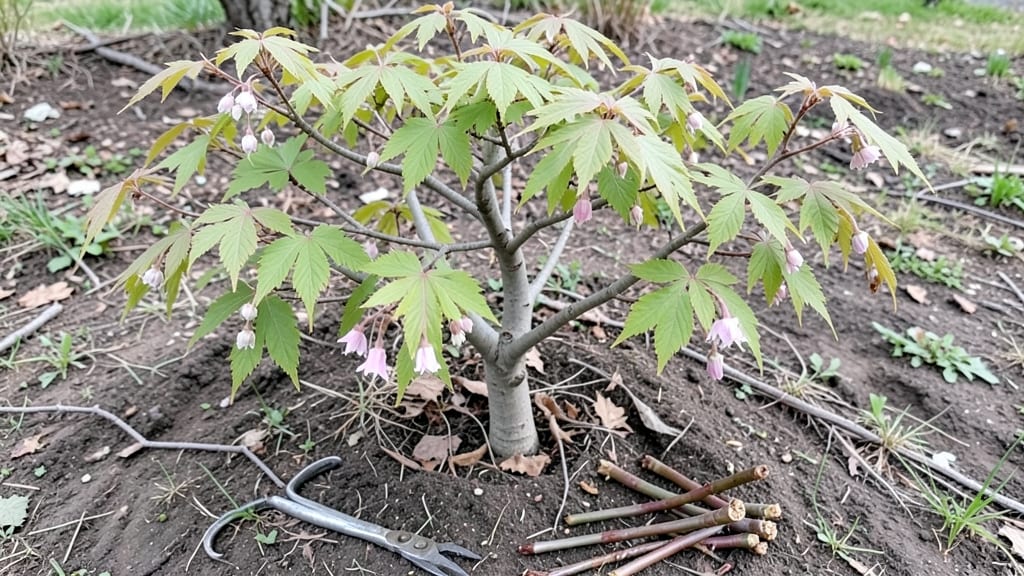
Flowering maple pruning keeps your tree thriving and blooming for decades—if you time it right and cut with purpose. 🌿 I learned the hard way that pruning too late or too aggressively can rob your Acer palmatum of next year’s delicate flowers, but the right approach turns this into a simple, satisfying ritual that pays off in vibrant foliage and bursts of spring color.
The key is working with the tree’s natural rhythm: light pruning in late winter (before buds swell) to shape the canopy, and minimal touch-ups after flowering to maintain airflow.
You’ll need sharp bypass pruners, a sturdy ladder for higher branches, and a clean bucket for clippings—no fancy tools, just the right approach. Even my first attempt produced a tree that bloomed more heavily than ever before.
By summer’s end, you’ll see the difference in your tree’s structure—stronger branches, fewer crowded stems, and a shape that lets sunlight reach every leaf. The flowers return bigger and brighter, and the fall foliage deepens to those coveted fiery hues.
This isn’t just about looks; healthy pruning extends your tree’s lifespan by decades.
Works for all ornamental maples, from dwarf varieties to statement trees in the yard. The same principles apply whether you’re shaping a bonsai-sized Acer palmatum or a 20-foot centerpiece. Let’s get those branches looking intentional!
📚 In This Guide
- What you need
- Instructions
- Tips and common mistakes
- Wrapping up and next steps
What you need
- ● Pruning shears: Bypass pruners (sharp, 6-8 inch blades) – 1 pair (for small branches)
- ● Loppers: Bypass or anvil type (18-24 inch blades) – 1 pair (for medium branches up to 2 inches thick)
- ● Pruning saw: Curved-tooth saw (for branches thicker than 2 inches) – 1
- ● Gloves: Heavy-duty, cut-resistant (e.g., leather or synthetic) – 1 pair
- ● Disinfectant: 70% rubbing alcohol or pruning sealant – Small bottle
- ○ Extension pole (optional but helpful): For high branches (10-15 ft) – 1
- ● Safety gear: Safety glasses, long sleeves, and sturdy shoes
- ● Pruning paint or sealant: For larger cuts (1+ inch diameter) – Small container
- ● Ladder: Sturdy, non-slip (if branches are above 8 ft) – 1
- ● Tree bag or tarp: To collect fallen branches/debris – 1
- ● Marking spray or tape: For identifying cuts (e.g., bright-colored paint) – Small bottle
- ● First-aid kit: In case of minor cuts or scrapes – Compact size
Step-by-Step guide to pruning flowering maples for lush growth
Here's how I keep my flowering maples thriving—no guesswork, just precise cuts for vibrant blooms.
⏰ Step 1: Time Your Pruning for Optimal Health
Prune flowering maples right after they finish blooming in late spring—this ensures you don’t cut off next year’s flowers, which develop on old wood. If you must prune in winter, wait until late winter or early spring before buds swell. Never prune in fall, as this stresses the tree and invites disease.
I always check the buds first—if they’re still tight and closed, hold off. Once the blooms fade and new leaves appear, that’s your cue. For severely overgrown trees, you can do light pruning in summer, but avoid heavy cuts that remove more than 25% of the canopy at once.
✂️ Step 2: Gather Tools and Sanitize for Safety
Use sharp, clean pruning tools—a bypass pruner for small branches and a pruning saw for thicker stems. Sanitize blades with rubbing alcohol between cuts to prevent spreading disease. I also keep a small bucket of water nearby to rinse tools if sap gets sticky.
Inspect your tools before starting. Dull blades tear bark and damage the tree. If you notice sap oozing after a cut, that’s a sign your tools weren’t sharp enough. A little extra effort here means cleaner wounds and faster healing for your tree.
🌿 Step 3: Remove Dead, Diseased, or Crossing Branches First
Start by eliminating dead, dying, or diseased branches—these are easy to spot as they’re brown, brittle, or lack leaves. Next, look for crossing or rubbing branches that create weak points. Remove these first, as they’ll eventually split or invite pests.
Make your cuts just outside the branch collar—the swollen area where the branch meets the trunk. This ensures the tree seals the wound properly. If a branch is larger than 4 inches in diameter, make a 3-cut technique to avoid bark tearing.
☀️ Step 4: Thin the Canopy for Better Airflow and Light
Step back and assess the tree’s shape. Aim to remove branches that block sunlight or airflow from the center. Focus on suckers (shoots growing from the base) and water sprouts (fast-growing vertical shoots) first—they drain energy from the tree.
Never remove more than 25% of the canopy in one session. If you’re unsure, err on the side of caution. A well-pruned flowering maple should still have a balanced, open shape with sunlight reaching the lower branches. This keeps blooms vibrant and prevents fungal issues.
💧 Step 5: Clean Up and Monitor for Recovery
After pruning, rake up and dispose of all debris—this prevents pests and diseases from lingering. I also apply a layer of mulch around the base (but not touching the trunk) to retain moisture and protect roots. Water deeply if the weather has been dry.
Watch for new growth in 4-6 weeks. Healthy branches will sprout fresh leaves, while deadwood stays bare. If you see oozing sap or discolored leaves, your cuts may have been too harsh. Next year, adjust your approach—smaller cuts heal better.
Tips & tricks for perfect flowering maple pruning
A few simple tricks can make all the difference when pruning flowering maples—especially if you want to keep those vibrant blooms coming back year after year.
Timing is Everything: In Step 1, when you're checking for blooms that have faded and new leaves emerging, look for fresh green leaves that are fully unfurled—not just tiny buds. I've learned the hard way that pruning too early can remove next year's flower buds, which develop on old wood. For severely overgrown trees, that light summer pruning should be done in early summer when the tree has already set its flowers for next year.
Tool Sharpness Matters: Before you even make your first cut in Step 2, test your tools by making a clean cut through a small twig. If the cut is jagged or the blade squeaks, sharpen it immediately. I keep a small file in my tool bag for quick touch-ups—dull tools don't just make messy cuts, they actually stress the tree more than the cut itself. Remember, clean wounds heal faster than torn ones.
Branch Collar Awareness: When making those precise cuts in Step 3, take a moment to really see that branch collar—the swollen area where the branch meets the trunk. It's easy to cut too close, but that collar is crucial for proper healing. For branches over 4 inches, the 3-cut technique prevents bark tearing—start your first cut about 1-2 inches out from the trunk, then make your final cut just outside the collar. This might seem tedious, but it's worth the extra few minutes.
Canopy Vision: In Step 4, when you're stepping back to assess your tree's shape, try this trick: hold your hand up at arm's length and look through it at the center of the tree. You should be able to see light and sky through the branches. This helps you visualize where sunlight and airflow are being blocked. I've found that removing just a few strategic branches can make a bigger difference than taking out many smaller ones.
Pro Tips for Flowering Maple Pruning
- A few simple tricks can make all the difference when pruning flowering maples—especially if you want to keep those vibrant blooms coming back year after year.
- Timing is Everything: In Step 1, when you're checking for blooms that have faded and new leaves emerging, look for fresh green leaves that are fully unfurled—not just tiny buds.
- Tool Sharpness Matters: Before you even make your first cut in Step 2, test your tools by making a clean cut through a small twig.
Frequently asked questions
Got questions about pruning your flowering maple? You’re not alone! Here are answers to some of the most common concerns to help you keep your tree thriving and blooming beautifully.
When’s the best time to prune a flowering maple?
The ideal time depends on your tree’s type! For spring-blooming varieties (like Japanese maples), prune right after flowering—usually late spring or early summer—to avoid cutting off next year’s blooms. For summer-blooming types, prune in late winter or early spring before new growth starts. Winter pruning is also fine if you’re shaping the tree or removing deadwood.
Can I prune my flowering maple in fall?
What are the risks?
Fall pruning can work, but it’s riskier! Late fall pruning (after leaf drop) may encourage sap bleeding or attract pests, while early fall pruning (before cold sets in) could stress the tree before winter. If you must prune in fall, focus on dead or diseased branches and avoid heavy cuts. For best results, stick to late winter or early spring.
What if I accidentally cut too much off my flowering maple?
Don’t panic! Flowering maples are moderately tolerant of pruning, but over-pruning can reduce blooms or stress the tree. If you’ve removed more than 25% of the canopy, skip pruning for a year to let it recover. Focus on watering deeply and fertilizing lightly with a balanced formula. Over time, new growth will fill in!
How do I prune a flowering maple for more blooms?
To boost blooms, prune strategically! Remove old, weak, or crossing branches to improve airflow and sunlight access. For spring-blooming trees, cut back last year’s growth by about one-third after flowering. Avoid heavy pruning in fall or winter—this can delay next year’s flowers. A well-timed trim encourages new flower buds to form!
What tools should I use for precise cuts on a flowering maple?
Sharp, clean tools make all the difference! Use a pair of bypass pruners for small branches (up to ¾ inch thick) and a handheld saw for larger limbs. Always disinfect tools with rubbing alcohol between cuts to prevent disease spread. For large branches, consider a pruning saw or pole pruner to avoid damaging the bark.
Wrapping up and next steps
Pruning your flowering maple is a rewarding way to ensure vibrant blooms and lush growth year after year! 🌸 By following seasonal best practices—whether shaping in late winter, deadheading in spring, or light maintenance in summer—you’ll keep your tree thriving.
Remember, patience and precision are key, and even small adjustments can make a big difference.
Now that you’re armed with the know-how, grab those pruners and get started! 🌿 Check your local climate and tree’s specific needs, then schedule your next pruning session. Happy gardening—your flowering maple will thank you with stunning displays for seasons to come!