
Light Requirements
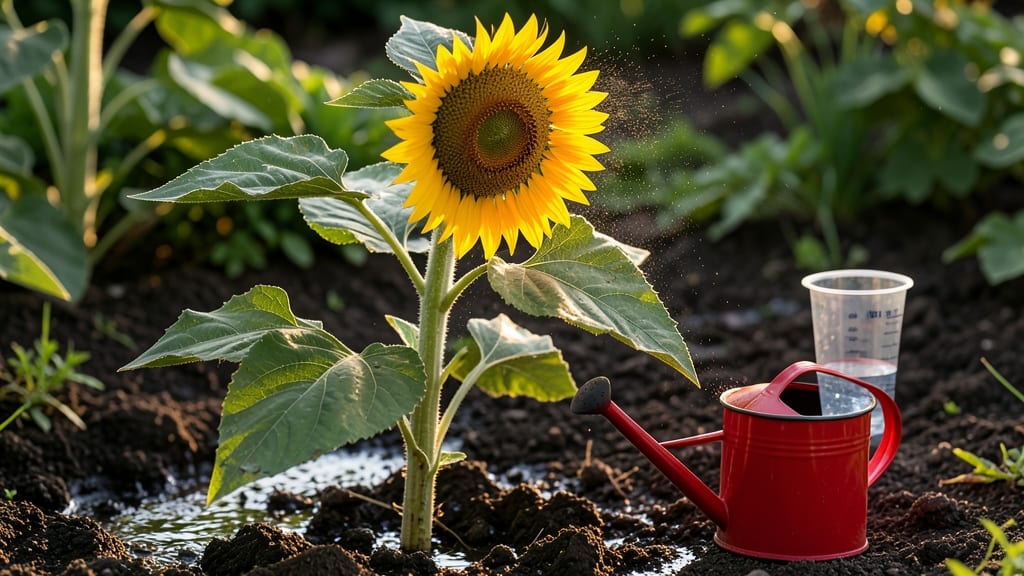
Watering sunflowers the right amount keeps those towering 🌻 blooms strong and healthy without wasting a drop.
You’ve probably seen sunflowers wilt or develop yellow leaves—those are classic signs of watering gone wrong. Too much, and you risk root rot; too little, and the plant struggles to reach its full height.
The key is understanding how much water sunflowers truly need at each stage of growth, from tiny sprouts to towering giants.
In Zone 6a, where many gardeners grow sunflowers, the rule of thumb is 1 inch of water per week—but that changes with weather, soil type, and whether you’re growing them in pots or the ground.
I’ll break down exactly how to adjust your watering schedule so your sunflowers stay hydrated without drowning.
From deep-soil techniques to seasonal tweaks, you’ll learn how to give your sunflowers the perfect amount of water for vibrant blooms and a strong stem. Let’s dive in!


Sunflower watering schedule by growth stage: from seed to bloom
Sunflowers are drought-tolerant once established, but their first 6-8 weeks are critical for root development. Too much water at this stage causes rot-prone soil, while too little stunts growth. Understanding their three key growth stages—germination, vegetative, and flowering—lets you adjust watering like a pro.
I’ve grown sunflowers in clay-heavy soil and sandy loam, and the difference in water needs is dramatic.
Your soil moisture is the best indicator of when to water. Stick your finger 2 inches deep—if it feels dry, it’s time. In hot, dry climates, you’ll water more frequently than in cool, humid regions.
For example, my Texas-grown sunflowers needed watering every 2-3 days in July, while my Pacific Northwest plants thrived on every 5-7 days in the same month.
Here’s how to water sunflowers at each stage, with climate adjustments and soil triggers to keep them thriving:
| Growth Stage | Watering Frequency | Soil Moisture Trigger | Climate Adjustments | Watering Depth |
|---|---|---|---|---|
| Germination (0-14 days) | Every 1-2 days | Top 1 inch dry | Mist seeds daily in heat | ¼ inch per watering |
| Vegetative (2-6 weeks) | Every 3-5 days | Top 2 inches dry | Increase to every 2 days in 90°F+ | 1 inch per watering |
| Flowering (6-12 weeks) | Every 5-7 days | Top 3 inches dry | Reduce to every 7-10 days in rain | 1.5 inches per watering |
| All Stages: Water at soil level, not leaves. Use drip irrigation for large patches. | ||||
During the germination stage, seeds need consistent moisture to break dormancy. I’ve seen seeds fail to sprout when soil dries out too quickly, so I use a spray bottle or light misting in hot climates.
Once sprouts appear, switch to shallow watering—just enough to keep the top 1 inch of soil moist. Overwatering here leads to fungus gnats and seed rot.
The vegetative stage is when sunflowers grow their tall stems and leaves. This is where most gardeners make mistakes by underwatering or overwatering. Check soil moisture by pushing your finger 2 inches deep—if it’s dry, water deeply until moisture reaches 6 inches down.
In sandy soil, you’ll need to water more often than in clay soil, which holds moisture longer. My sandy-loam garden needed watering every 3 days in summer, while my neighbor’s clay soil only needed it every 5 days.
When sunflowers enter the flowering stage, they’re more drought-tolerant but still need deep, infrequent watering. Focus on keeping the root zone moist—aim for the top 3 inches of soil to stay damp.
In arid climates, reduce watering to every 7-10 days, but monitor for wilting leaves, which signal thirst. I’ve seen sunflowers bolt prematurely when stressed, so consistent moisture is key during this phase.
Climate plays a huge role in your watering schedule. In humid regions, like the Southeast U.S., sunflowers may only need watering every 7-10 days even in summer. But in dry, desert-like conditions, like Arizona, you’ll water every 2-3 days during peak heat.
Always adjust based on rainfall—skip watering if you’ve had 1 inch of rain in the past week. A simple rain gauge helps track this.
Container-grown sunflowers dry out faster than in-ground plants because pots have limited soil volume. Water containers every 2-3 days in summer, ensuring water drains through the bottom. I use self-watering pots for my balcony sunflowers to prevent root rot from overwatering
Signs of overwatering vs underwatering sunflowers (with fixes)
Sunflowers 🌻 often show their water needs through leaf and stem behavior. Yellowing leaves or mushy stems usually mean you're overdoing it, while crispy edges or drooping foliage signal thirst. The key is understanding these subtle cues before they become irreversible damage.
Overwatering creates soggy soil that suffocates roots, leading to fungal diseases like powdery mildew. Underwatering, on the other hand, causes wilting even when soil is dry just 1-2 inches down. Both extremes stress your plants and reduce their ability to produce those iconic blooms.
Overwatering Sunflowers
- Prevents drought stress in extreme heat
- Keeps soil cool for root health
- Root rot from waterlogged soil
- Encourages fungal growth on leaves
- Stunts growth due to oxygen deprivation
Underwatering Sunflowers
- Encourages deep root development
- Reduces fungal risks
- Wilting even in moist soil
- Leaf scorch from dehydration
- Slower growth and smaller blooms
To diagnose overwatering, gently tug on the sunflower stem. If it pulls out easily with little resistance, roots are rotting from excess moisture. For underwatering, press your finger into the soil—if it feels dry past 1 inch, it's time to water deeply until moisture reaches 6 inches down.
Mulching with 2-3 inches of straw or wood chips helps regulate moisture by reducing evaporation. Apply mulch around the base (but not touching the stem) to protect roots while keeping soil cool. This simple step can cut watering needs by up to 30% during peak summer months.
Adjust your watering schedule based on the season. In summer, sunflowers may need water every 2-3 days, while fall watering can stretch to once a week. Always water in the morning to allow foliage to dry before evening—this prevents fungal spores from thriving in damp leaves.
If you spot yellowing leaves with green veins, it’s likely overwatering. For brown, crispy leaf edges**, underwatering is the culprit. Act quickly: trim affected leaves to redirect energy to healthy growth, and adjust your watering routine based on soil tests rather than guesswork.