
Shrubs
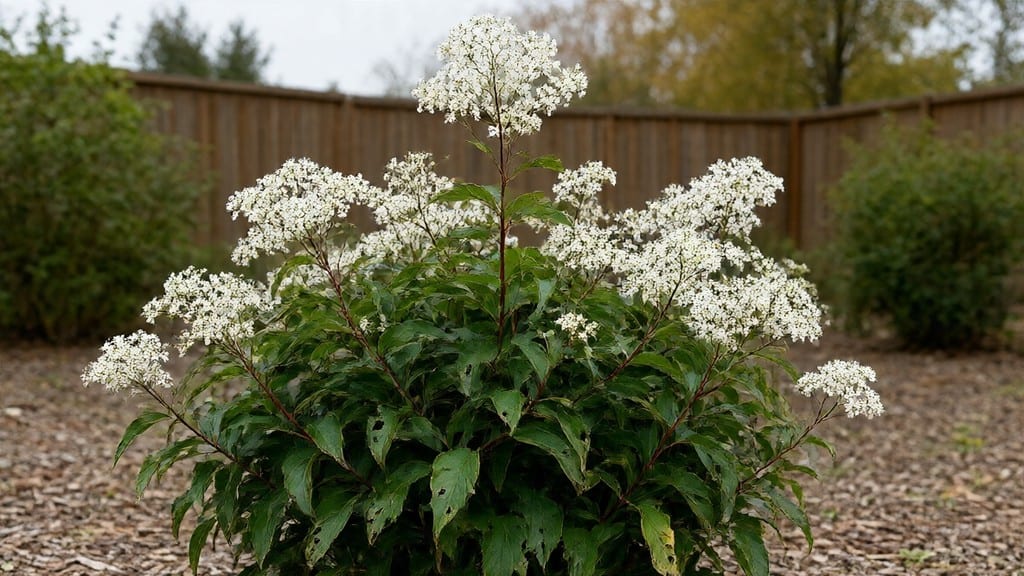
Nandina berries with white flowers, like the rare Nandina domestica 'Firepower' or Nandina 'Moon Bay,' thrive in partial shade with well-draining soil. Prune after blooming, water moderately, and fertilize lightly in spring for vibrant foliage and striking white blossoms followed by red berries.
These eye-catching white-flowering nandinas stand out in gardens with their delicate blossoms that contrast beautifully against the plant's signature burgundy foliage. 💫 Unlike their more common pink-flowering relatives, these varieties like 'Moon Bay' produce clusters of pure white blooms in late spring, followed by clusters of bright red berries that persist through winter.
Their compact growth habit makes them perfect for borders, containers, or as accent plants in shaded areas where other shrubs might struggle.
The secret to coaxing those stunning white flowers lies in their cultural needs - they prefer slightly acidic, well-draining soil that mimics their native woodland conditions.
I've found that a light layer of organic mulch helps maintain moisture while preventing root rot, which can be particularly problematic in heavy clay soils. These varieties also respond well to a balanced fertilizer in early spring, though they're generally low-maintenance once established.
💡 In This Article
- Identifying and Selecting Nandina Varieties With White Flowers
- Step-by-Step Care Guide for White-Flowering Nandina
Identifying and selecting nandina varieties with white flowers
The white-flowering nandina varieties create a stunning visual contrast in gardens, thanks to their pure white blossoms that appear in late spring.
The most sought-after cultivars include Nandina domestica 'Moon Bay,' which produces dense clusters of white flowers followed by vibrant red berries, and Nandina 'White Flame,' known for its creamy-white blooms that stand out against its burgundy foliage.
These varieties differ from the more common pink-flowering types by producing flowers with higher pollen visibility, making them more attractive to pollinators like bees and butterflies.
What sets these white-flowering types apart is their berry production consistency. For instance, 'Moon Bay' typically yields 1-2 inch-long berry clusters that persist through winter, while 'White Flame' produces slightly smaller but equally striking berries.
The foliage also varies: 'Moon Bay' maintains a compact, mounded shape reaching 3-4 feet tall, whereas 'White Flame' grows more upright to 4-5 feet. This makes 'Moon Bay' ideal for borders or containers, while 'White Flame' works well as a focal point in shaded garden areas.
The key to selecting the right variety lies in understanding their light requirements. While all nandinas tolerate partial shade, white-flowering types thrive in 3-6 hours of morning sun with afternoon shade protection. This lighting condition enhances their flower brightness and prevents foliage scorching.
In full sun, the white blooms may fade more quickly, and the berries might lose their vibrant red coloration over time. 🌸 The right placement also maximizes their winter interest when the berries provide color against snow or evergreen backdrops.
For gardeners seeking unique textures, consider Nandina 'Firepower,' which combines white flowers with deep purple-black foliage. This variety produces smaller white blooms but compensates with darker, more dramatic berries that contrast sharply against the foliage.
The trade-off is a slightly slower growth rate, making it better suited for smaller gardens or as a specimen plant. All white-flowering nandinas share a similar root system, spreading moderately but not aggressively, making them suitable for most garden sizes.
What most gardeners don't realize is how these white flowers reflect light differently than pink varieties. The white blooms create a brighter, more luminous effect in shaded areas, effectively "lighting up" darker corners of the garden.
This optical property makes them particularly valuable in woodland gardens or under tall trees where other plants might struggle. The berries also maintain their color longer in white-flowering types, providing extended seasonal interest compared to pink-flowering cultivars.
When choosing between varieties, consider your garden's color scheme and space constraints. For example, 'Moon Bay' pairs beautifully with silver or blue foliage plants, while 'White Flame' complements deep green or purple hues.
Both varieties are deer-resistant and drought-tolerant once established, making them practical choices for low-maintenance landscapes. The white flowers also attract beneficial insects, creating a mini ecosystem that supports pollinators while adding visual appeal.
The secret to their popularity lies in their versatility and low-maintenance nature. Unlike some ornamental shrubs that require constant pruning or fertilization, white-flowering nandinas thrive with minimal intervention.
Their ability to adapt to various soil types (though they prefer slightly acidic conditions) and survive in urban environments makes them perfect for city gardens, patios, or foundation plantings. 💫