
Flowers
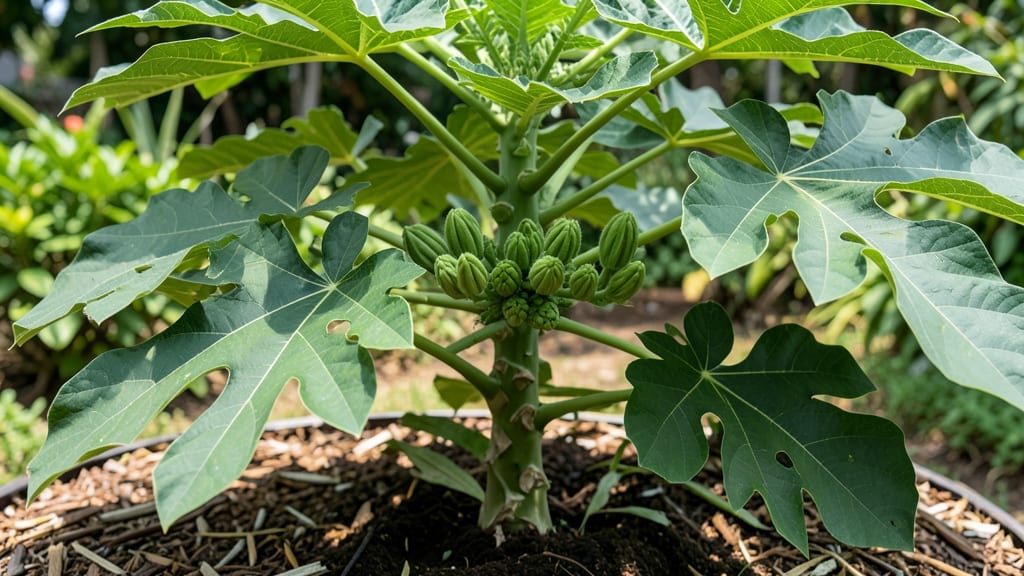
Papaya flower buds are the gateway to a bountiful harvest, but many gardeners miss the mark by pruning too early or too late.
Picture this: you’ve nurtured your 🍈 tree for months, only to watch its delicate buds drop without a single fruit forming. That heartbreak comes from a simple timing mistake—one that’s easy to fix once you know the exact window for pruning.
In tropical and subtropical zones like 10-12 (or 9b), the key is pruning when buds are half-formed but before they open. This guide breaks down the step-by-step process, from identifying the right buds to avoiding the three biggest mistakes that kill fruit production.
Ready to turn those wasted blooms into a fruit-filled harvest? Let’s get started.
When to prune papaya flower buds for maximum fruit production
Pruning papaya flower buds at the right time can transform your harvest from a handful of fruits to a bountiful tropical feast. The key lies in understanding your plant’s growth stage and environmental conditions.
Unlike many fruit trees, papayas thrive when you remove excessive buds—but timing is everything. Prune too early, and you stunt growth; too late, and you waste energy on blooms that won’t fruit. Let’s break down the exact window for optimal results.
Papaya trees produce male and female flowers on separate plants (or sometimes the same plant). Female buds are bulbous at the base with a small bump, while male buds are slender with a long stem. Your goal is to prioritize female buds—these develop into fruit.
However, even female buds need strategic pruning to ensure the plant’s energy focuses on fruit development rather than an overabundance of blooms. The best time to prune is when buds are 1-2 weeks old but haven’t yet opened.
Weather plays a critical role in pruning success. Avoid pruning during hot afternoons (12 PM–4 PM) when temperatures exceed 85°F (29°C). Stress from heat + pruning can shock the plant, leading to dropped buds or stunted growth.
Instead, prune in the early morning when humidity is lower and temps are mild. If you’re in a humid tropical climate, prune during the dry season to reduce fungal risks.
Young papaya trees (under 1 year old) are still building their root and canopy systems. Focus on light pruning—remove only 10-20% of buds to avoid overstressing the plant.
For mature trees (1-3 years old), you can be more aggressive, pruning 30-50% of male buds to redirect energy to fruit production. Always prioritize female buds—these are your future papayas!
One common mistake is pruning too aggressively all at once. Papayas are sensitive to sudden changes, so space out pruning sessions over 2-3 weeks. Start with the outermost buds first, then move inward.
Use sterilized pruning shears to prevent disease spread. After pruning, apply a balanced fertilizer (like 10-10-10) to help the tree recover and support new growth.
Pay attention to your papaya’s growth signals. If the tree produces more leaves than buds, it’s not ready for heavy pruning. Wait until you see 10+ buds before starting. Conversely, if buds appear small and weak, the plant may need more sunlight or nutrients.
Adjust your pruning approach based on these cues. For example, if your tree is in partial shade, focus on pruning only the healthiest buds to avoid weakening it further.
Seasonal timing also matters. In tropical regions, prune during the dry season (e.g., December–February in Hawaii or Florida). In subtropical zones (like coastal California), aim for early spring (March–April) before the heat peaks. Avoid pruning in late summer when the tree is
Step-by-step guide: how to prune papaya flower buds correctly
Pruning papaya flower buds correctly is an art that balances fruit production with plant health. When done right, you’ll encourage stronger growth and more papaya fruits—but one wrong cut can stress your tree and reduce yields. The key is precision: timing, tools, and technique all matter.
Start by gathering your sterilized pruning tools—a sharp bypass pruner or clean scissors to avoid damaging the delicate buds. Work on a mild morning when the air is cool, reducing stress on the plant.
Remove buds that are half-formed but haven’t yet opened, as these are the ones competing for energy with potential fruit.
- 1 Identify the right buds: Look for buds that are 1/3 to 1/2 open. These are the ones to prune—they’re still developing but haven’t committed to flowering yet. Avoid buds that are fully open or already showing signs of pollination.
- 2 Use the right technique: Make a clean, diagonal cut just above a leaf node or bud. Angle the cut away from the bud to prevent water from pooling. This promotes faster healing and reduces the risk of fungal infections.
- 3 Prune strategically: Focus on buds growing near the main stem or thick branches. Remove no more than 20-30% of buds at once to avoid over-stressing the plant. Prioritize buds that are crowding existing fruit or growing in dense clusters.
- 4 Disinfect tools between cuts: Wipe your pruners with rubbing alcohol or a 10% bleach solution after each cut. This prevents the spread of bacterial or fungal diseases that can weaken your papaya tree.
- 5 Monitor post-pruning care: After pruning, give your tree a light fertilizer (like compost tea) to support recovery. Increase watering frequency slightly for the next week, but avoid overwatering, which can cause root rot in the tropical climate papayas thrive in.
Once you’ve finished pruning, keep an eye on your tree for new bud development. Healthy papaya trees will respond by producing more fruit-bearing buds within 4-6 weeks. Avoid pruning again during this recovery period—let the tree focus on growing new buds and setting fruit.
Pro tip: If your papaya tree is male and female separate (like many varieties), prioritize keeping female buds. These are the ones that will develop into fruit, while male buds are primarily for pollination support. You can identify female buds by their small fruit-like structure at the base.
With the right technique, your papaya tree will reward you with a heavier harvest and fewer wasted buds. Just remember: patience and precision are your best tools in the garden. 🌱