
Flowers
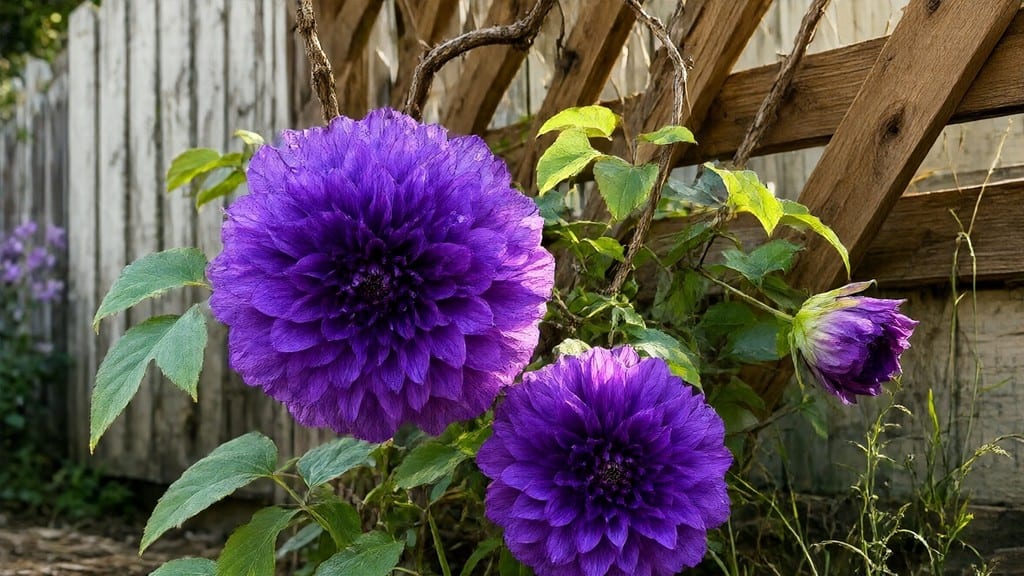
Growing a double flowering clematis 🌸 means turning your garden into a vertical canvas of color—but only if you master the art of training and pruning these fast-growing vines.
Picture this: lush, double-blooming flowers cascading down a trellis, their petals unfurling in waves of purple, pink, or white. Yet without the right support and pruning, these beauties can turn into tangled messes that barely bloom.
I’ve seen it happen too many times—healthy vines left to sprawl without guidance, their potential wasted.
This guide cuts through the confusion about Group 3 clematis care, from choosing the perfect trellis to timing your pruning for maximum flowers. Whether you’re planting in early spring or fall, you’ll learn how to coax your vines into showstopping displays—without the guesswork.
Ready to transform your garden? Let’s dive into the step-by-step training and pruning secrets that make all the difference for these stunning climbers.
Best training methods for double flowering clematis vines
Training your double flowering clematis properly is the secret to unlocking their full potential. These vines produce luxuriant blooms when supported correctly, but without the right structure, they’ll sprawl chaotically.
The key lies in choosing the optimal support system—whether it’s a sturdy trellis, a textured wall, or an elegant obelisk—each offers unique advantages for vine health and flowering intensity. Let’s explore which method works best for your garden layout and goals.
Double flowering clematis varieties like 'Nelly Moser' or 'Jackmanii' thrive when given strong vertical support from day one. Unlike their single-flowering cousins, these varieties produce heavier blooms that require extra stability.
The wrong training approach can lead to broken stems or poor air circulation, both of which reduce flowering potential. By selecting the right support, you’ll ensure your clematis climbs confidently while maximizing its season-long display.
Here’s how the three most popular training methods compare for double flowering clematis:
| Training Method | Best For | Structural Requirements | Spacing Guidelines | Seasonal Adjustments |
|---|---|---|---|---|
| Trellis | Small gardens, containers, or focal points | 6-8 ft tall, 2-3 ft wide; use galvanized wire or wooden lattice | 1 plant per 3-4 ft of trellis width | Prune late winter to shape; add soft ties in spring |
| Wall | Vertical garden spaces, pergolas, or fences | Rough-textured walls (brick/stone preferred); attach clematis hooks every 12-18 inches | 1 plant per 3-5 ft of wall length | Train vines counterclockwise; prune after flowering to encourage rebloom |
| Obelisk | Small spaces, patios, or container gardening | 5-7 ft tall; use powder-coated metal or plastic obelisks for durability | 1 plant per obelisk (multiple vines per structure) | Remove dead wood in winter; add support ties in early spring |
If you’re working with limited space, a trellis is your best bet. These freestanding structures let you control vine direction while keeping the flowering canopy compact.
For example, a 6-foot trellis placed near a seating area will train your clematis to climb upward, creating a living privacy screen with minimal footprint. Just ensure the trellis is wide enough—3 feet is ideal—to prevent overcrowding as the vine matures.
Training clematis against a wall is perfect for larger gardens where you want to soften architectural lines. Brick or stone walls provide the rough texture clematis roots need to grip securely.
Pro tip: Plant your clematis 6-12 inches away from the wall to allow for proper air circulation and reduce disease risk. This method also lets you layer multiple varieties, creating a vertical garden tapestry that blooms from early summer through fall.
For small gardens or containers, an obelisk offers a space-saving solution. These tiered structures encourage vines to grow upward in a controlled spiral, making them ideal for patio displays.
Choose an obelisk with wide arms (at least 18 inches apart) to accommodate the thick stems of double flowering clematis. In containers, pair your clematis with a dwarf companion plant like heuchera to fill the base and create a balanced look.
Seasonal adjustments are critical for double flowering clematis. After the first flush of blooms in late spring, prune back 1/3 of the previous year’s growth to encourage a second flowering cycle in summer or fall.
For wall-trained vines, this means cutting back stems to strong buds just below the first set of leaves. With trellis or obelisk supports, focus on removing crossing stems to improve airflow and reduce pest pressure.
One common mistake is over-tightening ties around clematis stems. These vines grow rapidly—up to 3 feet per season—and need room to thicken. Use soft fabric ties or velcro straps that can be adjusted as the vine grows.
Check ties weekly in spring and monthly in summer to prevent stem girdling, which can strangle the vine.
To maximize blooms, fertilize your clematis after flowering with a low-nitrogen, high-phosphorus formula (like 5-10-10). This encourages root development and bud formation for next year’s display. Pair this with regular mulching (2-3 inches of organic mulch) to retain moisture and regulate soil temperature.
With the right support and care, your double flowering clematis will reward you with abundant, show-stopping blooms year after year.
🌸
Pruning schedule for double flowering clematis by season
Double flowering clematis (like Clematis 'Nelly Moser' or 'Jackmanii') thrive when pruned strategically by season. These Group 3 varieties bloom on both old and new wood, so timing matters.
Late winter is critical—it sets the stage for abundant summer blooms while removing dead or weak stems. Summer maintenance keeps vines healthy, and post-flowering care prevents decline.
Start by identifying dead wood (brown, brittle stems) versus healthy growth (green, flexible stems). Healthy stems have buds facing outward—these will produce flowers. Dead wood should be cut back to the base, while healthy stems need selective pruning.
Use clean, sharp pruners to avoid damaging the plant and reduce disease risk.
⚠️
Never prune in fall or early spring—this removes next year's flower buds. Double flowering clematis bloom on both old and new wood, so late-winter pruning (just before new growth starts) is essential. If you prune too late, you risk cutting off 60-70% of potential blooms. Always wait until dormant season ends (late February to early March in Zone 6).
Late winter (February-March) is your biggest pruning window. Cut back last year's stems by one-third, focusing on weak or crossing branches. Leave 2-3 strong buds on each remaining stem—these will produce flowers.
For overgrown vines, reduce height by half to encourage bushier growth. Mulch heavily after pruning to protect roots as temperatures fluctuate.
Summer maintenance is about light touch-ups. After the first flush of blooms (June-July), remove spent flowers and any weak or leggy growth. This redirects energy to new flower buds for a second bloom cycle.
Avoid heavy pruning—just trim back 10-15% of the vine to maintain shape. Water deeply after pruning to reduce stress on the plant.
Post-flowering care (August-September) focuses on preparing for winter. Reduce watering slightly but keep soil moist, not soggy. Apply a balanced fertilizer (5-10-10) to strengthen stems for dormancy.
Remove any diseased foliage immediately to prevent fungal spread. In late fall, add a 3-inch layer of mulch around the base to insulate roots.
Winter (October-February) is a hands-off period—no pruning! Focus on protecting the crown from freezing temperatures. In colder zones (Zone 5 or below), wrap the base with burlap or straw.
Double flowering clematis are hardy to Zone 4, but extra insulation prevents root heave and damage. Resume pruning in late winter when buds begin to swell.