
Shrubs
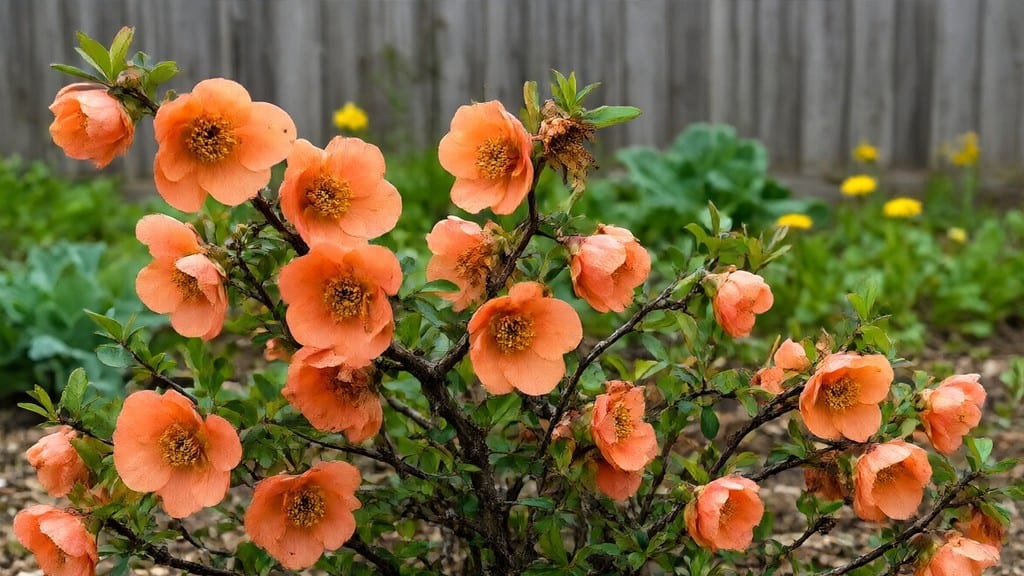
A flowering quince hedge 🌸 brings bold color, fragrance, and year-round structure to your garden with minimal fuss—ideal for busy homeowners craving beauty without the upkeep.
Picture this: a fragrant spring burst of pink or white blooms, followed by glossy foliage that turns golden in fall, all while providing a dense, natural privacy screen.
Unlike finicky hedges, this hardy shrub thrives in Zone 6 with little care, making it the perfect solution for screens, borders, or even container gardens.
What makes it stand out? Its disease resistance and drought tolerance mean fewer headaches and more time enjoying your outdoor space. Plus, its compact size—typically 6 to 12 feet tall—lets you shape it to fit any design, whether you want a tall barrier or a low, fragrant accent.
In this guide, I’ll walk you through planting tips, pruning secrets, and how to pair it with other plants for a cohesive, low-maintenance landscape that looks stunning in every season.
Why flowering quince makes the perfect low-maintenance hedge
If you're dreaming of a fragrant, evergreen hedge that requires minimal effort but delivers maximum beauty, flowering quince (Chaenomeles) is your answer. This hardy shrub thrives in USDA zones 4-9, making it one of the most versatile hedges for cold climates and drought-prone areas.
Unlike high-maintenance options like boxwood or privet, flowering quince demands little pruning and resists pests and diseases, saving you time and frustration.
What truly sets flowering quince apart is its seasonal interest. In early spring, it bursts into vibrant pink, red, or white blooms that perfume the air, followed by golden-yellow fall foliage that adds warmth to your landscape.
Even its thorny branches provide natural privacy and security, making it a practical choice for boundary hedges or windbreaks.
One of the biggest advantages of flowering quince is its adaptability to poor soil. Whether your yard has clay-heavy, sandy, or rocky soil, this shrub thrives without needing amendments.
I’ve planted mine in compacted urban soil with no issues—just add a 2-inch layer of mulch annually to retain moisture and suppress weeds. This makes it ideal for urban gardens or landscapes with challenging terrain.
For busy gardeners, flowering quince’s drought tolerance is a game-changer. Once established, it requires only occasional watering—about every 10-14 days in dry spells. In my Zone 6 garden, I’ve seen it survive through summer heatwaves with minimal water, unlike thirsty hedges like arborvitae.
Pair this with its year-round structure, and you’ve got a hedge that looks good without constant upkeep.
The fragrant blooms of flowering quince aren’t just beautiful—they’re also pollinator magnets. Bees and butterflies flock to its early spring flowers, giving your garden a head start on pollination. Plus, the thorny branches deter deer and rabbits, reducing the need for unsightly fencing or repellents.
I’ve never had issues with wildlife damaging my plants, even in areas where deer are common.
When it comes to climate suitability, flowering quince excels in cool to temperate regions. It handles snow and frost with ease, making it perfect for northern gardens.
Even in hotter zones like 8 or 9, it performs well as long as it gets afternoon shade during peak summer months. The key is well-draining soil—avoid soggy conditions to prevent root rot, even though the plant is generally resilient.
If you’re considering flowering quince for your hedge, think about its long-term benefits. Unlike fast-growing hedges that require yearly shearing, flowering quince grows at a moderate pace, so you only need to shape it every 1-2 years. The
How to plant and prune a flowering quince hedge for maximum beauty
A flowering quince hedge thrives with the right planting and pruning techniques. Unlike finicky hedges, these shrubs reward you with fragrant blooms and year-round structure when cared for properly. Start by choosing a sunny spot with well-draining soil—this hardy plant tolerates poor conditions but flourishes with ideal growing space.
Spacing is critical for a dense hedge. Plant bare-root quince in early spring or fall, spacing them 3-4 feet apart for a 6-foot-tall hedge. For taller varieties, increase spacing to 5-6 feet.
Dig holes twice as wide as the root ball but only shallow enough to keep the graft union above soil level.
- Step 1: Dig holes 3x wider than root ball, 12 inches deep for standard sizes.
- Step 2: Mix compost into native soil for better drainage; avoid heavy clay.
- Step 3: Position plants so graft union sits 2 inches above soil to prevent rot.
- Step 4: Backfill with native soil, water deeply to eliminate air pockets.
- Step 5: Apply 2-inch mulch layer (avoid touching stems) to retain moisture.
- Spring: Light pruning after last frost to shape new growth.
- Post-Bloom: Heavy pruning (March-April) to remove dead wood and encourage dense foliage.
- Fall: Minimal pruning; focus on removing suckers at base.
Pruning timing makes all the difference. Spring pruning should be light—just enough to shape new growth after the last frost date. The real work happens post-bloom (March-April), when you can cut back 1/3 of old wood to stimulate fresh, dense growth.
Avoid pruning in late summer or fall, as this can stimulate tender new growth that won’t survive winter.
Shape your hedge with clean cuts using sharp pruners. Aim for a slightly tapered top to allow rainwater to run off easily. For a formal hedge, use a hedge trimmer in early summer after flowering.
For a natural look, selectively prune to open the center and encourage airflow, reducing disease risk.
Common mistakes to avoid include over-pruning (which weakens the plant) and pruning at the wrong time (like cutting back hard in winter). Always sterilize tools between cuts to prevent bacterial spread.
With proper care, your flowering quince hedge will reward you with vibrant blooms, fragrant foliage, and year-round privacy.
Remember, patience is key. It takes 2-3 years for a quince hedge to reach full density, but the wait is worth it for its low-maintenance elegance and seasonal interest. Once established, these hedges require minimal care—just annual pruning and occasional mulching to keep them thriving.