
Planting
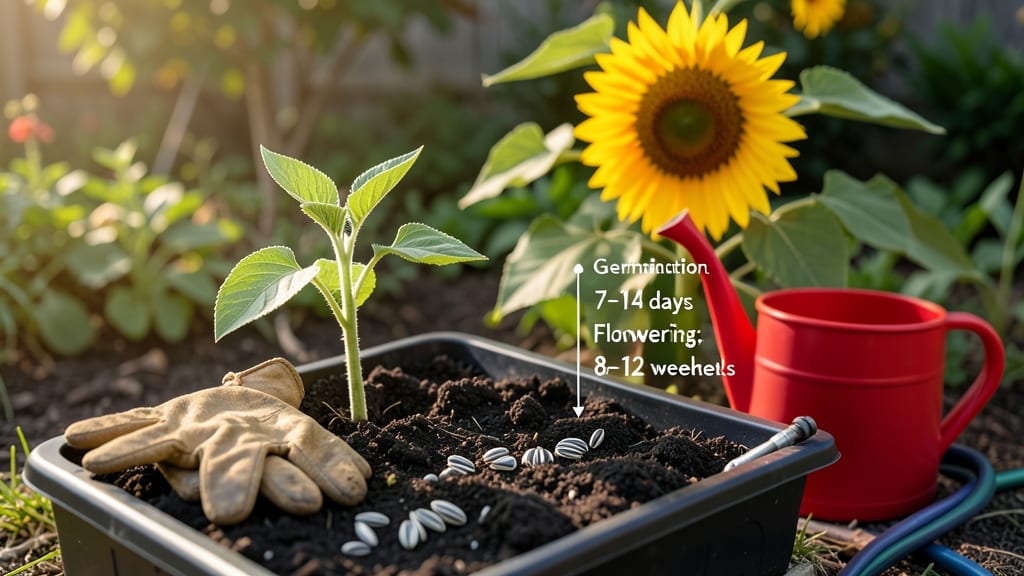
A sunflower seed takes 3 to 14 days to sprout and 60 to 120 days to reach full bloom, depending on the variety and growing conditions you provide.
Picture this: you’ve just tucked those tiny seeds into warm soil, and suddenly, you’re counting down the days until those towering 🌻 faces greet the sky. But here’s the catch—soil temperature, watering, and even the type of sunflower you’re growing can shift that timeline dramatically.
Some varieties, like the fast-growing Teddy Bear, might surprise you with sprouts in just 3 days, while giants like Russian Giant can take twice as long.
Getting the timing right means knowing when to plant for your zone, how deep to bury those seeds, and how much patience (or urgency) to balance.
Below, I’ll break down the exact days by variety, the soil temps that speed up or stall growth, and 5 pro tips to help your sunflowers reach their full potential—faster and healthier than ever.

Sunflower germination timeline by variety: days to sprout and full bloom
If you’ve ever waited eagerly for those first green shoots to break through the soil, you know how crucial timing is. Sunflower seeds vary dramatically in how quickly they sprout and mature—some pop up in just 3 days, while others take nearly 2 weeks.
The variety you choose directly impacts your garden’s timeline, from early blooms to towering stalks ready for harvest.
For gardeners planning summer displays or fall seed harvests, understanding these differences helps you schedule companion plants and manage space efficiently. A Teddy Bear sunflower might reward you with cheerful blooms in 70 days, while a Russian Giant could take 120 days to reach its full 14-foot glory.
Let’s break down the exact germination and growth timelines for popular varieties.
⚠️ CRITICAL NOTE: Germination speed also depends on soil temperature and moisture—ideal conditions can shave days off these estimates. We’ll cover those factors in the next section, but first, here’s what to expect from your seeds.
The Russian Giant variety is the slowest to sprout but rewards patience with dramatic height and massive blooms. If you’re growing it for cut flowers or as a focal point, start seeds indoors 4-6 weeks before your last frost date.
For container gardens, Teddy Bear sunflowers are ideal—they bloom quickly and stay compact, perfect for balconies or small spaces.
Notice how Autumn Beauty and ProCut varieties strike a balance between speed and size. These are excellent choices if you want early blooms without sacrificing height. I’ve found that planting them in mid-April (after our last frost) gives them enough time to mature before fall’s first chill sets in.
For those tracking growth stages, here’s what to expect after sprouting: 2-3 weeks for the first true leaves, 4-6 weeks for stem elongation, and 8-10 weeks for bud formation. The key is consistency—maintain 1-2 inches of moisture in the soil during these early stages to prevent stunted growth.
One common mistake is assuming all sunflowers follow the same timeline. A Mammoth might take 14 days to sprout in cool soil, while a Teddy Bear could appear in just 5 days under ideal conditions.
Always check seed packets for specific variety notes, as some modern hybrids are bred for faster germination.
Pro tip: Mark your planting dates and track sprouting times in a garden journal. Over time, you’ll notice patterns based on your local climate. For example, my Russian Giants always sprout 2 days faster after a warm rain in May compared to April plantings.
Finally, remember that these timelines are averages. Factors like seed freshness, soil quality, and pest pressure can shift your garden’s schedule. Next, we’ll explore how to optimize these conditions for the fastest possible growth—
How soil temperature affects sunflower growth speed: ideal ranges and risks
Sunflowers are warm-season plants that thrive when soil temperatures rise, but getting the timing wrong can mean the difference between rapid sprouting and weeks of waiting.
The minimum soil temperature for germination is 50°F (10°C), but growth speeds up dramatically once you hit 70°F (21°C)—the sweet spot for fastest development.
If your soil stays below 50°F (10°C) for too long, seeds may rot instead of sprouting. On the flip side, extreme heat above 90°F (32°C) can stress young seedlings, causing them to wilt or grow unevenly. Understanding these temperature thresholds helps you time plantings perfectly for your climate.
In cooler climates, like USDA Zones 3-5, I recommend using black plastic mulch or planting in raised beds to warm the soil faster. This trick can shave off 3-5 days from germination time by trapping heat near the seeds.
For example, in Zone 4, waiting until late May ensures soil stays above 55°F (13°C) consistently.
If your soil feels too cold when planting, try soaking seeds overnight in warm water to jumpstart germination. This method works best for dwarf varieties like Teddy Bear, which are more forgiving of cooler starts.
Always check soil temperature with a soil thermometer—it’s the only way to get precise readings without guessing.
Once seedlings emerge, consistent warmth is key. If nighttime temperatures drop below 60°F (15°C), use row covers or cloche tunnels to protect them. I’ve seen Mammoth sunflowers grow 3x faster when soil stays between 70-80°F (21-27°C) during the day and doesn’t dip below 65°F (18°C) at night.
Monitoring soil temperature isn’t just about speed—it’s about preventing common issues. Cold, damp soil invites fungal diseases like damping-off, while overly dry soil can cause seeds to shrink and fail to sprout. Balance is everything: aim for moist but not soggy soil when temperatures are ideal.
For container growers, use heat mats underneath pots to maintain 70°F (21°C) soil temps. This is especially helpful in early spring or fall plantings when outdoor conditions are unpredictable.
With the right temperature control, you can extend your growing season by 2-3 weeks and enjoy sunflowers blooming well into September.