
Flowers
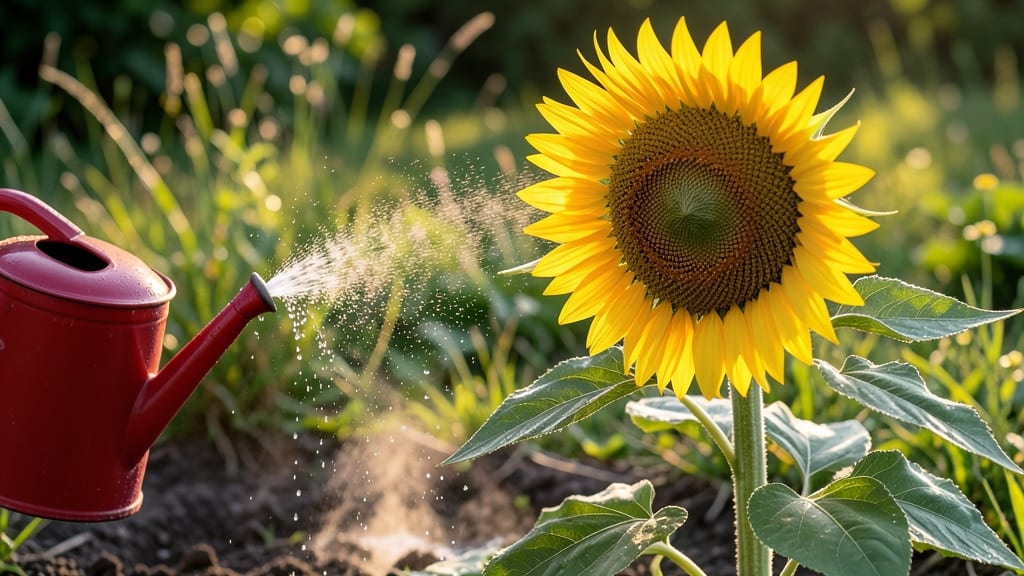
Sunflowers should be watered deeply every 3 to 5 days—but that’s just the start of the story, because how you water them matters just as much as how often.
Picture this: you’ve planted your 🌻 seeds in mid-April, and your garden is buzzing with potential. But if you drown them one day and let them dry out the next, those towering dreams will shrivel before they even bloom.
Too much water? Root rot. Too little? Stunted growth. The trick is balance—and it’s easier than you think once you know the science.
In USDA Zone 6a, where spring showers can turn into summer droughts overnight, your watering schedule needs to adapt. We’re talking morning watering to beat the heat, deep soaks that reach those roots, and mulch tricks to lock in moisture.
Skip the guesswork, and you’ll end up with sunflowers that reach for the sky instead of wilting in the shade.
Below, I’ll break down the exact watering schedule by growth stage, how to spot over- or underwatering, and the drought-proofing hacks that’ll cut your watering time in half—without sacrificing a single bloom.
Sunflower watering schedule by growth stage: from seed to bloom
Sunflowers thrive on consistent moisture, but their water needs change dramatically as they grow. Overwatering can drown roots while underwatering stunts growth—especially during critical stages.
The key is deep, targeted watering that matches their development phase. Whether you're growing dwarf varieties or towering giants, this schedule keeps them hydrated without waste.
Newly planted seeds and seedlings are the most delicate. They need moist but not soggy soil to prevent rot. Once established, sunflowers develop deep roots that store water, making them surprisingly drought-tolerant.
However, skipping water during flowering can reduce seed production. Let’s break down the exact schedule for each growth phase, including how to adjust for heatwaves or dry spells.
During the germination stage (first 7 days), sunflower seeds need constant humidity to sprout. Use a spray bottle to mist soil lightly, ensuring it stays damp but never waterlogged. Overwatering at this stage causes seed rot, while underwatering prevents sprouting entirely.
Once seedlings emerge, reduce frequency to every 3-4 days, watering deeply at the base to encourage root growth.
As sunflowers enter the vegetative stage (30-60 days), they develop deep taproots that store water. This is when they become more drought-tolerant. However, skipping water during rapid growth can lead to weak stems. Aim for 1-2 gallons per plant every 5-7 days, focusing on the soil rather than
Signs your sunflowers are overwatered or underwatered (and how to fix it)
Sunflowers send distress signals when their water needs aren't met. Yellowing leaves or mushy stems often mean you're drowning their roots, while dry, crispy foliage or drooping buds scream for hydration. The key is observing both the plant and soil—overwatering creates soggy conditions, while underwatering leads to thirsty, brittle growth.
Start by checking the top 2 inches of soil. If it's damp, hold off on watering. For underwatered plants, stick your finger 3-4 inches deep—if dry, it's time to water deeply.
Sunflowers prefer consistent moisture but hate soggy roots, so aim for 1-2 gallons per plant every 3-5 days, adjusting for heat or drought.
Watering Sunflowers: Pros & Cons
- Water deeply (1-2 gallons) every 3-5 days
- Water in the morning to reduce fungal risk
- Use well-draining soil with compost
- Check soil 3-4 inches deep before watering
- Water shallowly (leads to weak roots)
- Water at night (encourages mildew)
- Let soil stay waterlogged (causes root rot)
- Skip watering during heatwaves (daily checks needed)
Overwatered sunflowers show dark, mushy stems and yellow leaves with brown edges. Pull back the foliage to check for mold or foul odors—these are red flags. To fix it, stop watering immediately and let the soil dry out.
If the stem is soft, it may be too late, but you can try pruning healthy leaves to redirect energy.
Underwatered sunflowers wilt dramatically, especially in hot afternoons. Their leaves may curl inward or develop brown, crispy edges. Dig a small hole near the base—if the soil is dry beyond 4 inches, water deeply until it seeps 6 inches down.
For recovery, water every 2-3 days until the plant perks up, then return to your normal schedule.
Prevent future issues by mulching with straw to retain moisture and improve soil drainage. Avoid compacted soil, which traps water. If your garden has heavy clay, amend it with sand or perlite to help roots breathe.
Remember, sunflowers are drought-tolerant once established, but they need consistent moisture during their first 6-8 weeks of growth.
When in doubt, observe your sunflowers daily. Healthy leaves should be deep green and upright, while stems should feel firm. Adjust your watering based on weather and soil conditions, not just a rigid schedule.
With the right balance, your sunflowers will reward you with vibrant blooms and towering stems all season long. 🌻