
How To
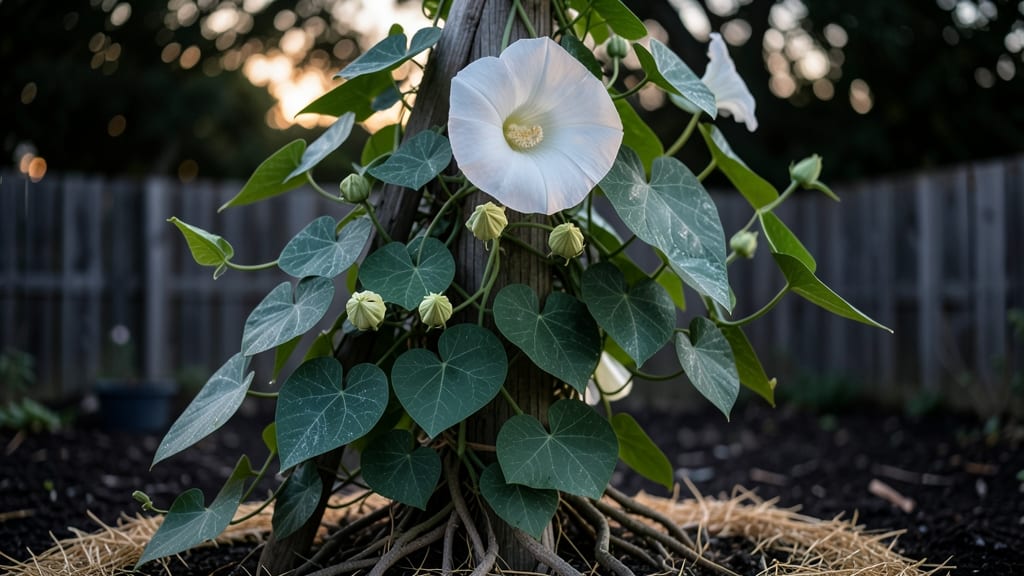
Moonflowers can grow 10 to 25 feet tall on a sturdy trellis, turning your garden into a dramatic nighttime spectacle with their silvery-green vines and glowing white blooms.
Picture this: your backyard transformed into a moonlit haven, where 🌙 moonflowers unfurl their fragrant blossoms only after sunset. But before you plant, understanding their growth habits is key—because without the right support, these fast climbers can sprawl unpredictably, or worse, flop over entirely.
Most varieties reach their peak height of 15 to 20 feet by mid-summer, but with proper care—like a tall trellis, rich soil, and full sun—they’ll hit that 25-foot mark like a sky-high jungle gym.
The secret? Planting in USDA Zone 6a after the last frost (April 15) and giving them room to stretch.
In this guide, I’ll break down the exact height ranges by variety, how to control their growth, and the 3 simple care tips that keep them climbing (not collapsing). Ready to grow a vine that outshines your expectations?


Moonflower height ranges by variety: from compact to towering vines
Moonflowers (Ipomoea alba) are famous for their dramatic night-blooming displays, but their height ranges vary wildly depending on the variety and growing conditions. Some varieties stay compact enough for small gardens, while others can climb 20+ feet with the right support.
Understanding these differences helps you choose the perfect vine for your space—whether you want a privacy screen or a container-friendly option.
The most common moonflower varieties fall into three height categories: compact (under 10 feet), medium (10–15 feet), and towering (15–25 feet). Unlike many vines, there are no true dwarf moonflowers, but some varieties naturally grow shorter if given limited support.
Let’s explore the exact height ranges and how to maximize—or control—their growth in your garden.
🌱
The tallest moonflower, Ipomoea alba, can reach 25 feet with proper support, making it ideal for privacy screens or backyard canopies. If you’re working with limited space, Ipomoea nil or the trailing 'Prostrata' variety stay shorter but still deliver stunning nighttime blooms.
Even the compact varieties (like 'Alba Compacta') can climb 10 feet if given a small trellis, proving that dwarf moonflowers don’t exist—just slower-growing or supported options.
🪴
Choosing the right support structure is critical to controlling height. A wooden trellis or metal arbor works well for tall varieties, while a cage or obelisk suits medium-height vines. For trailing types, use containers with built-in supports or let them spill over raised beds.
Without support, moonflowers sprawl 10–15 feet wide, which can overwhelm small gardens—so plan accordingly!
🌿
If you’re wondering how to limit height, prune aggressively in early summer to encourage bushier growth instead of vertical climbing. For maximum height, provide full sun (6+ hours daily), rich soil, and consistent watering.
In container gardens, choose smaller varieties like Ipomoea nil to avoid overcrowding. With the right variety and care, your moonflower can become the dramatic centerpiece of your garden—whether it’s a towering giant or a compact climber.
✂️
How to control moonflower height: pruning, trellising & growth tips
Moonflowers (Ipomoea alba) can grow into dramatic 10–25-foot vines if given the right conditions, but their height is entirely manageable with the right techniques. Without support, they’ll sprawl across the ground, while proper trellising and pruning can guide their growth vertically or keep them bushier.
The key is understanding how to encourage or limit their climb based on your garden’s needs.
If you’re working with limited space, dwarf varieties (like Ipomoea nil) can stay between 5–10 feet, but even standard moonflowers can be trained to stay shorter with consistent care.
The secret lies in selecting the right trellis—whether it’s a sturdy wooden arbor, a lightweight metal cage, or a simple obelisk—and pruning at the right times to prevent overgrowth.
⚠️ callout warning
For vertical growth, opt for a wooden trellis or metal arch—these provide the strongest support for 20+ foot vines. If you prefer a bushier appearance, prune the top 2–3 inches of new growth regularly to encourage lateral branching.
This works best for container gardening or small spaces where height isn’t a priority.
Seasonal care is critical to controlling height. In spring, focus on watering deeply (1–2 times per week) to encourage root development, which supports taller growth. By mid-summer, reduce watering slightly and prune aggressively to prevent the vine from becoming too top-heavy. Always use sterilized pruners to avoid disease.
One common mistake is over-fertilizing, which can lead to leafy growth at the expense of flowers. Stick to a balanced 5-10-10 fertilizer every 4–6 weeks during the growing season.
Another pitfall is waiting too long to trellis—if vines exceed 5 feet without support, they may permanently sprawl, making vertical training difficult.
To slow growth, limit sunlight to 4–6 hours daily (though this reduces blooms) or prune back by 1/3 in early summer. For faster climbers, ensure full sun (6+ hours) and consistent moisture.
With the right balance, you can coax moonflowers to reach your desired height—whether that’s a 10-foot trellis or a 25-foot garden wall.