
Flowers
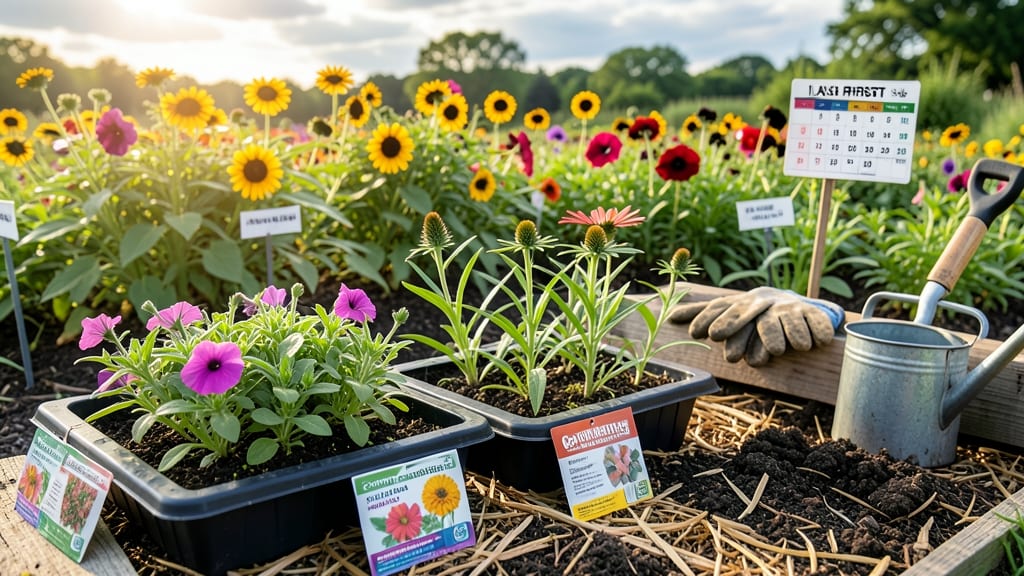
To plant flowers in Ohio at the right time means timing them for 165 frost-free days—a window that shifts from USDA Zone 5b to 6b, where one week can mean the difference between thriving blooms and lost seedlings.
Ohio gardeners know timing is everything—plant too early and frost will nip your blooms, too late and summer heat arrives before flowers even peek through the soil. But with Ohio’s diverse zones, figuring out the perfect window can feel like solving a puzzle.
Cool-season flowers like pansies and snapdragons can go in the ground 4-6 weeks before your last frost (around April 15), while warm-season favorites like marigolds and zinnias need to wait until soil hits 60°F—usually mid-May in most of the state.
Below, I break down the exact planting calendar by zone, how to extend your season with row covers, and the 5 signs you’re planting too early (and how to fix it). No more guessing—just blooms.
Ohio’s frost-free deadlines by USDA zone (5b, 6a, 6b)
Ohio’s USDA zones 5b, 6a, and 6b create subtle but critical differences in frost timing—just a few days can mean the difference between thriving blooms and lost investments.
In zone 5b, the last spring frost typically arrives around April 20-25, while zone 6a sees it 5-7 days earlier (April 15-20). Zone 6b gardeners often enjoy frost-free conditions by April 10-15, but don’t celebrate too soon—late frosts can linger until May 5 in colder microclimates.
First-time Ohio gardeners often overlook how urban vs. rural locations shift these dates. Cities like Columbus (6b) warm up faster than rural Toledo (5b), thanks to the "urban heat island" effect.
Always check your local Almanac frost forecast and adjust planting by 1-2 weeks if your yard sits in a frost pocket or near water bodies.
🌱 Key Takeaway: Use March 15 as your "ready date" for starting warm-season flowers indoors (like marigolds or zinnias), since they need 8-10 weeks before the last frost. For cool-season blooms (e.g., pansies), begin sowing 4-6 weeks before your zone’s average frost date.
For perennials like coneflowers or black-eyed Susans, timing matters less—plant them in early spring (as soon as soil is workable) or early fall (6-8 weeks before first frost). But bulbs (e.g., tulips, daffodils) need chilling: Plant them in fall (October-November) so they establish roots before winter.
Microclimates throw a wrench into these averages. A south-facing slope in zone 5b might be frost-free by April 10, while a low-lying valley could see frost until May 10.
Test your yard’s readiness with frost cloth or a minimum-maximum thermometer—place it near your planting area for 2 weeks before the expected last frost.
Pro tip: Succession planting saves the day when frost dates are unpredictable. Start a second round of seeds (like basil or cosmos) 2 weeks after your first planting. If late frost strikes, the second batch will be ready to take over once the danger passes.
Don’t forget container gardens in urban areas warm up faster than in-ground soil. You can plant heat-loving annuals (e.g., portulaca, celosia) 2-3 weeks earlier than ground planting dates. Just ensure containers have drainage holes and use lightweight potting mix to prevent overheating.
When in doubt, follow the "50°F soil rule": Use a soil thermometer to confirm ground temps are consistently above 50°F before planting warm-season flowers. Cool-season varieties (e.g., calendula, stock) can handle 40°F soil, but they’ll grow slower until temps rise.
Ohio’s first fall frost typically arrives between October 10-20, with zone 5b seeing it earliest. Use this as your cue to plant frost-hardy annuals (like pansies or kale) for fall color. For perennials, wait until October 1 to avoid shocking new growth before winter.
How to extend your Ohio flower season: cool-season vs. warm-season plants
Ohio’s unpredictable spring weather makes timing your flower plantings a critical skill. Cool-season flowers like pansies and snapdragons thrive in 40-60°F soil, while warm-season bloomers such as marigolds and zinnias need soil temperatures above 60°F to flourish.
Getting this balance right can extend your flower season by 2-3 months—whether you’re in Columbus, Cincinnati, or Cleveland.
For urban gardeners with limited space, container gardening offers flexibility. You can start cool-season flowers indoors in late winter and transition them outdoors as temperatures rise. Meanwhile, warm-season varieties can be grown in pots on patios where soil warms faster than in-ground beds.
This strategy lets you plant twice in one season—once in early spring and again in late summer.
Pros and Cons of Planting Cool-Season vs. Warm-Season Flowers in Ohio
Cool-Season Flowers
- Pros: Thrives in 40-60°F soil, blooms early, frost-tolerant
- Cons: Bolts in heat, shorter season, needs succession planting
Warm-Season Flowers
- Pros: Longer bloom time, heat-resistant, vibrant colors
- Cons: Needs 60°F+ soil, sensitive to frost, slower to establish
To maximize your flower season length, try succession planting. For example, sow fast-growing annuals like cosmos every 2-3 weeks from late spring through early summer. This ensures continuous blooms until the first frost.
In containers, mix cool-season and warm-season varieties—place pansies in the north side of a pot and zinnias on the south side to stagger their growth cycles.
Ohio’s USDA Zone 5b-6b means your last frost date varies by region. In southern Ohio (Zone 6b), you can plant warm-season flowers as early as mid-April in containers, while northern Ohio (Zone 5b) gardeners should wait until late May.
Always check your local frost forecast and use row covers for a 2-3 week extension on early plantings.
For container gardening, choose lightweight pots with drainage holes to prevent root rot. Fill them with a well-draining potting mix and add slow-release fertilizer at planting time. Place containers near south-facing walls to absorb extra heat, which helps warm-season flowers establish faster.
With this approach, you can enjoy continuous blooms from early spring to late fall—even in Ohio’s variable climate.
Don’t forget to mulch around your plants to retain moisture and regulate soil temperature. Organic mulch like straw or shredded leaves also suppresses weeds, giving your flowers a competitive edge.
By combining cool-season and warm-season varieties with smart planting techniques, you’ll turn your Ohio garden into a year-round floral showcase. 🌷